Showing posts with label values. Show all posts

Saturday, 16 May 2020

The answer lies in pushing diversity and creativity

There is a lot to be learned from our 7 weeks of 'learning from home', and the ether is alive with speculation on what education might look like as we come out of our home learning time. There are lots of ideas and opinions out there, but the trend I think I see (one which fits with my own thinking about 'undergraduate and postgraduate' models) is that our desirable next state might be a blended environment in which students mix face to face/synchronous/relational time with online/distance/asynchronous time.

Of course what perhaps matters more than anything right now to to gather the voices of the key stakeholders or participants in this whole education thing. In common with (probably) every other kura in th country e are planning on gathering that voice, to hear what our whānau, our students, and our teachers all think. I think tis will be a largely qualitative data gathering exercise, one in hich we need to be quite deliberate and intentional in our work.

It was fantastic to receive, entirely unsolicited, this email from a Mum of one of our junior boys. It is copied here with permission, with anonymity preserved.

I am writing in regard to my concerns of XXXX returning to school.
While being home & doing the online work, I have been able to see firsthand how he works & I must say I was & wasn’t shocked.
XXXX as we know is not a fan of school (never has been) due to struggling, being overwhelmed by the work and he just doesn’t enjoy it.  Hands on work however is a difference matter entirely as we know!
I noticed with the online work he was more engaged and interested in the work.  He also got the work done.  Not completely (math’s) but he did it.
I asked XXXX how he enjoyed this work.  He replied with its more interesting for me and I also don’t have the feeling of having to get it all done in one period.
With this is mind I was wondering if there was a way that we could incorporate something similar for XXXX while at school.  Meaning he doesn’t feel the overwhelming feeling.  When he gets that he shuts down, becomes uninterested and the work & lesson is wasted on him.
..... as you know he has been like this all the way thru school and we only want him to do his best.
I will be the first to admit he could try harder at school & we have told him that.
We are concerned considering he only has a few years left at school before he can leave & it terrifies us that he will leave with not education or qualifications.
I would love to be able to discuss this with you asap as XXXX is really not interested in returning on Monday (which he will be) and already that is a wall going up.

Now, don't get me wrong. At the moment I don't think there is one single answer to how we might want our kura to evolve, but I do think there is a pretty strong mandate for some of our students at least to have greater agency in their learning. This Mum's email brought me straight back to the writing of  Young Zhao, an educator of whom I hold the highest opinion, a theorist and a pragmatist (I don't think that's a contradiction in terms?), a voice of moral and educational commonsense.

Bio

Source: http://zhaolearning.com/

In a great lecture/slide show titled "Redefining Excellence" he described our current system in this way:
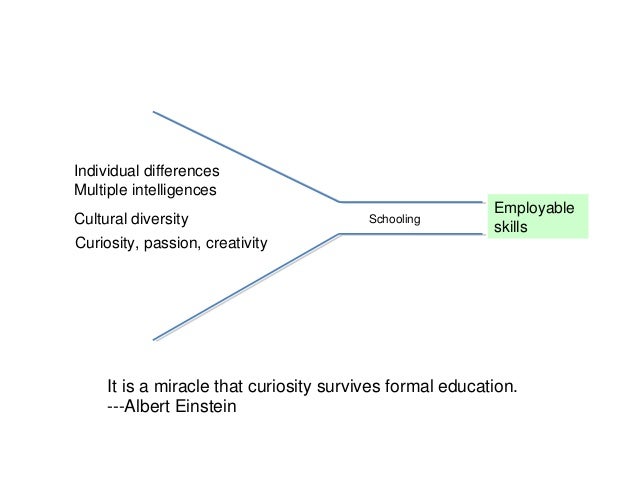
#PSP2012 | Yong Zhao, "Redefining 'Excellence'"
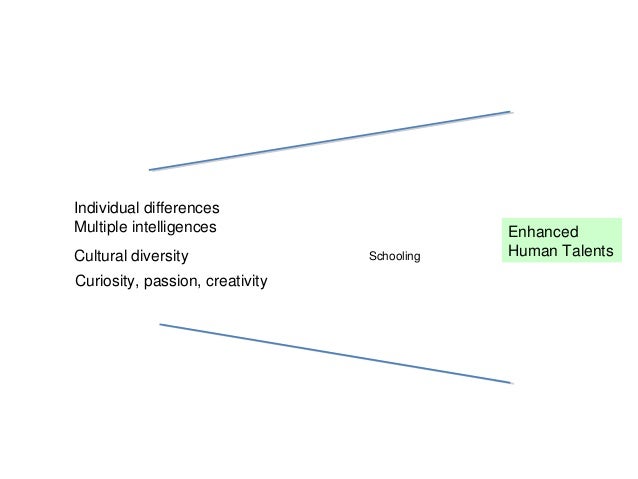
He then went on to say that especially now in the 21st century we need to do the opposite, that we need to do this:
#PSP2012 | Yong Zhao, "Redefining 'Excellence'"
Huh? That is, we need to stop constricting students' thinking and creativity, we need to celebrate and support growing divergence. We don't need more people who think the same, we need more people who think differently. This doesn't happen when we push students into boxes, it doesn't happen when we try to force students into the SAME box. It happens when we allow students to be themselves -  culturally, intellectually, emotionally.

Our job is to allow students to be themselves more than ever before. The question in most peoples' minds I suspect is not should we, but HOW do we? What does this look like on the ground within our kura on a daily basis? I think it will look different from kura to kura, but what do we think will be the general trends? Here's my speculation:

  1. More flexibility in time, with kura timetabled in a different way to what we have been used to 
  2. A blend of face to face and online learning, requiring a redefinition from the Ministry on what constitutes attendance
  3. More time spent allowing students to pursue their passions, meaning that at senior level in particular our key task is to attach assessment to work and learning, not the other way around
  4. Less didactic 'lecturing from the front', but acknowledging that the power of direct teaching, of deliberate acts of teaching, should never be lost
  5. An imperative for schools to ensure that they have a clear pedagogy around how we cause learning, both face to face and distance. My suspicion is that when you ask educators what their underlying pedagogy is, they will give you a blank stare. Last year I challenged a class of teaching grads with that very question, and saw far too many of those blank stares for my own liking. In this regard our work with Manaiakalani leaves us well placed with our 'Learn Create Share' pedagogy, leveraging the affordances of digital technology. The underlying factors of distance learning have been through our work with Manaiakalani

If we accept Yong Zhao's view (clearly I do), then the need to promote a focus on creativity is vital. Our Hornby High School vision 'A centre of creative excellence' captures the essence of Yong Zhao's philosophy of developing human diversity, not constraining it.  It is more important, and more urgent, than ever that we drive ahead with this work.

I want to hear at least some of the many voices on this. What is your view? To our community, to our students, to our staff, what do you think? Does this truly sound like, look like, feel like, the sort of educational future that you want for your tamariki, for your whānau, for our communities, for our nation of Aotearoa New Zealand? And are you with me on this?

Robin Sutton
Tumuaki

Friday, 1 May 2020

Is this distance learning stuff working?

We have now been in distance learning mode for between 4 and 6 weeks (depending on whether or not things stopped for the 'term break'. For Hornby High School students we offered up work for the break, but still treated that 2 weeks as a break before proactively seeking to re-engage. I first priority was hauora and relationships, and only after we'd focussed on that did we shift to more traditional 'back end of the curriculum' learning. We continue to maintain a focus on hauroa, with Deans monitoring student wellness though regular contact via Wānanga and Form Teachers.

I have taken some time to think about what I may be seeing, and have developed a hunch, a working hypothesis if you like. The hunch is based on a small amount of observational data only. Our staff are collecting engagement data each day, each week, and at some stage soon I hope I may get the chance to take a more detailed look at it to see whether or not it bears out my hunch.

Here's my hunch.

We can divide our learners into four groups.


  1. Those high flyers who will be just that, regardless of how we 'deliver' or 'cause' their learning. Here is an example of that from Jessica. We have many others.
  2. Those students who sit in the middle, whose engagement in school is variable, from whom we get the usual range of work from poor to great results, dependent on how successful we are in grabbing their attention and engaging them (in my opinion their range of engagement is more a result of what we do .. as a system .. than what they do)
  3. Those students who attend school some or most of the time but with whom we struggle to get much meaningful engagement
  4. Those students who do not engage, and with whom we work hard as we support them through a range of social and psychosocial issues created by anything from poverty, to mental or physical health challenges, to those who have beens seriously damaged by societal problems that are beyond their control

Groups 1 and 2 seem to be engaging as they usually do.

Group 3, so often disengaged 'at school', is now engaging in greater numbers and with greater enthusiasm, because the distance learning paradigm gives them more of the agency that they want. Without someone standing over them saying 'do your maths now', they are more likely to engage in their maths when it suits them, and just as successfully if not more so than they do in the conventional 'school' setting.

Group 4 continues mostly to be disengaged, and I stress through no fault of their own.

I also want to stress that this is my 'hunch', this is what I think I may be seeing emerge as a first set of outcomes from our distance learning.

Now teachers across the country are quite possibly saying that they worry because of the lack of engagement evidenced by attendance (or not) at GoogleMeets (especially with my Group 3). I have anecdotal reports of attendances on class GoogleMeets ranging from 2 out of 25, to 25 out of 25, in various class and year groups. However I would like to suggest that we are fundamentally wrong in our assumption that when students are present in front of us they are fully engaged .

There is a research backing for this. In a longitudinal study (one that takes place over a long period of time) the late Professor Graham Nuthall (University of Canterbury) conducted some powerful research in which he and his team 'wired up' students and recorded what they were saying during their classes. The results were published posthumously as The Hidden Lives of Learners .


One of the profound findings was that even when present in class, levels of student engagement are far lower than teachers think. So we shouldn't assume that things are worse in this virtual environment than they were in the physical environment.

In fact my hunch is that many students in Group 3 are better engaged and are in fact thriving in this environment because of the agency that they now have. They were not thriving before.

This is a 'win'. Instead of having only groups 1 and 2 engaged in their learning, we now have groups 1, 2, and 3, more engaged in their learning. I am not prepared to speculate on relative %'s of our student body. I am doing enough speculating with my hunch as it is, without trying to sound in some way numerically authoritative.

That still leaves us with Group 4, and their loss to the system, while not new, still drives ongoing inequity in society as those children fail to access the education that could liberate them from their status. The very cool thing is that (again anecdotally) we have students from that group too who are producing some amazing work in the distance learning state when they were NOT doing so even when they are physically present at school. It seems that it is whānau support that is the critical success factor for this group. Mind you that it is probably the case with most learners.

Much of this has been made possible because of our 5 year engagement with The Manaiakalani Programme. The underlying 'Learn Create Share' pedagogy, the benefits amplified with the use of digital technology, has been a true tāonga for our learners AND our teachers. The transition to the distance learning paradigm has, I suspect, been much easier for our amazing team because of the preparation that they have participated in over those past 5 years. Their familiarity with digital tools has been a wonderful enabler.

So, is distance learning working? My hunch is that it is definitely not delivering anything worse than we had before, and it might just be delivering more engagement and therefore, over time, better learning for our rangatahi. We'll look at the data over the next little while, but I think we need to get used to this 'distance learning'.. not only might the pandemic mean that it is with us for a while longer, but I suspect it offers opportunities that benefit a greater proportion of our society than we ever did before.

Education is not for the privileged few, those who have traditionally been the 'winners'. It is for everyone. And as a society we cannot afford to write off a significant proportion of our talent. We need EVERYONE enabled to be human and to contribute to our collective wellbeing.

Never waste a good crisis. BRING IT ON!!!

Robin Sutton
Tumuaki


Friday, 20 March 2020

What do beards and the OECD have in common?

As we watch the Covid-19 situation evolve as a rapid pace, those of us in schools are looking at our preparedness for the future challenges of causing learning remotely. There is an inevitability to this at some stage in the future, even if for a limited number of our students. Our overriding paradigm has to be 'business was usual' for as long as possible while taking all sensible measure possible to 'mitigate the risks', to keep everyone safe.

One of the things it has done for me is to provoke some thinking on our purpose as educators. You might say it's a little late in my career to start that. It's not a matter of having started it,  but rather a matter of deciding to put down in words how I see things in the face of the challenges we face right now.

In writing this, my target audience is our whānau and our rangatahi, because I would hope that colleagues have already determined their position in this regard.

So what is our purpose? I think that the greatest task that faces us is to prepare young people to take their place in society as people able to participate in society, to contribute economically, socially, morally, to bettering our existence as human beings. This brought me first to a piece I wrote in a school newsletter at the start of the year, as we faced the perennial 'beard wars', senior boys demanding the right to grow beards, despite the clear school rules. I wrote this:


Already this year I have had cause to consider the psychology of our teenagers. Psychologists in the 60’s and 70’s described them as ‘marginal man’ (at a time when our language was far less sympathetic to the issues of gender identity). They were referring to the idea that teenagers are at the margin, the grey area in which they are neither child nor adult. It is an age therefore where they are seeking identity, and they do this in many ways, not the least is by pushing against the boundaries in order to gain a line of sight to exactly what it means to be themselves. You will see this daily in your home lives.
Pushing against the rules of any organisation is perhaps the easiest way, as those rules are the things most visible and therefore the easiest target. The problem is that any group or organisation must have rules if it is to function. It matters not what the organisation is: the army, the Police, a hospital, a construction site, a school. They all need rules if they are to function. 
Therefore perhaps one of the best things we can do for our teenagers (after giving them our time and our unconditional love) is to ensure that they understand that rules exist and that they develop the resilience to cope with those rules, regardless of whether they agree with them or not. I have had cause to address the issue of beards. It is perhaps relatively normal for teens to see the growth of facial hair as a way of establishing identity, it reflects their search for themselves. However beards and moustaches are often not allowed. In the Police, yes, In the army no (although there was an odd rule that almost ‘required’ a sergeant in the Royal Artillery in the 19th Century to grow a beard - I haven’t been able to find out whether that is still allowed or not, although I suspect not). Our own school rule is clear: boys are to be clean shaven, beards and moustaches are not allowed.
There are rules in many workplaces, whether we like them or not, whether we agree with them or not. As a kura, and as parents, we do our children NO service at all if we do not support them to accept that fact. In one of our recent regular weekly visits to our local supermarket the checkout operator admired Lorraine’s painted nails, lamenting the fact that as staff they were not allowed painted nails if they were to work at the supermarket. When our employer says that we must wear protective footwear if we wish to work on site, then we have two choices: wear the protective footwear, or work somewhere else. We don’t argue with the employer that we want to work there but not wear the footwear.
Growing facial hair may well be seen as a chance to rebel, and you may argue that the growth of facial hair does not impact on learning. But as I said earlier, we do our young people no service whatsoever if we cannot help them to understand that societies and groups need rules to function, and that to some degree at least we all need to observe those rules. This too is an important part of their learning. If our young people want to rebel, let it be against something that actually matters in the long run. Facial hair hardly seems important  when the future of the planet is at stake, or when we have almost 300000 children still living in poverty. Support our rangatahi to rebel for a cause that actually makes a difference. Support them to show kindness in their actions, to show thought and care for others. An argument about facial hair seems to me to be very self centred. There are far better ways of building personal identity.

My brain then connected this with some material published by the OECD (Organisation for Economic Cooperation and Development). Here's what they said:

Creative problem solving requires us to consider the consequences of our actions, with a sense of moral and intellectual maturity. This allows us to reflect on our actions in light of experiences and personal or societal goals. The perception and assessment of what is right or wrong in a specific situation is about ethics. It involves questions related to norms, values, meanings and limits: What should I do? Was I right to do that, in light of the consequences? Where are the limits?


That brings us to the toughest challenge in modern education: incorporating values. Values have always been central to education, but it is time to move beyond implicit aspirations to explicit education goals and practices. This will help communities shift from situational values – under which an individual’s actions are guided by circumstance – to sustainable values that generate trust, social bonds and hope. If education fails to build foundations for communities, many people will try to build walls.
(OECD Educational Compass 2030 https://oecdedutoday.com/education-skills-learning-compass-2030/ Last accessed 21 March 2020)
The OECD has effectively stated in 'eduspeke' what I was saying about beards. All that matters in education, in learning, is not just academic in nature. One of our key purposes is to enhance and develop our moral position in life, to enhance our values, to grow those things that make us human.
The purpose of education is NOT to maximise examination passes. League tables and exam results do not measure what counts, and if we think so then we have certainly failed to give due consideration to what matters in education, to the true purpose of education. The OECD view certainly doesn't align with the 'League Table' bandits who thing that NCEA results are the true measure of the effectiveness of a school. It aligns very closely with what we call 'the front half of the curriculum' in New Zealand, that part that spells out key competencies, values, and vision, for our learners.
Yes we all want improved examination results. Yes these results matter. But more importantly we want young people to go out into society determined to make a difference, to be good citizens. For three years now I have been repeating my plea to our students: BE KIND. It is the SAME message we hear from our Prime Minister The Rt Hon. Jacinda Ardern.
The good news, going back to the original prompt for this thinking, is that as a Manaiakalani Programme kura, we are well placed to continue students' learning remotely, on line. Teachers have well developed Google sites that support visible rewindable learning. Students (and staff) blogs support interaction, they support the visible reflection of thinking and learning and the provision of feedback, the interaction with authentic audiences.
The 'however' is this: not all things that matter can be taught remotely, and not all things that matter can be taught in schools.
Much of the purpose of schools is to provide the social connection that we all need, to provide our children with the opportunity to a make it through adolescence learning those skills necessary to be connected, kind, adults who make a positive difference in our communities.
It is also true that not all that is important in learning comes from schools. If your children end up at home with you, take the time to cook a meal together, read a book together, prepare the garden for winter, or change a wheel on the car together. Maybe make a 'bobby cart' together.. do you remember the joy of that as a child yourself? Take the time to truly be 'present' with your children.

In the meantime, it is essential that we maintain business as usual, that we keep routine and 'normality' for our children. If nothing else, in Canterbury we learned this lesson post February 2011. The Ministry of Health emphasises that school closures do not keep people safer at this stage. It is essential that we follow their advice. THEY are the experts. We would be fools to ignore what they say.
In these challenging times.. kia tau te mauri
Robin Sutton
Tumuaki

Thursday, 12 March 2020

The power of collaboration

I have written before expressing my opinion that the media, by attacking schools that attempt to be innovative, are simply demonstrating institutional racism. In short the argument goes like this: our education system has historically failed Māori and Pasifika learners disproportionately. There is nothing wrong with those learners, but rather there is something wrong with the system. If our society is to realize the benefits of the skill, the talents, and the humanity, of that section of our population, the system has to change. Attacks on those proposed changes are therefore attacks on attempts to create real equity in society. Economically, socially, and morally, we shoot ourselves in the foot, it is something of an 'own goal' to attack those attempting to create change in our current education systems and structures. Some say why change a system that has worked? To which my response would be 'worked for whom"? Who says it has worked given that there has previously been nothing to compare it with? And anyway, can we seriously claim it has worked when it has failed significant groups in our society?

Today I was privileged to be present when educators from 23 secondary kura from across our region got together to share their evolving practice under the title 'Secondary Flexibility'.  We were brought together under the banner of Grow Waitaha, This is an organisation set up to help schools transform their practice, to make themselves fit for purpose in this new age where the future is so uncertain, in an age when we have much less idea than we ever had about what learners need in order to survive in their future because the pace of change is so rapid. This was an amazing exercise in collaboration that is not normal in the world of education. The previous competitive schools model meant that schools were afraid to share practice in case they gave away an edge to their competitors. We were left with small pockets of innovation that in themselves were limited because it is often difficult to see the bigger picture when trapped in our own bubble. However we continue to see that education at least is stronger when we collaborate, when we share knowledge and expertise. In short, OUR CHILDREN ARE BETTER OFF when we share our expertise. The competitive schools model simply created winner and loser children.

You could observe stuff at the surface level like the passion in the atmosphere, like the desire for change that was visceral to say the least. These are people who totally understand the moral imperative, who understand that we can no longer tolerate leaving a growing proportion of our population behind. These educators were unashamedly sharing their work on the sorts of innovations that they believe will create greater equity in our system. And there were lots of cool things happening. Interestingly we are all on the same journey. It's not as if each school is following a significantly different journey. Rather we are all on the same journey, but adapting the thinking to suit our communities, things like the readiness of community, or staff, or students, to adapt to change, or the capacity to resource change.

We are all talking about systems that build stronger relationships with learners (at Hornby High School we call this Wānanga time). We are all talking about changes that connect subjects across the curriculum (at Hornby High School this is Hurumanu), destroying the subject silos that have been the feature of secondary learning in our secondary schools since.. well , since forever as our teenagers might say.

At a deeper level though I think there is something much more significant happening. I previously wrote that schools are often afraid to put their heads above the parapet for fear of being sniped, of being shot down, by a contemptuous and hideously ill-informed media. Today was different. Today we stood shoulder to shoulder, announcing for the whole world that we are committed to a better education for ALL rangatahi, that we no longer believe the lie that the western education tradition is the best and only way to cause learning. We all acknowledged without saying that there is stuff we don't want to get rid of, but we were all also acknowledging that what we do now is no longer enough, if it ever was.

You see, the impact of this stuff is real. In achievement Hornby High School accelerates writing achievement at twice (yes that's TWICE) national averages as a result of our engagement with The Manaiakalani Programme and its 'Learn Create Share' pedagogy. Hornby High School has maintained attendances at an average of over 90% when attendance rates across the country have been declining. That's called engagement. Maybe, just maybe, we DO know what we are doing.  Maybe, JUST MAYBE, the profession of educators does know what it is doing.

I am proud to be a part of a kura that is pushing the boundaries, a kura that wants the best for all learners, not just a privileged few. And today we saw that we are not alone, and in fact never have been. We now know that we have good company on this amazing journey. We have a whole community of educators with us in this work to change lives and communities.

This is the power of professional collaboration. This is the way of the world, this is the. way forward in our work to empower and embolden our rangatahi, to set them on their journey to better lives for themselves, and for all.

You see, the whole IS more than the sum of the parts. As one famous thinker once said 'you can judge the quality of a society by the way it treats its weakest members.' Today showed that as educators we are determined to treat our young people, some of our weakest and most vulnerable members, in the best way we can imagine.

Saturday, 7 March 2020

The new 'cornerstones' of our society

All groups need rules. They need a set of agreements on how members will behave, how they will treat each other, if they are to succeed. Regardless of whether it is the armed forces or the police, a kura or a hospital, a sports club or a motorcycle gang, all groups have to have some agreement about how they will act.

I recall Lorraine in the 90's inviting her parish vicar for dinner. It was an enjoyable evening, and I recall expressing the view that for many centuries in European societies churches provided the moral glue that bound us together as a society. I suggested that it was the failure of our churches in general to retain their relevance to people that has lead to a significant drop in numbers of parishioners generally, and therefore in their ability to influence values, to sustain a moral code that we might live by. I then suggested that this has accelerated a significant shift in our cohesiveness as a society because we struggle to hold shared values. Here is some recent NZ data, and I readily acknowledge that this doesn't reflect some of the changes happening with individual faiths.


I realise that that statement suggests that their values are the right ones, and all others are not. That is not my intention. It is merely an observation on what I think has happened in European based societies globally. Here too I stress that this is a very euro-centric observation, on which I'll say more later in this post.

The vicar certainly didn't disagree with me, and I have to confess that despite working for 15 years in an independent school with an Anglican ethos (and an excellent school, at that), I have at best 'flirted with faith'. That worried me, although despite that I like to think that I have managed to live a values driven life that reflects core values founded on respect for others.

I would also like to state that this is not a post promoting any specific set of values, Christian or otherwise, other than the values that are implicit in the New Zealand National Curriculum. I merely make the observation of the need for an agreed and shared set of values. As a state school in New Zealand, we are required to be secular in nature. We do however have a set of values (Commitment, Achievement, Resilience, and Respect), that are our own interpretation of the values spelt out in the front half of our National Curriculum.

Just last week I was in a meeting with Gary Roberts (Principal, Hornby Primary School) and Malcolm Gooch (Leader of our local Mana Ake team, working with the Uru Mānuka cluster). Malcolm made one of those statements that 'joined the dots' for me. I admitted that I felt deeply embarrassed that I hadn't made this connection, that I hadn't joined these dots, before.

He said 'schools are the new cornerstones of society', they are places in which society generally has high trust, they are gathering places for us, perhaps in much the same ways that churches were before.

That lit a number of light bulbs for me, reflecting a vital function that had lurked in the back on my mind like one of those ghostly memories borne of a half remembered dream.

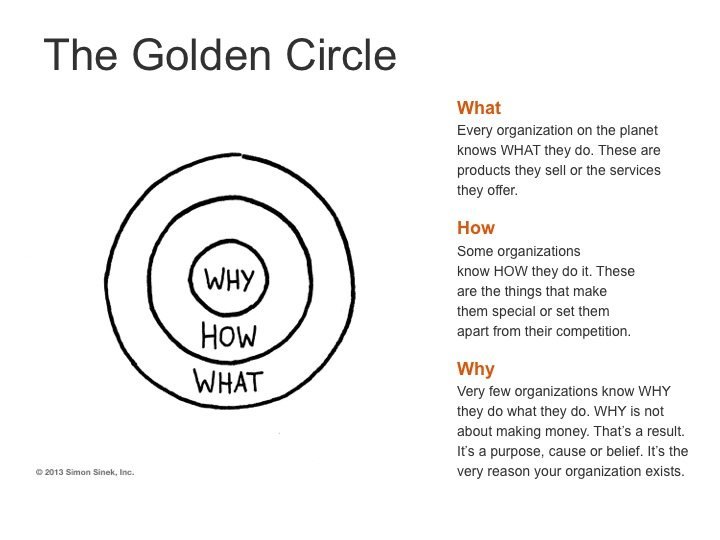
It also brought me back to Simon Sinek's work on change, and the need to know, and keep at the forefront of our thinking,  the 'why' of our work, our moral imperative.

Image result for simon sinek why

Our moral imperative within Uru Mānuka is well represented in this visual representation of our work, one I've shared numerous times before:


Image result for equality equity liberation
Our work with The Manaiakalani Programme highlights one of the important pieces of work that we are undertaking at Hornby High School to achieve this end, to meet our moral obligation to see ALL students able to be the best that they can be. Our work in establishing our Wānanga time and our cross curriculum Hurumanu, are also important pieces of work in supporting the best outcomes for our learners.

The problem lies in that bigger piece of work, that new role for schools as the cornerstones of our society. You see, this is not something we are resourced to do. We are staffed with wonderful people who hold the moral imperative dear to their hearts. We are staffed by people who would (and figuratively, often do) give the shirts off their backs for tamariki that they teach. However as a wonderful former colleague was want to remind me, we are schools, not social work organisations. That is what we are resourced to do.

But what of our work? What can we actually do to  make a difference, given that we are not actually resourced to be those 'cornerstones' of our society? We can be values driven, as we all are. We can be culturally responsive, culturally inclusive, welcoming to all cultures in our communities. Every child ought to be able to bring their 'cultural backpack' into the kura, to be who they are without fear or reservation.

These two ideas come together in a unique way in Aotearoa New Zealand. We have a true taonga in Tikanga Māori, in those beautiful values of manaakitanga and whanaungatanga, of kindness and relationship. By upholding the precepts of the Treaty of Waitangi we may yet save ourselves as a society. We currently have a Prime Minister who talks the talk and walks the walk about showing kindness, about rejecting the cult of the individual that has been an implicit part of the neo liberal right wing agenda that has driven much of western society for the past 40 years. We hear those messages abut inclusivity, about embracing diversity. Doing so makes us all richer, better off. A society that has extremes of wealth, a society that is divided along any grounds at all, is a poorer society both economically, culturally, and socially. Embracing tikanga offers us a path to greater moral and economic wealth. Why wouldn't we?

That's a big ask for schools alone. We must play our part, but we can't do this alone.

Saturday, 21 December 2019

Necessary but not sufficient ...

What's the secret to school improvement? If I knew the definitive answer to that, I'd probably be on the global speaking circuit earning significant dollops of cash, I suspect. Mind you, I think we all know that there ISN'T one single answer to that, and there never has been.

I have come to believe however that there are a series of factors, some necessary but not sufficient, and then others from which we leverage the significant learning gains for our rangatahi.

I think we begin with the Viviane Robinson framework for student centred leadership. This has been my 'bible' for thinking and for action around leadership since I took up Principalship in 2016, and continues to be my guiding framework. It looks like this:


Image result for viviane robinson leadership dimensions"


What do I think this has looked like in our Hornby High School context?

The "necessary' factors I mentioned in my opening paragraph have been, I think, a relentless focus on:

  • Relationship building
  • Valuing all students' cultures in our school community
  • Strong vision, consistently articulated and applied
  • Quality physical infrastructure with our whole school rebuild
  • Strategic resourcing of key initiatives with suitable staffing
  • Effective use of digital technology that is founded on a consistent  and overt/completely visible pedagogy
  • Consistency and coherence in everything that we do. That is, there has been NO jumping from one fad to the next. We call this 'staying on the bus'. This metaphor comes from the 'Helsinki bus theory'.
  • The demand that we have clarity in our values, and that all of us (staff and students alike) live and apply those values in all that we do, as a basis for strong positive relationships. In our case, we apply PB4L, restorative practices, and restorative circles, to conflict resolution and relationship building. I have consistently talked up the need for kindness.

These things are essential to school improvement, and there are more that we do that I have just not mentioned. Our new school buildings have had a significant impact on the mindsets of our students. I would like to think that more of our students now generally feel valued by our kura, and our country, because they have been given the chance to live and learn in the school facilities that they always deserved. The design we chose for our spaces, a mix of collaborative and single cell spaces, has allowed staff the opportunity to review their pedagogy, and to put into effect things they learned when we encouraged them to 'play in the sandpit' between 2016 and 2019, to try out ideas that ranged from project based learning to passion projects, from knocking out walls in classrooms due for demolition to cross curriculum learning opportunities.

We have seen the dramatic impact of digital technology, and our Learn Create Share pedagogy, on student outcomes, with writing progress accelerated at twice national averages, and reading and maths accelerating at 1.5x national averages.

My current opinion is that these are all things that have been necessary to improvement in our kura. However I suspect that on their own they would have relatively limited impact unless combined with what I think are THE game changers in schools:

  • Embedded inquiry
  • Curriculum shift
  • The Manaiakalani Porgramme

Our curriculum shift is already significant. If anything, this is where e are disrupting education. I often say that I am a believer in evolution not revolution when it comes to organisational change. Why? When we have revolution we are, far too often, left with bodies in the streets. I'd rather we embark on a change journey that sees everyone who wants to 'stay on the bus' still standing at the end (if there is ever an end, that is). So our curriculum is evolving, perhaps more quickly than some would like, perhaps less quickly than others would like, but nevertheless it is evolving. Our junior 'connected curriculum' is more adaptive, more engaging, more relevant. It connects more clearly with the front end of the national curriculum, supporting as it does the development of the five key competencies that we still think are essential to success. In one of this year's junior prize giving speeches, I said this:
I have chosen to talk about this today because your ability to be successful at school is in part determined by your ability to manage your emotions. The fancy phrase we use is your ability to self regulate. Work hard to get better at that. We all struggle with the challenge, regardless of age.
The Manaiakalani Programme has provided Hornby High School with a visible and clearly articulated pedagogy that is proven to make a difference. Without this, the application of digital devices is unlikely to have made much of a difference. My opinion on this mater is strong: placing digital technology into the hands of students and teachers without changing the way teachers work, without changing the way learning is caused (the pedagogy), is doomed to failure. TMP gives us the pedagogy and the visibility that is necessary to make a difference.

And then there is the professional game changer: inquiry. For the non educators amongst readers, this is the principle that teachers inquiring into what they do, investigating hunches about what will improve learning for their students, are far more likely to adapt and improve their practice. The process looks something like this:

Image result for teaching as inquiry"


Let's face it, NONE of us begins our lives in this profession knowing everything that we need to be successful. In fact, on a side note, I suggest that it is even worse than that, that much of what passes for initial teacher education in New Zealand is not fit for purpose, but that's a different issue. So, as teachers we all need to be curious learners. we need to ask ourselves how we can do this better.

At Hornby High School I believe that what I am seeing is the progressive adoption of inquiry as the driver behind improving what we do. As my colleagues have inquired, made changes, reflected, and then written of what they have done, I have seen reflection that I would describe as transformative. What's more, this has taken place with the support of Professional Learning Groups, many of which have involved collaboration across our Kāhui Ako. This means that we have had primary and secondary trained colleagues collaborating on their inquiries. This is a rich source of knowledge sharing and transfer, and the potential for impact on our learners is huge.

Amongst the benefits of being a Manaiakalani school are that we have a clearly articulated pedagogy (Learn Create Share) around which to focus all inquiry, with hunches often formed based around the mass of great data with which we are blessed. We are able to inquire into what we call 'high shift practices'. In short we are beginning to build a true inquiry culture that focusses on improving outcomes for learners.

That in itself is the high shift practice. I would suggest that while new buildings and digital devices are necessary for transformative school improvement, in and of themselves they are not sufficient. To create those big shifts we seek, we need inquiry, and a future focussed curriculum, and....


Saturday, 9 November 2019

Senior Prize Giving 2019

Mā te huruhuru, ka rere te manu
‘Feathers enable the bird to fly’

Board Chair, Mrs Kaye Banks, fellow Board of Trustees members, Te Taumutu runanga, honoured guests, colleagues, parents and friends, ladies and gentlemen, students of Hornby High School  - welcome to this 45th senior prize giving of Hornby High School.

During the year Kaye Banks, Penny Devine, Donna Sullivan, and  Rochelle Jackson, were re-elected to the Board, and Simon Evans joined them on election. Crystal Edminstin was re-elected as our student representative on the Board. Thankyou to you all for your time, your work, your wisdom and your support.

The year has seen a small number of staff changes.
Mr Jack Goodlfellow joined us as our newest Deputy Principal replacing Mr Jon Rogers and quickly showed his worth to our kura. Mr Alan Tenberth continued his work relieving for Mr Jonathan Handley-Packham who has subsequently announced his retirement. Mr Russell Cairns joined us in a part time position teaching English for the year, and Ms Gina Cuttance joined the counselling team part time for the year. Ms Cuttance’ position was funded entirely by the Board and reflects their focus on supporting improved wellbeing for students by increasing the availability of counselling support for students across the school.  Mr Corey Kamariera left us to join the team at Te Whānau Tahi, and subsequently Mr Connor Matthews joined us teaching Te Reo Māori. We welcomed Ms Melissa Oliver part time to the staff team working lart time in our Learning Commons Re Pae Rewa. Teacher Aides Emma Grennell and Sarah Nothcote left us to take up full time employment elsewhere.

We are grateful for the contributions that they have all made to our wonderful kura.

The year 2019 marked the completion of the whole school rebuild, with only landscaping and ‘make good’ work to be completed. Our contractors Leighs Construction expect to be clear of our site by March 2020. The company and its team have been exemplary citizens sharing the campus with us as they have undertaken their construction work. We moved into the last of our new buildings, we have called them kahui, late in term 3. Unsurprisingly we immediately saw students focussing on their learning in these new spaces. We were careful in our planning and design to allow for a variety of learning needs amongst students, with a combination of larger collaborative spaces and smaller break out and traditional class spaces. I have already observed increased staff collaboration, and the exchange of ideas and thinking, exactly the sort of start we would have hoped for in these spaces. Our preparation for the occupation of these new spaces has included a great deal of thinking and trialling of different ways of planning our curriculum, we have called it ‘playing in the sandpit’, and we believe that we continue to see improved engagement and achievement amongst students. The new buildings were also explicitly designed to allow a shift to a vertical pastoral system, a whānau grouping in which students from all year levels will be grouped in those whānau groups. Each of our kahui is a pastoral grouping. This change will be phased in over the next few years.

Of particular note has been what we believe is a significant improvement in internal NCEA results at the Merit and Excellence levels (and in fact overall pass rates). One year level has nearly doubled the proportion of internal standards credits achieved at the Excellence level before the inclusion of external results in January, and we have seen a record number of students gaining their NCEA endorsed with Excellence before they even enter the examination room. This reflects deeper learning and higher levels of engagement and aspiration amongst students. This broader aspiration is vital to our student success. Every student needs to aspire to be their best.

To every adult in the room, I beg you, I implore you, to support our rangatahi in raising their aspirations. Perhaps my biggest frustration in my professional life is the amount of almost unbounded human potential I see going unrealised. Talented students settling for nothing near their best means they miss out on fuller richer lives, and it also means that as a society we miss out on those talents.  We are the poorer economically, culturally, and socially. Settle for nothing less than their best.

To our wonderful staff, thank you. You are amazing colleagues, you show yourselves to be the risk takers that our rangatahi need in education. We know that risk taking is essential for creativity to thrive, and I want to make some comment at this point about the media in regards to education and its future, and the notion of risk taking.

We know that in New Zealand we have what has been dubbed a ‘tail of underachievement’. We know that our Māori and Pasifika children are overly represented in that group. This tells us that much about our traditional systems of education has not worked for those children, that this is the fault of our systems and structures, not the fault of those tamariki. We must change and adapt to better meet the needs of these children who are our future. However, most often when a school tries new ways of meeting the needs of these children, it is pilloried, it is attacked, by our media. The result of this is that schools become risk averse. Change is disincentivized. Frankly this is little more than institutional racism, it is the protection of the privilege of the few for whom the system does work, as the media is slowing the change that we need in New Zealand to better meet the educational needs of our tamariki. To steal and adapt the famous quote from the epic movie ‘Gone with the Wind’, “Frankly, we don’t give a damn about those media attitudes”. My colleagues are embracing change.They show great courage in our endeavours. We have not lost our moral compass. We are driven by the moral imperative to do right by every child, not simply the privileged few.

I’d like to once again make mention of The Manaiakalani Programme. In my entire career I have never seen anything as transformational in education. The Manaiakalani Programme is a pedagogy (a way of causing learning summarised with the three words Learn Create Share) that is consistent across our cluster, and increasingly throughout our kura, and it is magnified with the use of digital technology, specifically Chromebooks. With these tools, we are accelerating student progress in writing by twice national averages. That is, our students are improving in their writing twice as quickly as students of their age generally across the country. In reading and mathematics it is currently less spectacular. The rate of progress is only one and a half times that of students generally across the country. But we still have our junior students improving faster than students nationally. Can I say definitively that these improvements are solely the result of Manaiakalani? No. However, consider this. These same improvements are happening for the thousands of students across the country in the nearly 100 Manaiakalani schools. Those same improvements are not happening consistently anywhere else. It would be a funny old coincidence if it weren’t Learn Create Share and the affordances of the digital technology that were creating these transformational improvements. The Ministry of Education has finally accepted the worth of what is going on, and work is afoot to have funding for the scaling of Manaiakalani across the country built into budget 2020/21

We are doing our bit, as staff learn how to best employ the pedagogy to accelerate the learning of your children. Please help us. Please make what we know for many is a significant investment: provide your child with a Chromebook. It is possibly the best money investment you can make in your child.

In this regard I’d like to make special mention of and offer our warmest thanks to the members of the Uru Mānuka Education Trust who have done amazing work to support our work across the cluster, and to the Wayne Francis Charitable Trust who have made the investment into our cluster Uruy Mānuka. They have secured five years worth of funding to support our education leader Ms Kelsey Morgan who works with teachers to continue their upskilling in how to cause learning with our driving pedagogy, and therefore how better to help students to make informed use of the digital technology. This teacher development is essential, because we know that simply putting devices into the hands of learners and doing nothing else will fail completely. The devices impact learning for your children when we also change the way teachers teach. Thank you.

Of note too over this past year is that we have engaged with the other schools across our cluster (Uru Mānuka) to formalise our Kāhui Ako, our community of learning. This releases additional resources that will be put to use to support and benefit our learners, your children, not just at Hornby High School but across the whole community. Thank you to my colleagues and fellow Principals, and to the wonderful staff who make these kura such wonderful places tro be. We are doing amazing things for our community.

I have to say thank you to a growing number of supporters of our kura. This growing list is a symbol of the support, the love and kindness, the faith, that our community has in you our students, our whānau, our staff.

CERT Trust
Mainland Foundation
CSG
Westpac  - Hornby Branch
GCSN - the Greater Christchurch Schools Network
Orica Chemicals
Couplands
Hornby Residents Association
OCS   ( $200)
Wycola Medical Centre
Westpac Hornby Branch
Craig Frampton
David Browne Contractors
Kitchen Surplus 
Hornby Working Men's Club
Hornby Rotary 
Gators Basketball -   ran fundraiser for senior basketball to attend tournament

Finally, to our prize winners, well done. Tonight we acknowledge and celebrate your attitude, your persistence, and your achievement. The prizes we award acknowledge only one part of the wonderful achievement represented here tonight, and throughout the school, but that achievement represents much about our purpose as a kura..

To our 2019 Prefects, thank you for your leadership and your commitment to the school. You have modelled the very kindness that I think is essential to healthy caring inclusive communities. Your daily actions are an example and an inspiration to us all, you are all a wonderful example of the values based leadership that the world desperately needs. Kia tau te mauri.

To all of our leavers - please know that you take with you our best wishes, and the knowledge that at Hornby High School you have your turangawaewae, your place to stand. You are an outstanding group of young men and women. Thank you for everything you have contributed to our kura. Well done on all that you have achieved. Thank you for the people that you have become.

Kia mau ki te tūmanako, te whakapono me te aroha

Hold fast to hope, faith, and love.

Noreira tena koutou tena koutou tena koutou katoa

Sunday, 18 August 2019

A wonderful mix of 'Learn Create Share' and good old fashioned kindness and gratitude

Our Year 7 & 8 curriculum this year includes the opportunity for tamariki to take part in 'Community Impact Projects', and passion projects. One of these projects engages the tamariki in enhancing wellbeing in their community. Last term they devised and designed a mindfulness colouring in project/competition that they then promoted amongst cluster schools. They went out to businesses asking for prizes and were, on their own admissions, overwhelmed with the support they received, and were able to support improved wellbeing.

Their teacher Miss Birtch wanted to share some great learning and community interactions. Last week she had some of the Year 7/8's writing letters of appreciation to someone special in their lives. They were expressing their gratitude to help improve someone else's wellbeing and to show kindness.

Miss Birtch writes:

"Students wrote to a variety of people including Mums, Dads, other whānau members, teachers, friends, coaches etc. Students got to choose to share their actual letter on their blog, print them off to take home or email straight to their person, and then post a reflection about the task.

"It was great to see friends lighting up receiving kind messages and students running up to us to say that "Mum responded!!" or "Mum commented back!" within the time frame of the lesson."

This is a link to Saia's blog. He posted his letter on his blog, and guess what? Mum responded. I suspect you can imagine Saia's delight.

Engagement was high and these students brightened the day for a lot of people showing once more, and in a very different context, the power of 'Learn Create Share'. Students were writing, they were thinking critically, they were reflecting on gratitude which we know is strongly connected to wellbeing. For some this was via blogs, for others it was via email, or paper copies. The sharing of their thinking and their feelings was the important thing, and for some the technology enabled this in ways that might not have been easily accessible otherwise.

This is a condition of the human heart, and powerful determinant of our wellbeing. Of course that said, technology was never required to say thank you.

Thursday, 1 August 2019

The power of making learning visible 1

So what's this big deal about making learning visible?  'Manaiakalani', we say. "Learn Create Share' we say. "Accelerating learning", we say. How does that work? What does the Share part of that look like, and what it the big benefit of sharing learning?

Our basic sharing tool is student blogs. Blogs are our mechanism for sharing our thinking, our work, our learning, with a real audience. This blog post that you are reading is me as an educator sharing my thinking. And whenever a student writes a blog post, she opens up the possibility of connection with an authentic audience, with an audience that at the very least may be interested in the topic, or an audience that has much more specific expertise to offer on the blog topic. That offers a pathway to much deeper learning by connecting with levels of expertise that are not easily accessible within the student's own localised community. Sometimes that connection occurs naturally, and sometimes we have to 'engineer' it in the same way that a business or organisation has to engineer its own connections with its market or audience. But that's okay. We are most often so overloaded with information that we relish any opportunity to have our attention steered towards what matters, or what may be of interest.

This post is the first of two looking at real examples that we have seen at Hornby High School in the past few weeks.

Late last term a group of students from 7/8 Al started to read the book 'Night Vision' by ex Christchurch author Ella West.


Ella now lives in Australia. The students loved the book so much that they decided to contact her. To their surprise Ella replied. What's more she replied to each and every one of them.


And then this happened:


Followd by this:


The following day Mrs Allan-Fletcher took a phone call from Ella West, with the offer to come and talk with the class when she is in Christchurch in September this year. Mrs Fletcher came to tell me, and she was almost literally jumping up and down with excitement. If I am to be truthful, so was I when I heard the news.

Here are some of the responses of the students, who were equally as excited. Their words tell the story far better than I could. These are 11 and 12 year olds, hooked onto reading, and hooked onto learning. These are 11 and 12 year olds grateful for the opportunities they have, grateful for the chance to connect with a real author.


THIS is the power of blogging. THIS is the power of making learning visible.

Perhaps most importantly this is the power of Manaiakalani, Learn Create Share, and the use of Chromebooks as a way to create real connection, to create learning in context. This is how Chromebooks amplify learning. This is how we are accelerating learning. This is how we are accelerating writing development for our rangatahi by twice national averages. Theirs is perhaps the most powerful statement of that impact, and the most powerful argument for delivering a Chromebook into the hands of each and every child. We remain grateful to those whānau who make the sacrifice to purchase a Chromebook for their tamariki. After your time, you are giving your tamariki the best gift you possibly can.

This is not the first example of Hornby High School students making those real world connections with world experts to enhance their learning. Mr Rees' work with a Year 9 Maths class constructing sundials was the first I documented on this blog. This is another outstanding example.

Let's not forget that this is students showing our school values of Commitment, Achievement, Resilience, and Respect. And let's also not forget the power of an inspiring teacher in all of this. In this case, thanks Mrs Allan-Fletcher!!! And let's also not forget the manaaki, the whanaungatanga, the simple kindness, shown by Ellas West herself... reaching out to our tamariki in this way is true humanity. Thank you!!!

In part 2 I will describe another wonderful example of the power of sharing, of making learning visible, that has occurred in our kura over the past few weeks.

Saturday, 1 June 2019

What do teachers make?

What's the 'real oil' with these teacher strikes? As a member of the teaching profession for 40 years I've been thinking about this question, and what I see is not a pretty picture.

We have now been through 35 years of right wing free market ideology. The 'benefits' of the free market began to impact significantly on western economies in the 1970s as economist Milton Friedman began his crusade in pursuit of the free market. I well remember using his landmark television series 'Free to choose' with countless classes of Year 12 economics students.  It was the ideology of the day, and it made so much sense.


At the time his arguments seemed to be pretty powerful, and they significantly influenced the policies of the governments lead by Margaret Thatcher (UK) and Ronald Regan (USA), and ultimately the work of Roger Douglas in our fourth Labour government elected in 1984.

The argument was that we should have less government and more 'free market' (where the free market was the sum total of the individual choices of buyers and sellers). Friedman argued (amongst other things) that governments are not well equipped to make decisions for individuals, and that in fact we got the best outcomes for society if we allow the individual to make her or his own choices.

How is that connected with considerations of current industrial action by teachers? The free market view is that all workers are paid what they are worth, and the market will determine that 'worth'. All prices are the result of agreement between buyers (in this case, schools, and the Ministry of Education) and sellers (teachers).

However the view is flawed at such a fundamental level. Any student of economics should be able to tell you that markets only work effectively if a series of basic assumptions hold true. Amongst others, the market model assumes:

  • There is consumer sovereignty (that is, buyers have total control over what they do)
  • There is perfect knowledge (so everyone knows EVERYTHING they need in order to undertake a trade)
  • All resources are perfectly mobile (not just geographically, but also in terms of what they know and how they might be used.. in labour terms, they are meant to be able to undertake any activity
  • There are a large number of buyers and sellers, so many in fact that the actions of no one buyer or seller is able to influence the market.
There are others, but that's enough to be going on with. This is called perfect competition. In the context of the real world, this is clearly a load of nonsense. There is actually only one buyer in the state sector, for example, and that is the Ministry of Education (this is called a monopsony.. only one buyer). But even if every school were totally independent in this regard, there are still not sufficient buyers to make that assumption true.

Now how is that meant to work?

Take a parallel example. Let's say we are thinking about widgets. If there is a shortage of widgets the price goes up. This brings more widgets into the market, and reduces the quantities that buyers want to buy, bringing the market to equilibrium with fewer widgets selling at higher prices.

This does not and cannot happen with teachers. The industrial bargaining model prevents prices from moving freely, and you cannot simply conjure up more teachers.

And then there is the argument about 'performance pay'. which I heard raise its head again. 'Ah well, you see, we should be able to pay teachers in relation to the results they produce'. They should be paid in relation to the results they produce.' This argument is so bizarre, I struggle to see how any right thinking human being can continue to consider it, unless of course we understand that those people completely fail  to understand the complexities of education. There are so many impacts on learning outcomes, so many of which are beyond the control of schools and teachers.

Those that know me know that I do NOT accept deficit theorising, the view that we can do nothing because all these things are beyond our control. We make a difference because we focus on the things we can control. Perhaps the biggest flaw with the performance pay argument is that education outcomes are the result of collaborative activity, not the work of one single teacher. So whether it's the school culture driven by the Principal and senior leadership team, the work of each and every individual teacher, the amazing welcome each student gets as she or he passes the staff member on duty at the gate, or the staff member working at the reception desk, or benefits from the fact that the toilets and classrooms are well maintained by a fantastic group of property care specialists. All of these things impact on the educational outcomes that come from the school. So whose performance do you think can be separated out and paid accordingly?

So where does that leave us? It certainly destroys the free marketeers' arguments about the supposed worth of teachers. What's more, it denies the fundamental impact of good teachers on society as a whole. Their 'output' is not a series of widgets that people then buy. Their output is the fundamental fabric of society, the very humanity of us as people, our ability to create a caring world AS WELL AS our ability to be productive units in some economic machine. Yes BOTH are important.

What do teachers make? George Schultz put it so well:


Image result for snoopy cartoon what do teachers make?


The worth of teachers is to be found in their caring, their humanity. All schools need the same fundamentals to be successful, and this begins with the need for strong positive caring relationships. Schools need people who can empathise, people who can connect with the wide range of tamariki, of rangatahi, that society produces. Those relationships are built over the 6 hours of the school day, AND over happens way beyond that time. They happen with the teachers who spend their nights away giving children that senior geography trip, they happen with the teachers who leave their own families behind to take students to the theatre, or the calculator or maths competition, the kapahaka competition or the choral festival, the outdoor education camp in the mountains or the basketball game on a Tuesday evening.

Add to that the increasing complexity of the teacher's job. Children and their needs are becoming more complex, and teachers are all too often starved of the support resources that our children need. Most weeks, as a Principal, I face the challenge of how to meet the needs of children that the system starves of support. We live with the hope that this week's budget announcements may mean that our children can better access the mental health support and resources they need. When I see colleagues break down in tears of frustration as support is denied the children they try to support, when I see colleagues breaking down in tears of fear at the thought that this lack of resources puts these young people's lives at risk, I know we have sat quiet for too long. I have sat quiet for too long.

This is not an 8 hour a day job, 48 weeks of the year. It is definitely not a 6 hour a day 40 weeks of the year job, as some would suggest. 12 weeks holiday a year? Don' t make me laugh. Everything that happens in the classroom for 5 hours a day had to be planned and developed outside of that 5 hours a day, assessed outside that 5 hours a day, with feedback given to students outside that 5 hours a day. It often happens at ten o'clock at night as teachers sit with their laptop on their knees, having put their own children to bed, or come home from that sports practice or game that had to happen in the evening because there are not enough hours in the 'normal' school day for them to happen, or not enough court space for them to play on before 5pm.

Teachers care, just as nurses, police, and other social support professionals care. Yes they get paid, yes they do this as a job, but trust me when I say this is not and never has been a job you do for the money. People work in education because they want to make a difference, and because they CARE. However, because of their implicit drivers they also need to be able to do that job well, and frustration has never been higher.

Teachers' industrial action is partly based on the need for better remuneration. The shortage of teachers tells us that the money is not enough.  But it is also driven by their innate desire to do the right thing for our learners and whānau, driven by the moral imperative of trying to enable every child to be the best that she or he can be. Actually, we are ALL better off if this happens, even if we are amongst the more privileged in society.

To those who say, 'hey if you don't like it, go and find a better job', I say 'imagine what would happen if we all did that'. The strike last week showed the chaos caused if 50000+ teachers were NOT in our schools. I feel angry when I see responses to strike action that simply support the view that schools are little more than free child care. Schools, and therefore teachers, are the basic driver to social and economic progress. If we take the long view that our 2019 'wellbeing budget' espouses, NOTHING is more important than education because it is the driver of improved social and economic conditions for us all.  It is THE best investment a government can make in society.

To those who say teaching is a 6 hours a day, 40 weeks of the year, job, I say please come and join the queue of people fighting against each other to get into the profession. Oh wait, there are no queues? Oh.. doesn't that tell you something? If this was such a well paid profession, if this was such an easy ride, if the conditions were so good, people would be falling over themselves to get in.

They are not!!!

I regularly struggle wth the teacher shortage. It is NOT invented, it is real. Young people (in fact all people) are turning away for teaching as a career option to such an extent that we cannot find good teachers. Recruitment has become a competitive exercise. The net result of this must be that we create winners and losers in society. Remember that these winners and losers are our children before you go in to bat for competition.

What do teachers make? They make a difference, that's what they make. In fact, they make THE difference. An investment in teachers is the most important investment that we can make in our future. This is worth fighting for, because it is our future. It is the future for our children, and our children's future.

Robin Sutton
Tumuaki
Te Huruhuru Ao o Horomaka Hornby High School