Showing posts with label #elearning. Show all posts

Saturday, 12 November 2022

DigiAwards and 'Learn Create Share'

For 5 plus years now I've sat on the GCSN (Greater Christchurch Schools' Network) Trust Board offering a secondary principal's voice to their wonderful work. Their focus is on bridging the digital divide for those in the greater Christchurch area for whom this is an obstacle.

Last week I went along to the annual DigiAwards ceremony. This was a first for me. The awards are organised by CORE Education, and GCSN is one of three sponsors of the award this year (with the Ministry of Education, and SchoolDocs). Students from Year 1 to 8 put forward their work capturing their learning in digital form. The event got me thinking.

You can use these links to se what DigiAwards is all about

I have to admit that as I sat there, I was channeling Elwyn Richardson.


Had Elwyn been teaching in this digital age, I think he'd have been right in there, in the Digiawards.

The work I saw was a direct, deliberate, and outstanding, example of our Manaiakalani kaupapa 'learn, create, share'. These children of varying ages had created digital learning objects, and these were shared via the DigiAwards platform. I'm not sure how else they were shared, perhaps with communities, with whānau? I hope they were shared with those authentic audiences out there. But the DLO's were created with the express purpose of sharing the children's learning. The children there on the night last week received direct feedback from an appreciative audience. You could see the pride!!!

With my Manaiakalani hat on, I have probably sounded a little like that proverbial 'broken record' to my colleagues around the GCSN Board table, but my most persistent comment has been on the need to ensure that schools have clarity around the pedagogy that they are employing as they embrace digital transformation in education. There is I suspect ample evidence that doing so without a sound pedagogical underpinning is mostly doomed to failure (I haven't gone out there and looked at the evidence, I haven't done the research, but those media articles you see about the negative impact of digital technology on learning are I suspect mostly founded in those 'give 'em all a device and we'll transform their learning' schools.)

Where and I going with this 'ramble'?

The DigiAwards has, possibly unintentionally, highlighted what is achieved with the 'learn create share' pedagogy.  There is certainly scope to expand the 'share' component. For example, do these schools use blogging as a tool? Edublogs, and age appropriate moderated tool, is sitting right there waiting. And there is creativity sitting front and centre for our learners.

I'd love to see the achievement data for those children who participated. Our Manaiakalani network captures some of the most comprehensive data in the country on the impact of 'Learn Create Share'. We accelerate writing at twice national averages. We accelerate reading and maths at 1.5x the national averages. 

If as I am suggesting those students engaged in the DigiAwards are effectively getting a dose of our Manaiakalani medicine, if they are effectively experiencing 'learn create share', what impact could we have system wide if this were rolled out to more schools? Do we actually have teachers who unknowingly have embraced 'learn create share'? I am always attracted to the concept of system wide change and improvement. Could it be that experiences as simple as DigiAwards could do that?

What I do know is that I'll be pushing our Uru Mānuka cluster to engage fully with Digiawards in 2023.


Thursday, 2 September 2021

The power of teachers sharing beliefs, practice, and data

That the Manaiakalani kaupapa works is hard to dispute. The data keeps accumulating: writing progress at twice national averages. As we also know, reading and maths less so (only 1.5x national averages).

Look at the fluency of writing from Jordan, of Year 7. The visual expression of Sofia in Year 10. The list goes on.

I tend to overthink things (too often) and often therefore wonder why this stuff works. I ask the question 'what is it about Leaner Create Share' that creates this acceleration? Is it the pedagogy itself, or is it the fact that we have a clear visible pedagogy that we promote, that is clear to all staff across the kura engaged with this Manaiakalani kaupapa? We should not assume that this is universally so. I have seen many (I suggest most?) schools that do not have a clear pedagogy, and far too many teachers who do not know what they stand for, nor how they will achieve it.

I settled on the view that it doesn't much matter, because it works, and that is the most important thing. I tend to use a phrase that a former colleague would often use, and I say of myself 'I'm not over bright, you know'. 

It was a comment by colleague Gary Roberts (Principal, Hornby Primary School) that generated another of those 'aha' moments for me as we talked about our Teacher Summits run across our Uru Mānuka kāhui ako. He said this is what Hattie calls 'Collective Teacher Efficacy'. Some will no doubt say 'what the ** is that?'

Easy:

The concept of Collective Teacher Efficacy itself is much older. It was introduced in the 1990s by Albert Bandura and is rooted in his concept of self-efficacy, Bandura (1993, 1997). He defines collective efficacy as “a group’s shared belief in the conjoint capabilities to organize and execute the courses of action required to produce given levels of attainment.” Bandura found that the positive effects of CTE on student academic performance more than outweigh the negative effects of low socioeconomic status.

(Ref: https://visible-learning.org/2018/03/collective-teacher-efficacy-hattie/ )


In a video interview clip on the same page Hattie (https://visible-learning.org/2018/03/collective-teacher-efficacy-hattie/) makes the point that collective teacher efficacy is not only a matter of believing that students can achieve, that what we do makes a difference, but it is also a matter of backing it up with the data to show that it works. The 'effect size' of CTE is 1.57, the highest of any of the potential impacts that the Visible Learning team has investigated. As a point of reference the effect size of simply leaving learners to do their own thing is 0.2 i,e. that would be natural age related improvement.

We have the shared view of a consistent pedagogy, we are building this collective view that all learners are capable of being successful in their learning, we have the data to show that what we do works. We share practice across our kāhui ako, and across Manaiakalani's 100+ schools, practice that we have established works.

Collective Teacher Efficacy? Yup!!!

Friday, 14 August 2020

Does Creativity thrive under the 'Learn Create Share' pedagogy?

I'm not sure if it's even a hunch. Maybe it's more of a 'wondering' (as if 'intuiting' happens along some sort of sliding scale), but you see there's this amazing piece of work that three of our Year 13 students completed as a Media Studies assignment. It tells the story of the dangerous state of Waterloo Road, the road onto which our kura fronts.

My 'wondering' sits with the efficacy of our 'Learn Create Share' pedagogy in the creation of the video.  Does creativity thrive under the 'Learn Create Share' pedagogy? Specifically my wondering is: did this delightful piece of work come about because of The Manaiakalani programme, and our 'Learn Create Share' pedagogy?

You see, pieces of work like this are not the sole prerogative of TMP schools, and pieces of work like this don't just happen. Work like this is created when there are motivated students, or when there are amazing inspirational teachers, or when whānau values, support, and upbringing in general, are incredibly strong, or (most likely, I think) some combination of these.

And in the case of Zoe, Caleb, and Kim (the students who created this work) my opinion is that all three of these are present.

BUT - my wondering is still about the part that 'Learn Create Share' played in leading up to this point where three students felt inspired, equipped, enabled, and supported, to produce something of such quality, and what's more something that has and is sending shockwaves through our local community. The video has pricked the consciences of local civic decision makers, and has become a clarion call to action. We showed it in assemblies, and there were audible gasps as students watched some of the scenes of pedestrian/vehicle conflict that the team so competently and effectively captured.

My 'suspicion' (my hunch, if you like) is that this piece of work, and some of the other amazing pieces we are increasingly seeing from students now, have come about because we have a clear school vision (A centre of creative excellence), and an increasingly consistent and coherent pedagogy (Learn Create Share).

Our Year 13 students have seen, been exposed to, and used, this pedagogy for the past 5 years of their schooling (our Kāhui Ako is in its 6th year of participation in The Manaiakalani Programme), and as the next few years go by we will increasingly see students who have used this pedagogy for a significant part of their schooling career. Such is the benefit of the cluster wide application of the pedagogy. 

So, is the creation of work like this the result of 'Learn Create Share'? I cannot say for certain. Do I feel that 'The Manaiakalani Programme', and it's 'Learn Create Share' pedagogy, have been instrumental in these higher levels of creativity? Does creativity thrive under the 'Learn Create Share' pedagogy? My opinion: 'Hell Yes'!!!


Saturday, 25 April 2020

It's the learning that's the thing

With forty years of experience in education, I continue to be gobsmacked at the arrogance with which we seem at times to think about 'education'. Perhaps the problem lies with the word itself, it almost seems to posit the idea that 'education' and 'learning' are totally different things, which in turn seems to lead us to think that one thing is possibly more important than the other.

But it's the 'learning' that's the thing, isn't it? If you disagree, then you are certainly going to find the rest of what you are about to read rather challenging. I suggest you stop right now.

Still with me?

I more and more frequently laugh at our professional conceit when we assume that teenagers will sit down in front of us when we tell them to do so, to learn what we tell them to learn, the way we tell them to learn it. 'Damn it all, do as you are told, we know what's best for you'. Of course to some degree we DO know much about what young people need to know and to be able to do in order to be more fulfilled human beings, better able to participate in our society, and we do so within the framework of a national curriculum which is still amongst the best in the world.

If I reflect on my own learning it is, these days, almost always 'just in time' learning. I learned how to use Screencastify four weeks ago because i realised that writing lots of words for our community (not just now but at any time) is NOT the best way to communicate. Job done!!! I can now make Screencastify recordings at will, although I am still not yet very accepting of hearing and seeing myself.. my inner vice says "EEEwwwwwkkk .. b***y hell".

If we accept that it's the 'learning' that's the thing, then I suspect that you are highly likely to agree that there are many different paths to learning. The concept I am hedging around here is what in the educational jargon we call 'agency': our capacity and the capability to determine what we will learn, when, and to some degree how.

Now I'm not trained in primary education, so don't know what this could/should look like for younger children, but for secondary aged/teenage learners I think I have a little more clarity. Our own Hornby High School experiences with distance learning have put the spotlight on some of these issues.

Here is one absolutely delightful example of what I mean. A staff member emailed me with this after a GoogleMeet with members of her Year 12 form class.

"<Teacher A> said XXXX had made a bonfire in the backyard, XXXX told me in Classics Meet it was in fact a forge, complete with bellows but he didn't have the right fuel to build up heat. XXXX had made a metal tipped spear bound, in Hippolyte fashion, to a spear head, with a round shield including metal cup to defend the fist- he shared a video of a reenactment fight, critiquing their formations and linking how the hippolyte method influenced the Roman legions. He and his brother had a battle which he linked  to the Drama curriculum- method acting [he doesn't do Drama]. In passing he discussed how Leonardo di Vinci invented a tank, based on the Roman battle formation;  then explained to me how to present screen properly.  Is learning happening without school?  I like the way XXXX thinks and connects ideas!"
Consider for a moment the depth of thinking and problem solving that is apparent in that description. I contacted XXXXX to discuss what he had done, seeking his permission to share his work (which he readily and graciously granted). He said:
"Here is just some of the many things I have made over this last month. But sadly i couldn't get any photos of the forge as i did get in trouble for it as big looms of smoke went up into the sky. And the crossbow is what I am still working on."
He sent me these photos:


I asked him if he had been set these tasks or whether he just did it off his own bat. His reply:

"Yeah I got bored and just started to use stuff laying around the house so I did this purely because of boredom."
This reply reminded me that being 'bored' is actually an important part of creativity. The mind needs to rest, to be allowed to wander and ponder, something we do NOT grant our learners  as we push them in the 'busyness' of 'education'. If as a kura we are to continue our pursuit of our vision as a 'centre of creative excellence', one ongoing challenge for us will be how we empower learners to harness their innate creativity.

This is the impact of 'agency'.  XXXX was empowered, he dug into stuff that interests him, using his own talents.

I added to the discussion a suggestion to a range of XXXX's teachers that they consider whether there are NCEA standards that could be attached to any of his work. Isn't that the way NCEA was intended, before we subverted it in the interests of 'education'?

And then there are these examples of students completing some great work at home, when they are ready. Take a look at these two blog posts:

Desharn's creative writing

Trisha's analysis of dystopian writing

These are both junior students.

All of this challenges the school/home paradigm under which we have worked for the past 150 years. We have subverted learning in the name of education. Yes learning and education are the classic examples of the economists' 'Merit goods', and yes we are all better off when individuals get more of it (which is the LIE to the whole idea of charging student loans etc.. but that's another story).

However our assumption that learning can only take place in our institutionalised setting is (as we are seeing right now) flawed.  We need to consider and develop a new paradigm for learning, one that acknowledges the cultural and emotional capital that sits within the home, one that builds student agency, and also one that is founded on kindness to ourselves and each other.

Perhaps one of the biggest obstacles to all of this is the set of 19th century definitions of school attendance that require physical presence on site, that define what attendance looks like (2 hours before and 2 hours after midday, for 380 (or 384) weekly teaching half days).  These things I believe are technically easy to change.

The bigger elephant in the room is the problem of equity - for agentic learning to happen in the home, learners need supportive whānau. What do our whānau think? This lovely piece of research  headed by Dr Riwai-Couch is more than informative, it should be central to our thinking. Our levels of wealth and income inequality, and that raft of problems that come with poverty, and substance abuse and addiction, mean that we already have an underclass of disempowered young people who will find access to learning difficult without whānau support at home.

How do we address that?  Economists are the first to agree that Government intervention is an essential tool to providing suitable 'quantities' of Merit and Public goods (education is defined by those economists as a Merit good). These are good reasons for government intervention against the 'market'. So a caution to any neoliberals who might have read this far .. your own dogma supports government action. Don't you DARE try to tell me that the market will solve these problems. The market has singularly failed to solve the problems of inequality,  and inequity (and yes for the uninformed out there these ARE very different things). The market has merely exacerbated them.

Perhaps one of the best things Government can do right now is to empower educators to solve the problems. Changing the rules can only enable improvements in learning outcomes for learners, as long as we focus on learning. not education, as as long as we can keep focussed on the greater good of society, not the benefit of the privileged few.

We have over the past five weeks of lockdown seen the capacity that teachers (and schools in general) have for innovation and simple bloody hard graft. The voices railing against longer term change are the voices of the entitled, the voices of those who have been the historical winners from our 150 year old paradigm.

I am hopeful that this Government will allow a collaborative, cooperative, and empowering, philosophy, coupled with a good dose of pragmatism, to hold sway.


Wednesday, 15 April 2020

Did our plans survive first contact?

Apparently it was the nineteenth-century Prussian military commander Helmuth van Moltke who said “No plan survives first contact with the enemy".

No battle plan ever survives contact with the enemy." Helmuth von ...


That is, whatever we plan, what happens once we confront the things we have planned for? Do our plans actually work?

I would be lying if I said that I had no doubts at all that our preparations for distance learning would 'do the job' with our learners at Te Huruhuru Ao o Horomaka Hornby High School. Doubts are normal, even when you have done everything you think you can in preparation for any new circumstance.  At the bottom of this post is a footnote in which I have offered a summary of our preparations, of the framework that we have built to support learning.

Going The Distance: Part-Time Online Learning Lacking | Wyoming ...

Source: Creative Commons (Wyoming Public Radio)


We entered this new remote learning space well prepared, we thought. After our first day in this distance learning paradigm, I asked our wonderful staff team for feedback on our 'learning from home' experiences. I hasten to add that our focus in this first week has been on re-establishing relationships rather than knowledge transmission, and feedback suggests that we did absolutely the right thing.  I wanted to share some of these authentic stories as I think it is important that we document our journey. There will be much to think about, and our first task is to 'make sense' of what we are seeing, feeling, hearing, and doing.

I have anonymised these comments, but if these are your stories, you'll recognise them. However no-one else will.

Response 1:
I have had the best day chatting with my form class and some parents. The students were chatty, engaged, honest and highly respectful. ........ the students were on time for their calls and they were prepared to chat (seated and in an appropriate spot.)
...... it has made for a productive and enjoyable day. I am 100% exhausted though.
 Response 2:
Kids seem keen to join the chats and I would say most have been following our updates on Fb and email, so they know what’s what and what’s expected of them in terms of online learning. 

I’m surprised how tired I am from sitting and chatting for 6 hours but all great fun catching up with students and whanau. It was great to see how this digital stuff connects us - had quite a few kids at dads house for example call in, but we were also able to get mum on the line too from her home just by sending an invite! Or collaborating with other staff e.g. XXX has one sibling, I have the other so we did a 4-way video chat to lessen the stress on mum needing to book in 2 time slots. 

Lots of support from parents too. Seem keen to get their kids back on a schedule and keep them busy... One young man jumped off his video call and powered through 130 min of online Lexia reading (for context, we ask for 100 minutes total for the week - 20 min each day!) sent a big congratulations email for his effort! 
 Response 3:
All really positive! Everyone seems happy at home and are getting on with work! Conversations varied from me driving the conversation to meeting the family and the pets ha ha that one was cute! All in all positive and seemed happy to chat. General consensus was they want to come back to school ASAP so that is great too! 
Response 4:
I connected with 8 families today and all (students and whānau) were pleased to catch up and asked me what my lockdown "stories" were. The reminder to get on with (or start) the work set was timely for some students (even though I stressed that this is a health crisis not an education crisis).

Generally I got the feeling that whānau welcomed the call from the "normal" after a stressful time of lockdown. They seemed to appreciate the "Nigel Latta" approach of not pushing these kids too hard, but also welcomed us taking charge of some of their kids' "discretionary time".
Response 5:
Great buy-in, parents and students appeared to be quite comfortable and confident using google meet. All learners were engaging with the online material to some degree and all parents were very happy with our plan moving forward. I had some parents asking if we could schedule more google meetings and they were keen on the idea of watching recordings of lessons. Was great to have a chance to connect with some parents I had not met yet.
Response 6:
Approx 40% strike rate for the online component.  For those online a good vibe.  ....... 
The classes have three groups ........  The (first) will cut through the work independently; the (second) will need all the time over the next two weeks, the (thrid) will hope to complete the work when we are back at school - ........  The stratification reflects that which happens normally but with a different set of students.  Student XXXXX has approx 38% attendance rate (normally) but he is chomping through the theory work.  Student YYYYYY  is working at warp speed as is Student ZZZZZ.  

What I think I am trying to say is that the greatest influence on engagement is the parents.  Also, different methods / mediums / and environments of information transmission suits individuals differently in different situations.  For some the medium, method and environment does not impact greatly they just get on with the job at their own pace.  Others possibly see pedagogical learning as an impediment to their lives and subsequently duck, dive and dodge the learning opportunity - until necessity forces "their feet to be held against the educational fire" 
Response 7:
Everyone I have spoken to is doing well, some families have their own challenges with isolation, less connection with friends or juggling working at home with parenting. 

Students all seem positive and ready to engage back into their learning again. It was really lovely to see them and their parents who were very grateful that we were making the effort to host video conference calls. Some are less familiar with using Google Meet but a quick phone call to talk through connecting has been working well.

But it was great!! Excited faces, happy parents and a lot of compliments on how connected they have been to the school and teachers
Response 8:
I have already setup my YXXX and YYYYYY classes online and we/they are have made excellent progress during the “holidays”.
Response 9:

Overall my form class is very positive, no one scored below a 7.5 on asking how they were doing.

All parents .......  were actively involved and asked questions " How long " etc..

General feeling is that students are missing the contact. Most are on insta, snap chat, messenger. etc. 
None reported not having any work, no contact, some had been speaking to subject staff.

All have indicated good connectivity, no problem with devices. One family has 7 at home

And for a little colour, I love this one:

Some hilarious moments.  This one in particular.  I was privy to 2 dog 'accidents' in the house complete with parental expletives, kids squealing and a younger sibling moving the screen so I could witness the before and after 'clean-up'  lol, lol, lol 😂
Some sense making;

1. We gathered a lot of data as Form and Wānanga teachers entered brief notes on their 1:1 meetings with students and whānau. The over-riding theme of this is that our students miss the daily contact with peers, and with teachers. We should not be surprised by this, given that one of our foundational beliefs is that we are a relational school, and that we believe that relationships are an essential foundation to learning.

2. Gathered across the data collection, and referred to explicitly here by one teacher, is the observation that students who in our physical classroom settings don't always appear to be well engaged are in fact 'going for it' in the distance learning setting. I wonder if the issue here is that these students have been given 'agency', they have been given much more control over their learning. If so, what then is the next step in building this agency for the benefit of more of our learners? And what of those learners for whom we have built a 'dependence'? Those learners who have been taught by practitioners who teach from the perspective of the 'cult of personality'? These are the learners who will continue to rely on their teachers. What of them?

3. Online contact/meetings/teaching is exhausting. I know that from experience, with my day made up of anywhere between 2 and 6 hours of online in meetings. I end the day exhausted, myself. I do not think that is sustainable for either teachers or students. My conclusion therefore is that simply replicating our physical classroom practice online is NOT the answer. I am aware of schools attempting to do this. I hope for the sake of their learners AND their teachersI am wrong, but I am not convinced that that approach is sustainable over the long term.

4. This more general observation is based on more than just this very small sampling, and something perhaps a little more evaluative from me: I suggest that we are seeing a change to education that is unlikely to be 'undone'. It is much like a 'pandora's box'. Once we have let this distance learning thing out, once we have supported (actually once we have 'allowed') student agency, there will be no going back.

My opinion, - I hope there is NO going back. If we can see students more fully engaged, if we can see students managing and controlling their learning more, then the outcome must surely be better learning?

So, our plan, based on 5 years of preparation as a part of The Manaiakalani Programme, does appear to have survived first contact as of the end of day 1.

Footnote:

Hornby High School joined The Manaiakalani Programme in 2015. The programme is a taonga gifted to schools from the Manaiakalani cluster and the Manaiakalani cluster in south Auckland. This approach to learning uses a clear pedagogy (Learn Create Share), with the benefits amplified with the use of digital technologies (Chromebooks) in order to make learning authentic and visible. Content is made visible via teacher Google sites. This means that all learners can access material relevant to their learning. at any time, from anywhere. We call this ubiquitous learning. Learners make their learning visible by publishing it to authentic audiences via the blogs.

Schools are support by an education programme leader whose main task is to assist teachers to upskill in the specific skills required to use the pedagogy and the technologies.

We have been privileged to be support initially by Education Programme Leader Mark, and now by Kelsey, and this work is funded by the Uru Mānuka Education Trust which has done some extraordinary work to ensure that we can sustain these initiatives.

Friday, 20 March 2020

What do beards and the OECD have in common?

As we watch the Covid-19 situation evolve as a rapid pace, those of us in schools are looking at our preparedness for the future challenges of causing learning remotely. There is an inevitability to this at some stage in the future, even if for a limited number of our students. Our overriding paradigm has to be 'business was usual' for as long as possible while taking all sensible measure possible to 'mitigate the risks', to keep everyone safe.

One of the things it has done for me is to provoke some thinking on our purpose as educators. You might say it's a little late in my career to start that. It's not a matter of having started it,  but rather a matter of deciding to put down in words how I see things in the face of the challenges we face right now.

In writing this, my target audience is our whānau and our rangatahi, because I would hope that colleagues have already determined their position in this regard.

So what is our purpose? I think that the greatest task that faces us is to prepare young people to take their place in society as people able to participate in society, to contribute economically, socially, morally, to bettering our existence as human beings. This brought me first to a piece I wrote in a school newsletter at the start of the year, as we faced the perennial 'beard wars', senior boys demanding the right to grow beards, despite the clear school rules. I wrote this:


Already this year I have had cause to consider the psychology of our teenagers. Psychologists in the 60’s and 70’s described them as ‘marginal man’ (at a time when our language was far less sympathetic to the issues of gender identity). They were referring to the idea that teenagers are at the margin, the grey area in which they are neither child nor adult. It is an age therefore where they are seeking identity, and they do this in many ways, not the least is by pushing against the boundaries in order to gain a line of sight to exactly what it means to be themselves. You will see this daily in your home lives.
Pushing against the rules of any organisation is perhaps the easiest way, as those rules are the things most visible and therefore the easiest target. The problem is that any group or organisation must have rules if it is to function. It matters not what the organisation is: the army, the Police, a hospital, a construction site, a school. They all need rules if they are to function. 
Therefore perhaps one of the best things we can do for our teenagers (after giving them our time and our unconditional love) is to ensure that they understand that rules exist and that they develop the resilience to cope with those rules, regardless of whether they agree with them or not. I have had cause to address the issue of beards. It is perhaps relatively normal for teens to see the growth of facial hair as a way of establishing identity, it reflects their search for themselves. However beards and moustaches are often not allowed. In the Police, yes, In the army no (although there was an odd rule that almost ‘required’ a sergeant in the Royal Artillery in the 19th Century to grow a beard - I haven’t been able to find out whether that is still allowed or not, although I suspect not). Our own school rule is clear: boys are to be clean shaven, beards and moustaches are not allowed.
There are rules in many workplaces, whether we like them or not, whether we agree with them or not. As a kura, and as parents, we do our children NO service at all if we do not support them to accept that fact. In one of our recent regular weekly visits to our local supermarket the checkout operator admired Lorraine’s painted nails, lamenting the fact that as staff they were not allowed painted nails if they were to work at the supermarket. When our employer says that we must wear protective footwear if we wish to work on site, then we have two choices: wear the protective footwear, or work somewhere else. We don’t argue with the employer that we want to work there but not wear the footwear.
Growing facial hair may well be seen as a chance to rebel, and you may argue that the growth of facial hair does not impact on learning. But as I said earlier, we do our young people no service whatsoever if we cannot help them to understand that societies and groups need rules to function, and that to some degree at least we all need to observe those rules. This too is an important part of their learning. If our young people want to rebel, let it be against something that actually matters in the long run. Facial hair hardly seems important  when the future of the planet is at stake, or when we have almost 300000 children still living in poverty. Support our rangatahi to rebel for a cause that actually makes a difference. Support them to show kindness in their actions, to show thought and care for others. An argument about facial hair seems to me to be very self centred. There are far better ways of building personal identity.

My brain then connected this with some material published by the OECD (Organisation for Economic Cooperation and Development). Here's what they said:

Creative problem solving requires us to consider the consequences of our actions, with a sense of moral and intellectual maturity. This allows us to reflect on our actions in light of experiences and personal or societal goals. The perception and assessment of what is right or wrong in a specific situation is about ethics. It involves questions related to norms, values, meanings and limits: What should I do? Was I right to do that, in light of the consequences? Where are the limits?


That brings us to the toughest challenge in modern education: incorporating values. Values have always been central to education, but it is time to move beyond implicit aspirations to explicit education goals and practices. This will help communities shift from situational values – under which an individual’s actions are guided by circumstance – to sustainable values that generate trust, social bonds and hope. If education fails to build foundations for communities, many people will try to build walls.
(OECD Educational Compass 2030 https://oecdedutoday.com/education-skills-learning-compass-2030/ Last accessed 21 March 2020)
The OECD has effectively stated in 'eduspeke' what I was saying about beards. All that matters in education, in learning, is not just academic in nature. One of our key purposes is to enhance and develop our moral position in life, to enhance our values, to grow those things that make us human.
The purpose of education is NOT to maximise examination passes. League tables and exam results do not measure what counts, and if we think so then we have certainly failed to give due consideration to what matters in education, to the true purpose of education. The OECD view certainly doesn't align with the 'League Table' bandits who thing that NCEA results are the true measure of the effectiveness of a school. It aligns very closely with what we call 'the front half of the curriculum' in New Zealand, that part that spells out key competencies, values, and vision, for our learners.
Yes we all want improved examination results. Yes these results matter. But more importantly we want young people to go out into society determined to make a difference, to be good citizens. For three years now I have been repeating my plea to our students: BE KIND. It is the SAME message we hear from our Prime Minister The Rt Hon. Jacinda Ardern.
The good news, going back to the original prompt for this thinking, is that as a Manaiakalani Programme kura, we are well placed to continue students' learning remotely, on line. Teachers have well developed Google sites that support visible rewindable learning. Students (and staff) blogs support interaction, they support the visible reflection of thinking and learning and the provision of feedback, the interaction with authentic audiences.
The 'however' is this: not all things that matter can be taught remotely, and not all things that matter can be taught in schools.
Much of the purpose of schools is to provide the social connection that we all need, to provide our children with the opportunity to a make it through adolescence learning those skills necessary to be connected, kind, adults who make a positive difference in our communities.
It is also true that not all that is important in learning comes from schools. If your children end up at home with you, take the time to cook a meal together, read a book together, prepare the garden for winter, or change a wheel on the car together. Maybe make a 'bobby cart' together.. do you remember the joy of that as a child yourself? Take the time to truly be 'present' with your children.

In the meantime, it is essential that we maintain business as usual, that we keep routine and 'normality' for our children. If nothing else, in Canterbury we learned this lesson post February 2011. The Ministry of Health emphasises that school closures do not keep people safer at this stage. It is essential that we follow their advice. THEY are the experts. We would be fools to ignore what they say.
In these challenging times.. kia tau te mauri
Robin Sutton
Tumuaki

Monday, 16 September 2019

'Learn Create Share' the old fashioned way, with a modern twist

The Manaiakalani Programme is extraordinary. It is accelerating student achievement wherever it is used, regardless of the context. It uses a common pedagogy regardless of age, stage, or subject matter: 'Learn Create Share'. Pedagogy is just a fancy way for saying 'the way that we cause learning'. The biggest challenge is to help everyone to understand what that means. Teachers may get that idea more easily than non teachers, and the best way to help is to show what it looks like.

You might argue that teachers have used 'Learn Create Share' throughout the development of education, but the differences now are :

  1.  We are consciously employing it, consistently employing it, and making it clear to learners that we are using it, and
  2. We are amplifying the benefits of the pedagogy using digital devices, and digital tools.

In doing so we have to be careful not to through the baby out with the bathwater. That is, we have to be careful that we don't throw away other tools that still work.

Over the past few weeks two classes of Year 10 social studies students under the guidance of Catherine, a teaching intern from NZGSE, and their class teacher Alby Wilson, have combined the best of the old and the new. They have been studying technological change through human history, and today it was my pleasure to open an 'exhibition' of their learning. They were looking at technologies from those early neolithic civilisations, alongside those of ancient Rome, and ancient Egypt.

Because the room they have been working in is due for demolition very soon (yay) they sought my permission to do some 'cave drawings' on some of the walls. The walls were first textured using glue and sand, and they students then created their 'cave art'. The created cardboard models, cooked food according to what historians believe were accurate recipes of the time, made life sized replicas of some equipment, and created costume that they thought was appropriate to the times. They looked at mummification as a process, both scientifically, and culturally.

The researched and they wrote (all digitally), and alongside that they created. Finally today they shared as we opened their exhibition, inviting whānau to come along and enjoy their work too.

'Learn, Create Share', the old fashioned way, but again 'amplified' through the use of digital technologies.

Now let the blogging begin as students reflect on their learning, and share those reflections with the real world, making their learning visible.

Here are some photos of their exhibition. Ka mau te wehi!!


Monday, 5 August 2019

The power of making learning visible 2

My last post looked at a class scenario in which some of our amazing rangatahi contacted a fave author after reading one of her books, and writing a series of reviews. The net result is Ella West's planned visit to our kura in September. When we make our learning visible, authentic connections occur and new opportunities are created, opportunities that most probably would not have existed without that visibility, without the blogging, without the affordances of the digital technology.

Here is another recent example. Natasha is a Year 10 Business Studies student in Mr Stokes' Business Studies class. Natasha put together a presentation on what we call the 'Triple Bottom Line', the idea that businesses need to focus not just on profits, but also people, and the planet. Her presentation was a mini case study about Van, the shoe manufacturer. She then posted her presentation on her blog for the world to see.


With a little 'engineering', a staff member from Van's in Australia read the presentation and commented on Natasha's blog post. You can see the reply if you scroll down to the bottom of Natasha's post.

This is a real and authentic connection, a connection with real world people in a real world context. Natasha has brought her thinking to the attention of the people who matter in this regard, she has been able to begin the process of tapping into real world expertise. The fact that her presentation has been shared across the Australian arm of this company is extraordinary. Imagine how Natasha feels. No, you don't need to imagine. In her own words:


Natasha's context is real, the expertise that she may now be able to learn from is real. Natasha's learning is real. The benefits of this visible learning go far beyond the improvements to thinking and writing that occur with the act of 'blogging', improvements that are well documented through the independent and authenticated research conducted by Woolf Fisher Research centre (Auckland University).

We can only guess at the possibilities that now exist, but we can be sure that they are possibilities that did not exist before.

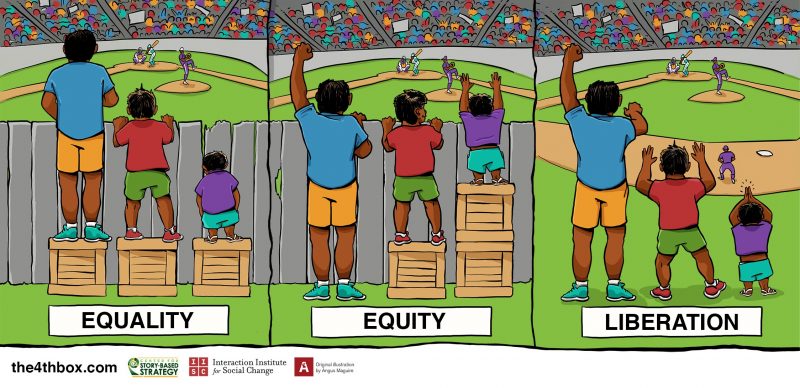
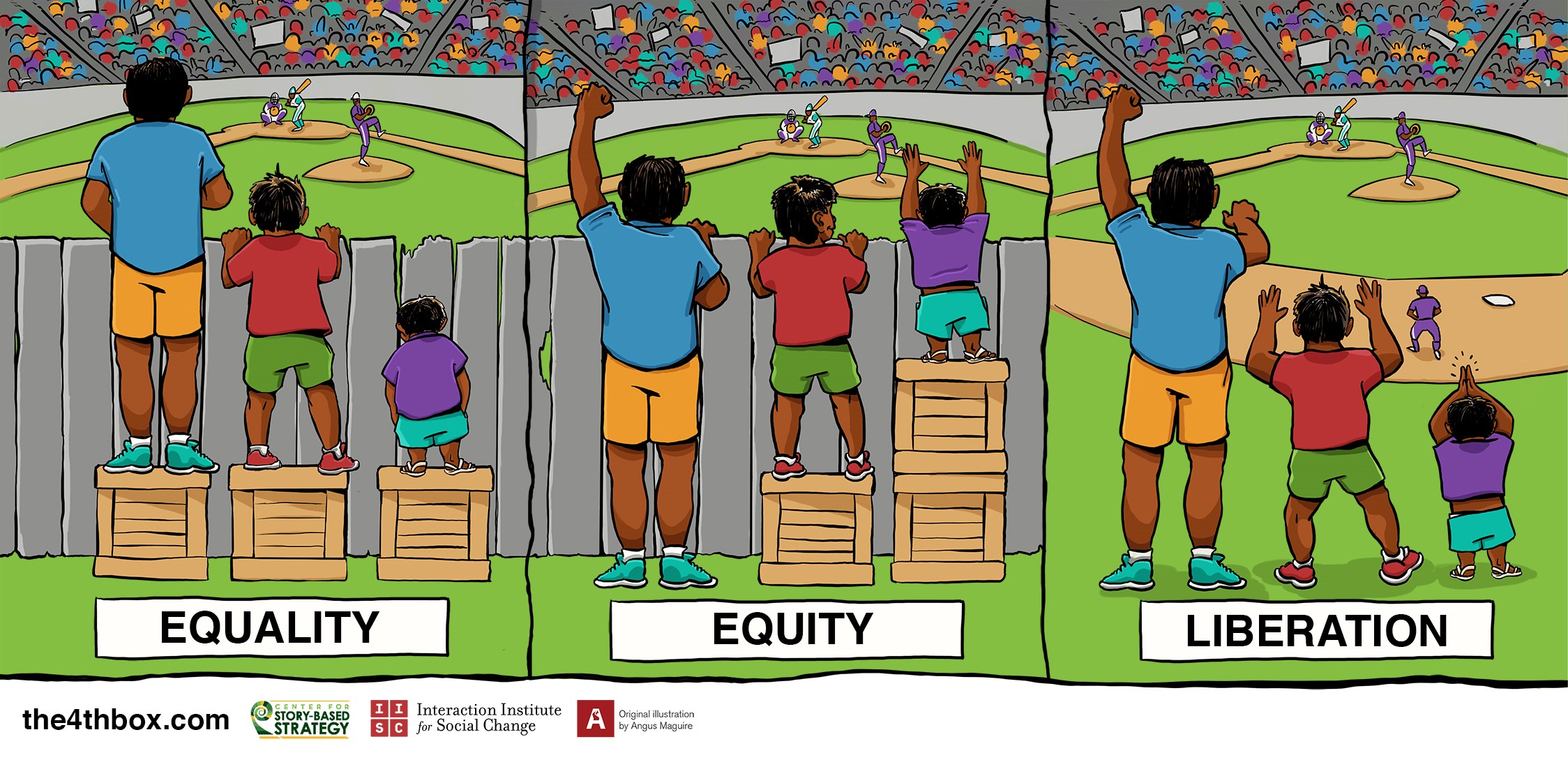
Image result for equality equity liberation image


This is the power of visible learning, this is the liberation we want for our learners. This is what happens when learning focuses on real world situations, and is shared with an authentic audience.


Saturday, 4 May 2019

Doing what you couldn't do before

There are a lot of really special things about what we do at Hornby High School, and across the Uru Mānuka cluster. The Manaiakalani Programme is one of them, but what is it? Is it a laptop/device programme?

Well no, and yes. It is an approach to causing learning that uses the empowering pedagogy that we call 'Learn Create Share'. This doesn't represent some sort of linear approach to learning. That is, these don't occur 'in order', but are in fact likely to occur in what at times can be an almost chaotic way. Some students may start by creating something. From that they may learn, and then share. Others, starting from Create may share and from that sharing to an authentic audience then learn something, and so on.

So where does the digital side of this all come in? Why do we keep talking about Chromebooks?

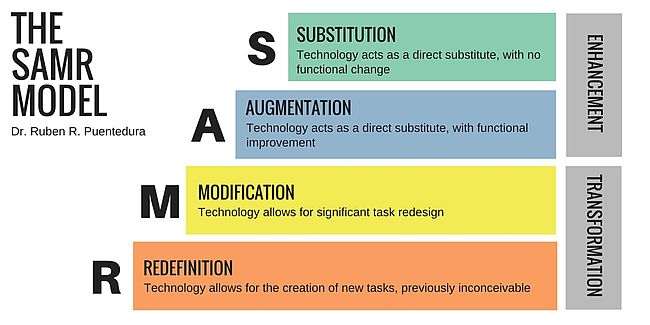
The technology is in fact only likely to have an impact if we use it to do stuff that we couldn't have done any other way. If we just do what we did before, then all we have is a $540 dollar pencil (to paraphrase the words of globally recognised educator Allan November).

Some technology advocates like to talk about the SAMR model for the use of technology in learning.

That looks like this:


The SAMR Model.jpg

Now I'm not a big fan of the model as some sort of definitive statement of the change that surrounds the use of technology. Here's one of the critiques (amongst many).

However, when all said and done, what it does establish is the need to move to that place where we are doing stuff with digital technology that we couldn't do without that technology, what in the SAMR model is termed 'Redefinition'.

So what is it that we might do that we might be doing that we couldn't otherwise be doing? The short answer is 'how long is a piece of string'? That is, 'crikey, where do I start'?

Perhaps the most basic is the ability to genuinely publish to an authentic audience. Take my earlier post about Mr Rees, and his class's work with sundials. That collaboration could only have occurred with digital technology. Similarly with other individuals: the student who had an author comment on a book review of her work, the student who had contact with a notable political figure. The list goes on.

We all have access to the rapidly growing suite of creative tools to devise or create new products, ideas, and learning. In this regard, Google has been 'stellar' in the development of new tools that form a part of what we call the G Suite.

Then there is the rather interesting impact of the technology on student writing. Research on the impact of digital tools on writing has been growing over the past decade and a half. This piece of research was some of the first.

"The Effect of  Computers on Student Writing:-A Meta-Analysis of.Studies from 1992 to 2002"
Source: chrome-extension://oemmndcbldboiebfnladdacbdfmadadm/https://ejournals.bc.edu/index.php/jtla/article/download/1661/1503

What we know is that when asked to write electronically, students write more, and they wrote better. This reflects improved critical thinking. This explains why we see these results in our writing over the past three years:


Of special note here is the impact on Māori writing.. our Māori students are at the top, true liberation. Again I have to sue this wonderful image:


Image result for equality equity liberation

This is all stuff we could never do with just pencil and paper alone.

If we go back to our Learn Create Share pedagogy, much of this is seen though our students' blogging. Student blogs are by default publicly visible. Making learning visible, both through student blogs, and through the web sites that staff maintain that show the learning and the work they are completing, is essential to all of this work. This is important, as this means that students are publicising to an authentic audience, a real audience. It also means that they can 'rewind' that learning, (go over it again in their own time, at their own pace), and also that they can engage in something that Dr Eric Mazur of Harvard University calls flipped learning. This makes the learning very real. And if you really want to support your child's learning, read their blogs, make a comment on their work. This is an exceptionally powerful thing to do. If you are not sure how, give us a call. We have a great support team who will be available throughout term 2 .. just ask.

And so yet again we thank all Whānau who have chosen to make this really important investment in the learning of your tamariki.  It is also a good time to once more urge all whānau who have yet to make this investment to do so. After your time, this is the next best investment you can make in your children's learning and success.

What is the point of our use of Chromebooks? It is to enable learners and staff to do things they couldn't otherwise do, not the least of which is your ability as whānau to see your child's work any time any where, and to make comment and give feedback.. any time, any where.

There is nothing more important nor more powerful.


Saturday, 9 February 2019

True Liberation for our learners: exciting new data on achievement

What if we could figure out how to take learners who were well behind their peers nationally, and accelerate their learning to the point that they exceeded the statistical average of achievement growth for all learners? What if we could figure out how to reduce the inequities that run through our society such that all learners were able to learn and be the best they could be, regardless of gender or ethnicity?

Would we be interested? Would we want to embrace those processes?

Well, within our Uru Mānuka cluster (and in fact all Manaiakalani clusters) we know how, and here is some of the latest evidence.

Hornby High School and the Uru Mānuka cluster have been a part of the Manaiakalani Outreach since 2015. The efficacy, the impact, of the pedagogy and the digital devices is tracked carefully and independently by Woolf Fisher Research Centre (Auckland University) to verify the truthfulness of claims as to its effectiveness. WFRC uses the nationally determined and normed assessment tools e-asTTle, and PATs, to measure progress in writing, reading, and numeracy.

This is no laboratory controlled experiment, ethically we cannot deliberately have some children in our kura experience the impact of 'Learn Create Share' and digital devices, and some not. We can however measure the impact of the work that we do against children nationally, the vast majority of whom do not experience the pedagogy.

So last week we had our first sight of three years worth of achievement data tracking learners at Horny High School, and the Uru Mānuka cluster.

The improvements in writing are frankly nothing short of spectacular, gobsmacking, exciting .. choose your own superlative.

The following graphs track achievement as measured at the beginning and the end of the year in writing, using the e-asTTle writing tools. They track the same students and their achievement across three years, beginning of year 2016 to end of year 2018. The gray line on each graph is the progress measured for all students across the entire country of that age. Acceleration . we define as progress at a rate faster than that national progress.

The best way to look at these graphs is to look at where they begin at the very start (Fenruary 2016) in comparison with the grey line, and where they have ended up at the end of 2018.

What do you notice?

Hornby High School writing progress Years 7 - 10 by gender
All of the groups have shifted form well below the national grey line,. to above the grey line. That is acceleration. In this first graph you will see that both groups of students, boys and girls,  have made that shift. The dips in achievement you see are what we term the 'summer slump', the learnign that is lost over the summer break. As an aside, it is with this in mind that Manaiakalani set up and runs the Summer Learning Journey. More about that again later this year.

But it is even more powerful that that. The following graph shows shifts in achievement by ethnicity.

Hornby High School writing progress by ethnicity

Regardless of ethnicity, all students have made massively powerful shifts in their writing achievement. This is truly culturally responsive stuff, it overrides ethnicity. It enables all learners to accelerate their learning.

And this is not restricted to Hornby High School. Here is that same data across our whole cluster.

Uru Mānuka cluster writing progress by gender
I began this blog post by asking this question: "What if we could figure out how to take learners who were well behind their peers nationally, and accelerate their learning to the point that they exceeded the statistical average of achievement growth for all learners?"

WE KNOW!! We KNOW how to do this. We do this by using the 'Learn Create Share' pedagogy of Manaiakalani, and by magnifying the impact of that pedagogy by using digital devices (Chromebooks).

This is LIFE CHANGING stuff. This is TRANSFORMATIVE stuff, transforming lives before our very eyes.

Now in all honesty our own progress in reading and mathematics isn't as spectacular. We knew that and so in 2018 we experimented with several new strategies that showed great promise, and so we will be rolling these strategies out in 2019, sitting alongside and supporting the work that takes place under the Manaiakalani banner.

I am brought back to the wonderful cartoon used by Mr Pat Sneddon:


Image result for snedon cartoon equity liberation

What we see unfolding before our eyes is true liberation.

The critical success factors are:

  1. Teaching staff who are well versed in and committed to 'Learn Create Share', and the use of digital devices, and
  2. All students with access to Chromebooks
This week we released details of the new finance and purchase options that have now become available to whānau as a result of the work of our wonderful Uru Mānuka Education Trust, connecting with the Manaiakalani Education Trust in Auckland. 

We KNOW how to accelerate learning. Sadly as kura we are not resourced sufficiently well to provide Chromebooks for all learners. However, we are able to address the financial obstacle that stands in the way of so many. We KNOW how to do this. Providing a Chromebook for your child is, after your love and time, the next best investment you can make in your child's future. Join with us. Together we are unstoppable.

Ngā mihi nui
Robin Sutton
Tumuaki