Showing posts with label connected curriculum. Show all posts

Saturday, 16 September 2023

Ako Ōtautahi - Learning City Christchurch: "... cooperation is the law of civilization.”

“Competition is the law of the jungle, but cooperation is the law of civilization.”

So apparently said Peter Kropotkin, Russian anarchist and geographer who lived from 1842 to 1921.


Perhaps a better way to express this might be with this whakataukī:

Nāu te rourou, nāku te rourou, ka ora ai te iwi
With your food basket and my food basket the people will thrive

While cooperation ("the action or process of working together to the same end") and collaboration ("the action of working with someone to produce something")  are subtly different things, it seems reasonable to conflate them to some degree when thinking the education landscape. Learning in formal institutions has in some places at some times evolved towards cooperation and collaboration. Most significantly, I've spoken to a number of tertiary academics who all say that their work is most often the result of collaboration, rarely is it the result of 'solo effort'. In our system however we seem to be deep into the paradigm that learning is an individualistic thing, one where we are assessed on our solo efforts, and our specific knowledge at a specific point in time. Our system goes through a fascinating transformation from cooperation and collaboration in the primary sector, to this individualistic approach at secondary and early tertiary, and then shifts back to the cooperative and collaborative approach at the more advanced tertiary level. There is no doubt that each of us benefits form direct instruction, and individual attention. There are many skills we need to acquire, and much knowledge that we need. 'Knowing stuff' is important, despite claims that this is the 'Google-able' age where with so much knowledge at our fingertips, we don't need to remember anything anymore.

I do believe that there is a consensus amongst educators that effective learning generally occurs when we are able to make connections with existing knowledge, and when we see that learning as relevant to the real world around us.

Engineering this in the secondary school environment is often seen as risky, fraught, and difficult to do, yet it's not only the key to deep learning, but also what we all most naturally do. It is made difficult because of the silo'd nature of knowledge and delivery in schools, and the silos in teaching/learning at tertiary level. The silo'd approach seems to be justified by the need to promote deep deep knowledge, and the view that learning is primarily basically content delivery. 

This seems to fit in with the western tradition, possibly driven by the eighteenth century writings of  Adam Smith on the benefits of specialisation. We have applied a market-led philosophy to learning.

Now don't get me wrong, I am very keen for my doctor, my dentist, that woman that designs the new road bridge, to have deep deep knowledge of their subject area. This sort of specialisation is great when we get to the sharp end of the training of doctors and engineers.

But this system hasn't always worked for some people. I suggest that it hasn't worked well for most. It was fine in our industrial era society when we needed to identify those who might be suitable for management, so that we could separate them out from the 'drones', the workers, who simply needed to turn up to work every day and undertake the same repetitive tasks hour after mindless hour.

Our new 'post modern' era however doesn't need this so much anymore. We need a society that maximises the benefits to society of all human potential. We need to harness the creative and critical capacities of everyone. Not only does this have economic benefit for us all, but it also offers quality of life benefits for everyone.

Why critical and creative thinking? Our world is besieged by problems of a type and scale that we have not faced before. There's an old wisdom that says that you can't solve the problems of today with the thinking that created them in the first place.

We are however locked into this paradigm of learning, believing it is best.  What if it's not? What if we already knew of a better way? What if we understood that formal school learning is only one small part of our learning journey? What if we valued people sufficiently well that we sought to allow them to maximise their own life potential, no matter what that looked like? What of we believed that we could do better?

Maya Angelou is quoted as saying “Do the best you can until you know better. Then, when you know better, do better.” 


What if we already know better? What if we understood that learning happens everywhere, all the time? What if we understood that the co-existence of multiple generations in our society presents us with an opportunity to accelerate learning by recognising the intergenerational nature of learning, in exactly the same way the Māori recognised this with their wānanga which were an essential part of their society pre-colonisation?

In their broadest sense, learning systems are a collaborative endeavour, not a competitive one, So ...

  • What if we added to the school system with a coherent, connected, holistic, system of 'just in time', 'any where, any time' learning that harnessed the power of the multiple generations that co-exist in society? 
  • What would happen if we made the multiple learning opportunities more visible to all, if we made sure that the connections between the learning opportunities and those who create them led to the widening of the scope, the availability of and access to the learning opportunities that are available to us? 
  • What if we had a society in which, as a member, you had no doubt whatsoever that learning is 'the thing', that learning opportunities are everywhere, that your life can be enhanced by learning in whatever way, shape, form, or context that might be?
  • What of we finally really valued indigenous knowledge, where indigenous knowledge took its rightful place alongside our western traditions, where we got the best of both worlds rather than writing off indigenous knowledge as superstition?

I almost hesitate to use the word, but is this what true 'democratisation' of education might look like?

I have tried to capture my understanding of the visionary work of Dr Cheryl Doig who conceived of Ako Ōtautahi - Learning City Christchurch (AO-LCC). Cheryl describes AO-LCC as 'a bloody good idea', and as I talk to her over a long black (the first of the day for both of us) I see someone committed to trying to re-imagine the future in a way that addresses inequity. She clearly has a heart for those who have not been able to speak for themselves. Cheryl describes herself as a 'futurist', and refers me to an article which she says captures much of what she believes and feels. The piece is written by Frank Spencer (no, not that Frank Spencer) who "founded Kedge — a global foresight, innovation, and strategic design firm which pioneered". The article can be found in full here. In the article Spencer says:

“The Official Future” tells us to “think exponentially, act incrementally,” beckoning us to utilize foresight in service of the ever-expanding present systems of quantifying, micro-analyzing, extracting, consuming, and automating. This way of futuring is at the heart of Epistemic Uncertainty. “The Emergent Future” instead challenges us to “think transformationally, act transitionally” to manifest futures-empowered landscapes of care, empathy, reconciliation, and love in our organizations, governments, and social entities, allowing us to align with much healthier expressions of our biological, psychological, and sacred experiences. Of course, this is not in line with the value proposition of our present systems, and most would deem such futures improbable at best and frivolous at worst. Nevertheless, challenges to long-held assumptions take place when individuals dive deeper and deeper into anticipatory imagination and provocation, and this opens the door to transformative realities that profoundly change the perspective of the foresight practitioner. Consequently, the possibility of these new worlds become an internal experience that can no longer be ignored. This is the future thinker’s dilemma.

The phrase “think transformationally, act transitionally” echoes again and again and again in Cheryl's words, and in my mind as I walk away from our meeting, and as I sit and try to make sense of this. So too in my mind is her description of AO-LCC's work in terms of what she calls 'social capital theory'. She tells me that there are three main components to this:

  • Bonding - building connections within communities
  • Bridging - building connections between communities, and
  • Lifting - working with those who have the influence, to make a difference

Here is a link to an additional piece on the difference between bonding and bridging social capital, and some additional in depth reading on the wider field of social capital theory.  I love this stuff, it's big, bold, 'ballsy' (what Ewan MacIntosh describes in the context of BHAGs - Big Hairy Audacious Goals), and it looks to ways and means of changing the system. I find the lyrics to Leonard Cohen's song 'First we take Manhattan' running through my mind.


Having read all of this so far you might still feel obliged to ask why. Why do we need to do this? My career in education has shown me again and again and again how much human potential goes unrealised, wasted, thrown on the scrap people along with the people within whom it resides.  Often is fails to thrive because of social issues, substance abuse, social disconnection, the 'poverty trap', this is a complex issue which there is no one cause (just as there is no one answer, no silver bullet).

And there's the economic argument too. Failure to optimise participation in education (not just formal education) regardless of age, stage, or format, increases the gap between rich and poor. If you are rich you might well say you don't care. However OECD economic research suggests that the wider that gap, the poorer performing is the economy. If we allow the gap between rich and poor to widen too much, the wealth of the rich suffers as does the 'wealth' of the poor. This report from the OECD spells it out. Not all of the econometric evidence is that conclusive (IMF research offers other perspectives), but this seems to be enough to 'hang my hat on'.

So, "Ako Ōtautahi - Learning City Christchurch" -  connector, visionary, revolutionary, hopefully a change agent that brings together  the influencers in our city to highlight the learning opportunities that are available, and to enhance those opportunities through cooperation and collaboration, because after all - the whole is more than the sum of the parts. If we can do this, how much richer would our world be, how much richer if we saw the results of that lost potential, that creativity, harnessed in a way that enriched not only the lives of those involved but those around them? All it requires is that we shine the spotlight on the benefits of cooperation and collaboration, that we understand that there is a balance between acting in our individual interest, and acting in the collective interest, that we support and sustain each other.  There is a place for both, and as I walk away from my meeting with Cheryl I can't help but go back to my own philosophical position in which in our current 21st century society we have swayed way too far towards a belief in the benefits of self self self and lost sight of the fact that human success is a collective endeavour.

As Kropotkin said: “Competition is the law of the jungle, but cooperation is the law of civilization.”

And the final word must be this whakataukī:

Ehara taku toa i te toa takitahi, engari kē he toa takitini

My success should not be bestowed onto me alone, it was not individual

success but the success of a collective


Sunday, 5 March 2023

Slow it down, and pay attention

 I love wandering through our learning spaces. I love watching good teachers at work. I love watching engaged students. I love seeing creativity in action. Today I wandered into our creative arts spaces, places that feed my educator's soul (they all do, actually!!). I came across a session with Whāea Rowena in which the students were being challenged to draw from nature, specifically creating botanical drawings.


I was aware from some conversations we'd had last year that Whāea Rowena did this, but all the same seeing it in action drew a gasp. I had to race along to the sciences area right next door to see if there was a scientist free and able to come see.. there wasn't, they were all hard at work with groups of their own

So why the gasp? Why the excitement? 

First, I think what I was seeing was an outstanding example of cross curriculum work, albeit with a visual arts 'bent'. That in itself is awesome.

I also reckon I was seeing several essential components of creativity: slowing ourselves down, and taking time to observe the world around us. In one of my other careers I worked in a regional museum, and there I met with various natural scientists. One was studying the Cadis fly. He would go out at night and set light traps in which he would catch things that flew, and the next day he would analyse what was in the traps. He would then proceed to draw by hand the specimens he had trapped. He was credited with discovering at least one previously unknown species (is that the correct term?) of Cadis fly. Taking the time to draw by hand requires careful observation, and his drawings were meticulous in their attention to detail, and artful at the same time.

This also put me in mind of the work of Elwyn Richardson. Richardson would often take students outside and have them observe the natural world, and then engage with that in various creative media - drawing, lino cuts, sculpture etc. These are some examples:

'In the early world', Elwyn Richardson', page 238, NZCER

'In the early world', Elwyn Richardson', page 239, NZCER

'Elwyn Richardson and the early world of creative education in New Zealand', Margaret MacDonald, NZCER

I talked afterwards with Whāea Rowena. This class work practises a number of those skills so necessary for creativity, but those of most significance in my mind (as a non arts educator) are the two already mentioned: taking the time to slow down, and taking the time to observe the world around us and to wonder. 

It put me in mind of the work of Professor Peter O'Connor and his colleagues on creativity in schools. In particular it put me in mind of this beautiful book (which frankly I can't recommend enough!!):


And all of this put me in mind of a poem I wrote last year about creativity:


And again I have to say thank you to NZCER, and to author and research Margaret MacDonald, for making both Elwyn Richardson's original book, and Margaret's wonderful analysis, available to us. Their support has meant a lot for our team and their mahi.

I am pleased to say that Whāea Rowena's lesson is not unique in our kura. Our children are blessed when they are able to participate in experiences like these. They are all a part of our education journey as a kura, a journey guided by our vision 'he puna auaha, a centre of creative excellence', a journey facilitated by our underlying pedagogy 'learn create share', one of many of the taonga that we receive as part of The Manaiakalani Programme.


Wednesday, 27 July 2022

Creative connected curriculum and culture

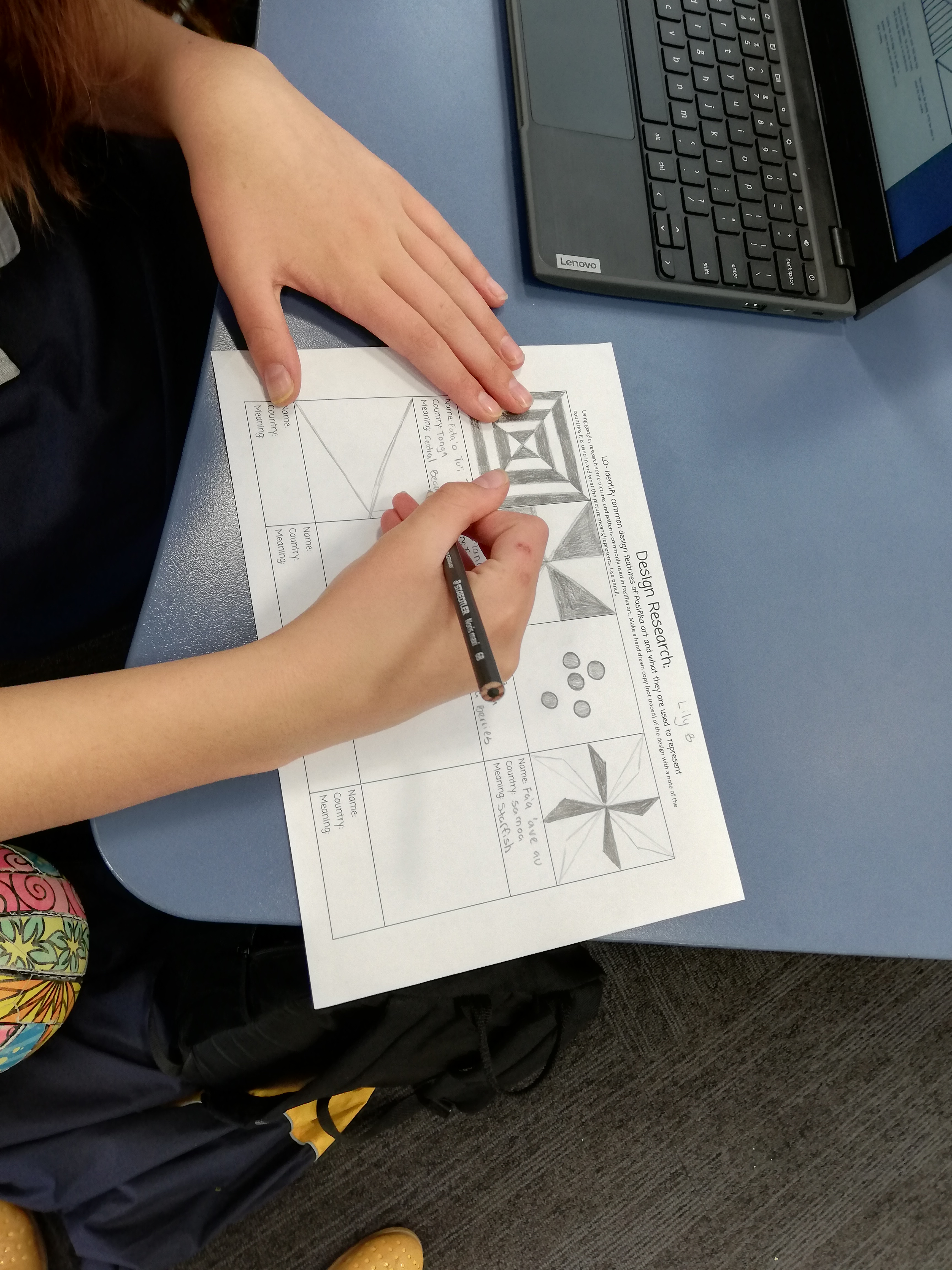
Towards the end of 2021 a group of Year 9 students worked on a Pasifika Art unit from our Creative Connected Curriculum. The 28 students in this group researched patterns and designs from Pasifika cultures before designing one of their own and painting it onto our class tapa cloth.

We were recently able to have the work 'framed' and put on display in Te Pae Rewa. It's a beautiful piece of work reflecting culture and belonging, and 'creative excellence', and an outstanding example of 'Create' from our 'Learn Create Share' pedagogy, made so delightfully explicit with our Manaiakalani kaupapa.

This is a bit of a short photo study showing some of the work that went into the development of the imagery, and the final product.


The completed work, with many of the students who contributed to its completion.

The completed work on display in Te Pae Rewa


Thursday, 11 November 2021

Deep knowledge, collaboration, and creativity

In conversation with a long time friend, we turned to education. To put some perspective on this, he is a recently retired university professor, currently holding the title 'Emeritus Professor,' someone who began life as a secondary teacher before progressing into doctoral study. He has lots of experience at the 'pointy end' of our sector in both secondary and tertiary teaching, study, and research. He is also NOT a 'boring old **', NOT one of those reactionary 'things were better in my day' people - refreshing, to say the least.

The kōrero got around to the issue of research, and how high level research, at doctoral level and beyond especially, often involves multiple perspectives that are brought to bear through collaboration, and how this is often a case of making connections between existing ideas, of creating new understanding by synthesising what we already know. He had a wonderful example of how a fresh water ecologist and a geneticist had combined their expertise to develop a method of DNA testing of fresh water stream water using DNA testing to build a picture of the biodiversity of life in fresh water. All of this requires what I was initially going to describe as 'expert subject knowledge', but I think I actually mean 'deep subject knowledge'. Our world seems to me to be filled with too may self proclaimed 'experts' who in fact operate from a very shallow knowledge base.

As he described some of his work, my mind fired off in all sorts of directions. The first is the importance of subject knowledge. One of the criticisms I still hear of NCEA is that it not longer values content knowledge (and by default that we as a teaching profession no longer value knowledge). For the record let me restate my position: NCEA focuses on thinking. However you can't think in a vacuum. So to teach deeper thinking you have to build knowledge. I suggest that the deeper the knowledge you can develop, the deeper the thinking you can attempt. However for that to happen teachers have to be 'deliberate and intentional' in teaching for both the deeper knowledge AND the deeper thinking. This is one of the reasons that in our Manaiakalani clusters across Aotearoa we share our mahi around the development of critical literacy skills, regardless of the age and stage of our learners.

If we refer back to Professor Peter O'Connor's Creative Schools Index, one of the eleven dimensions of the index is "Discipline knowledge: To develop expertise in a domain of knowledge that involves specialised content and process understandings." I've written about this idea before here.

But another idea struck me: how could we better leverage off the differing levels of 'deeper knowledge' that our kaiako, and our students, each have in order to build creativity, or 'creative capacity', in our learners? Here are some of my 'wonderings' (I'm still trying to decide if I love or hate that word!!) on the question.

Perhaps first and foremost this is a matter of leadership. By that I refer to leadership at all levels in our kura: the leadership of the Principal, the leadership of the teachers, and the leadership of our learners, our akonga. So, what would a Principal's leadership look like if that leadership were seeking to build collaboration amongst teachers, collaboration that might build new understandings of how to cause learning, and how to build new knowledge? What would a teacher's leadership look like as they sought to collaborate with others, and to build collaboration amongst and between akonga? And what would we be encouraging as attributes and habits amongst our akonga if we are trying to help them to understand the benefits, the power, of collaboration in their lives? 

Perhaps passion projects, project based learning, genius hour, call it what you will, is an important component, particularly where that work is undertaken in groups. Perhaps our Business and Enterprise kete is a great example because of requires students to collaborate in groups. Equally, participation in drama, in sports teams, or kapahaka, are important  and powerful ways to build the habits, the attributes, that akonga need to be able to collaborate later in their lives.

I always recall comments from Professor Eric Mazur of Harvard University in a conference address where he said (and I am paraphrasing here) that in his career to that point he had authored 84 academic papers, and not a single one of them was his work alone. Every one of them was a collaboration.

As a specific thought, it does seem to me that at the senior leadership level in secondary kura, encouraging and supporting thinking that connects traditional subject silos would do that. Encouraging new senior courses that leverage off the amazing flexibility of NCEA, where we recombine standards to create new cross-disciplinary courses, might also be an example of leadership. That thought in itself I hope will help inform an understanding of our own Hornby High School journey as we build cross curriculum courses for our learners.

And one final point: this all requires deep subject knowledge. Therefore we will still require subject specialists. We will still require the mathematics teachers, the biology teachers, the English teachers, the Te Reo teachers. It's just that their expertise needs to be layered across our curriculum and our mahi in a way that is different to what we have done for the last 150 years.

Friday, 29 October 2021

Creativity abounds.. more than just a cliche

Presumably in the beginning a cliche wasn't a cliche, but an observation of something that appeared to be true. It became a cliche because it seemed to be so true that people used it often, often as in a lot, and so it became over used, it became a cliche. Social media, and its tendency to cut every thought down to as few words as possible, has meant that a lot of our lives seems to be described in a series of cliches.

So something like 'If you do what you've always done, you'll get what you've always got', was once someone's observation of what they thought they were seeing often  in the world around them., and so thought this was a wisdom about their world. I have come to the point where there is also another way of saying this: "If you think what you've always thought, you'll do what you've always done, and you'll get what you've always got". And in our mahi to improve learning and educational outcomes for learners, this has never been truer.

In this case however there is good research data to back this up. In a Manaiakalani wānanga yesterday I was reminded (as I often am) of Hattie's meta analyses that show (amongst a huge number of profound things) that teacher expectations have a very large effect size in terms of their impact on learners.

"With an average effect size of 0.4, Hattie finds the effect size of teacher estimates of achievement is 1.62 and the effect size of collective teacher efficacy is 1.57."
Reference: https://www.k12dive.com/news/teacher-expectations-top-list-of-effects-on-student-achievement/422029/

So its effect size is even greater than that of collective teacher efficacy, which I've written about before. So it should be no surprise that when you expect creativity, that's what you get. That ought to be exactly what you expect. That ought to be exactly what you get when a kura increasingly immerses itself in the Manaiakalani pedagogy 'Learn Create Share'.

And.. lo and behold (cue dramatic music, here!!), that seems to be what I am seeing at Hornby High School.  Over this term, our Year 10 and 11 students, as a part of their wānanga time, have been engaged in personalised passion projects (PPPs). Our aim here has been to improve student engagement with their learning, to harness their inner creativity, whatever that looks like. It's time for that reminder that we don't mean creativity in only the creative arts sense (although we definitely mean that too), but creativity across all learning areas for all learners. The PPP approach in wānanga has been an illustration of us not just expecting creativity, but also putting in place those systems, structures, and routines, that are necessary to support it. It offers student agency, it offers the possibility of doing just what Yong Zhao says we should.

He suggests that at the moment we do this:


Whereas we should be doing this:

This is a notion that sits at the centre of our Kāhui Ako plan and achievement challenges.

The net result? My feeling is that creativity is flourishing. I have dipped in to Year 10 and 11 blogs and gained an interesting insight into that flourishing creativity.

Here for example is the work of Lauren and Louise who set out to create a graphic book based around a story that Lauren had written.

Or here, the work of Johanna and Genica, who crated bubble tea, and designed a cafe in Minecraft.

There's Mya who designed and created a quilted blanket in the textiles room.

Or Tamsyn who looked at drawing as a means to improving wellbeing.

There are so many more, and my sample is purely random. I just jumped around on our list and 'browsed'.

And then outside of the PPPs, Nadia of Year 12 was chosen to be a "Member of the Shakespeare Globe Centre New Zealand Young Shakespeare Company 2022 (SGCNZ YSC 2022)", for which she will travel to London.


Creativity everywhere. Is this happening by pure chance? I suspect not. It happens because we have clarity around our pedagogy, a pedagogy that places creativity at its centre. It happens when we place creativity at the centre of much of teachers' thinking, and I hope at the centre of their expectations.

You get what you expect, you see what you are looking for.. the cliches go on, but you get the meaning.


Thursday, 3 June 2021

We teach children, not subjects

It was one of those 'OMG' moments. You know the ones. You see something and think 'that has to be the coolest thing I have seen' (using whatever language your generation uses to express utter delight).

I was doing a walkthrough of our learning spaces (as I often do - it's my  reconnection with sanity when the admin ** gets a bit tedious). I walked into a Year 7-9 wānanga session being run by one of our team of secondary trained English teachers (shout out to you, Mr Taylor).

Wānanga time places learners with a 'learning advisor' for 7 hours a week in Years 7-9. In that time they will cover a wide range of activity, from that simple but vital relationship building, to cybersmart, to community impact and passion projects, to literacy and numeracy work, and a whole lot more on top of that. The teacher was standing next to a mobile whiteboard, and he had drawn the numbers 1 and 2 on the whiteboard in large numerals, with a space between them.  Had he taken a leaf out of the book of Dr Seuss?


I watched as he asked this simple question: "how many numbers are there between 1 and 2?" Students came to the front and wrote numbers on the whiteboard, or offered their best guesses about how many numbers there are between 1 and 2. There was quite a degree of curiosity amongst the students.


I was frankly gobsmacked, excited, overwhelmed.. why?

Here was a humanities teacher teaching maths. There was, I thought, a clear understanding from the teacher that he was teaching students, not a subject. His connection with the students was deep, positive.. it was profound.

I talked with the teacher the next day, and he commented that the discussion then went on to what we mean by infinity. (Here is some information in the concept of infinity, and here is some information on this idea that regardless of how close two points re on a number line, there will always be a point in between them) For example the students asked if there were different sizes of infinity. This teacher loves philosophy, and there he was engaging 11-13 year olds in deep philosophy. In an email to me Luke Taylor  said "I'm loving the opportunity to weave philosophy through Wānanga."

Students were engaged, interested, curious, happy to have a go, to try, and come up with an answer. They did not have the usual reluctance to offer ideas, they were 'doing maths'. I'm not sure that they knew that they were doing maths, and that in itself left me wondering if therefore they had lost the typical 'fixed mindset ' that we so often see towards mathematics. You know the one .. 'I can't do maths', 'I was never any good at maths'. Yet actually we can all do maths, we all have the necessary mental ability to do maths. It's just that we tell ourselves that we can't. I know from personal experience that this is true. It took one good teacher to shift me from abject failure in the old School Certificate maths early in the year, to a stellar mark at the end of the year. We can ALL DO maths. That's what I saw in this wānanga class.

Here's another observation: the teacher was de-silo'ing secondary education. He was crossing those traditional 19th century artificial subject boundaries. This makes learning real for learners. I hasten to add that he was following the guidance of our HOD Maths, a maths specialist , who has set up a wodmnerful Google Site to support teachers and learner. This is a basic component of our Manaiakalani work, in which all learning is made visible. Maybe that is a future evolution for the traditional Head of Department, maybe that role might morph into a learning advisor for non specialist teachers? Maybe the HOD will be the one to ensure the integrity of traditional subjects? Mind you, that is a very euro-centric view of learning. maybe schools will structure themselves in a way that respects and values traditional knowledge accessed in traditional ways? After all, that traditional knowledge saw the earliest Polynesian navigators crossing the largest ocean on the planet.

And I saw all of this in part because (I reckon) the teacher realised that he wasn't teaching a subject, he was teaching children/pupils/students (choose your own word, there).

This is another example of 'creative excellence' in action, creative excellence in the ways in which we are evolving learning to be more fit for purpose for our young people.

Ka mau te wehi Mr Taylor!!!


Wednesday, 7 October 2020

Creativity, cultural inclusion, and Hornby High School

With a little more time on my hands I've been thinking. I do that. Actually I've been reading and thinking, First on the reading list was a re-read of Sir Ken Robinson's book 'Creative Schools'. Several years ago I gifted a copy to every staff member, and try to continue this tradition, although supplies ran a little short this year so I have a few copies to catch up on. But the book captures a lot of what I think is important to schools. 


Before I come to my main observation, allow me to list some readily apparent points that come from Sir Ken's writing:

  • Creativity comes directly from our individual cultures, so it is essential that every one of us is able to connect with our own culture and heritage
  • Personalisation is essential to creativity. That is, learners need to be able to find their 'element' (Sir Ken's term for that thing which excites us more than anything else)
  • Relationships are absolutely essential to this personalisation.

Sir Ken defines creativity as ".. the process of having original ideas that have value." (Robinson, page 118). He goes on to say 'There are two other concepts to keep in mind: imagination and innovation. Imagination id the root of creativity. It is the ability to bring to ind things that aren't present to our senses. Creativity is putting your imagination to work. It is applied imagination. Innovation is putting new ideas into practice." (Robinson Page 118). He goes on to attack the myth that only some of us are creative, and comments that ".. Creativity is possible in all areas of human life, in science, the arts, mathematics, technology, cuisine, teaching, politics, business, you name it." (Robinson, Page 119).

The final piece of Sir Ken wisdom I;'d like to bring to this post is this. He says "Creativity is about fresh thinking. It doesn't have to be new to the whole of humanity - although that's always a bonus - but certainly to the person whose work it is" (Robinson, Page 119)

I now want to tie this in to our Manaiakalani pedagogy 'Learn Create Share'. 

Here's how we define "Create|Hanga" within our Manaiakalani context: “Combine existing knowledge with original ideas in new and imaginative ways to create a new outcome.”


(Source: Staff presentation , Kelsey Morgan, 2020)

In my opinion the important synthesis of these ideas is this: when a learner brings together the ideas that she has come to understand, and develops a new insight into a specific topic, this is creativity. From my own subject discipline, if a learner brings together concepts of supply and demand, to arrive at the notion of the market, and its role in setting pieces and allocating resources, this is creativity. As Sir Ken observes, this is not an idea new to humanity, but it is new to the learner. Alternatively, if a learner studies a dramatic role, and then performs it with his own characterisation, that is creativity, even of the characterisation simply mimics that of another.  Or if a learner suddenly understands the power of bisecting angles to slip through the defensive line of the opposing league or rugby team, this is creativity.

Creativity may well be seen directly in the 'creative arts (painting, music, drama, dance) but it can also be seen regularly in all other areas of human endeavour and study.

A group of students planing, and initiating, a community impact project that has them go out and plant 200 trees in a wetland is creativity if it represents a shift in their understanding that allows them to understand the importance of those trees to the local environment.

Our Hornby High School experiences along the path of being 'a centre of creative excellence' encompass a broad spectrum of what might be termed creative activity and experience.

There is the aspect of 'creative teaching' Staff at Hornby High School are part the way along their own journey as we explore new and more effective ways of causing learning. A significant driver behind the changes that we have made is the desire, nay the absolute necessity, of increasing student engagement in their own learning. As Sir Ken says "The real driver of creativity is an appetite for discovery and a passion for the work itself." (Robinson, Page 120). We have so far restructured the school experiences of our Year 7-9 students, so that subjects are by and large not taught in isolation, but rather in a connected way. Our 'Hurumanu' are not yet perfect (and arguably never will be) but as we adapt and change we are modelling an essential ingredient of creativity, the willing ness to take risks, and to fail. We have already evolved our practice in this area in response to what has worked and what ha not. I continue to advocate for staff being prepared to take risks, and to fail. I continue to make the point that failure is more than OK, it is essential to everyone's learning.

We have carved time out of the week to build more meaningful relationships, relationships for learning, that will support student agency and efficacy. And we continue to work hard to build our cultural competence as a kura. "Cultural diversity is one of the glories of human existence." (Robinson, Page 49). All learners have a right to be themselves, to be able to express themselves as their own true authentic selves, at all times they are in our kura.

Then there is the quite different issue of teaching creativity. While on the surface this may have seemed to be the easiest of the two tasks, it is I suspect the more difficult. However when I see mathematics teachers encouraging students to have a go, focusing on method rather than the right or wrong answer, I know that even in what traditionally some might think as the most staid of disciplines we have the essential elements of creativity. After all the beauty and creativity implicit in mathematics is boundless.

Encouraging insight and imagination, encouraging risk taking and the willingness to put those new ideas out ther efor others to see, is essential to this work. As I write this I am sitting at a local suburban library where, right in front of me, are Year 3/4 students visualisations s of wintery trees. Look at this:


The sad thing is that we become less willing to do this as we grow older. There is a delightful story in one of the Sir Ken's TeD talks where he describes talking with a 5(?) year old who is intently drawing. He asks what she is drawing and she replies that she is drawing a picture of God. He responds that no one knows what God looks like, to which she says 'They will in a moment'. This unbounded willingness to take risks is something that we need to nurture and sustain as we grow.

My purpose in writing this is to try and give my colleagues the benefit of the brief time I have had to step back and look at what we are doing, what we are achieving. Are we 'a centre of creative excellence'? No. Are we on a journey that reflects pursuit of that as our vision? Yes, as we seek to try new things, as we seek to support our learners to take risks, as we undertake to be risk takers ourselves.

As I write this yet another report has been published criticising our schooling system, claiming that it has failed to improve results for learners in Aotearoa. In my opinion it reflects much more the degree to which the authors are out of touch with the new reality of the world around us in 2020, and the demands of that world as we embrace technologies that weren't even imagined beyond the minds of science fiction writers 20 years ago. That technology is rapidly replacing so many previously human tasks, in fact anything that is repetitive and at all predictable in our daily work. This is already accelerating in our current Covid world, as businesses are pushed ever faster to find new ways of doing things.

As the technology progresses we increasingly need to focus on those things that technology cannot replace, on those things that make us uniquely human, and it has been my contention for a number of years that one of those things is our creativity. Another of course is our ability to understand ourselves as human beings (to be introspective), and to empathise with each other. This requires a connection with who we are, what our origins are, our culture and our sense of belonging. These are the big jobs of our kura as we continue to forge ahead into this century.

The cultural component of this challenge is perhaps the most pertinent. The new report cites PISA data (something that I am frankly NOT enamoured with). My understanding of our PISA achievement data is that we are a population of two halves. Those of European origin in particular continue to perform as well as any students in the world. Our issue is our tail of under achievement, in which Māori and Pasifika learners are over represented. The challenge for us at both a systemic and a kura level is NOT the quality of the 'instruction' per se, it is a question of the cultural capability of our schools, one that I suggest goes back to our underlying structures. The current system does not work for all, it works for some. I would go as far as to express the opinion that it works for the privileged few. To persist with the system we have had, as the report writer might have us believe, is in my opinion little more than structural racism, as historical systems have continued to fail our Māori and Pasifka learners.'What's good for Māori is good for all'. 

This includes an acceptance and celebration of the 'Māori world view' in science and maths, in literature and performing arts. We would be conceited indeed if we denied the power and efficacy of Māori mathematics and astronomy for example when as a people our Polynesian forebears were navigating and voyaging across vast tracts of the Pacific Ocean in ways Europeans dared not across their own oceans and seas, and mostly at times often well before Europeans were prepared to try. As I quoted above - "Cultural diversity is one of the glories of human existence."

So, for my colleagues at Hornby High School.. ka mau te wehi, he waka eke noa. Our progress has been significant, and I thank you for and celebrate your work, and your willingness to imagine and try new things. 

As I often say, I am not interested in revolution for its own sake - revolutions all too often leave blood and bodies in the streets, I would much rather we take the path of evolution, as I am keen that we are all standing together along the way of this journey. One step at a time.

Ehara taku toa, he takitahi, he toa takitini (My success should not be bestowed onto me alone, as it was not individual success but success of a collective). 

WE are the collective.

Robin Sutton

Tumuaki


Bibliography

Robinson, Kenneth 'Creative Schools", Penguin Books, 2015

Thursday, 7 May 2020

Peering into a Post Covid world

Many kura, teachers, and leaders, are turning their attention to what our Post Covid school world might look like. That act of looking ahead is in itself a supremely human act because it is an act of hope, and faith, hope and faith that the future will be better, that we will come out the other side of this (and any) crisis, that we in fact have a future at all.

In thinking about that future I have on several occasions evolved and voiced some thinking around the structure and focus of 'education' (as opposed to learning), and it goes something like this.

In a child's early years much learning takes place via that child's interests, or passions. Children explore, they play, they experiment, and then as they progress through their Primary years they have increasing levels of skill attached to that, often using with Direct Instruction (which is not always from teachers, but often from whānau). Throughout this we are of course meant to be developing a series of important dispositions that we call the key competencies, things like thinking and self management.

When those students hit secondary school, it's as if we think that it's now time to get our 'big girls'/boys' pants on' and start some proper education. Students are expected to sit down, shut up, and listen to the teacher because the teacher knows everything. We think we are filling their heads with knowledge and skills, based very much on the 'just in case' view of learning. I may be doing us all a disservice, but it seems as if we think that this is the way universities work, after all students sit in lectures of 100-250 students, and a learned professor lectures at them for an hour, so that must be real learning. It's the way universities operate. It ignores the fact that while that may have been true decades ago, increasingly universities are shifting undergraduate practice towards more collaborative work and/or more project work. That is, the days of the lecture being the sole source of real learning are in fact coming to a close. What's more, increasingly universities (even pre Covid) have been operating online with recorded lectures that are rewindable.

And then those who a deemed able are allowed to enter what we call Postgraduate education where they do a combination of 'papers' (classes that very often involve collaborative work at the least) followed by a research project, a dissertation, a thesis. These projects are guided by a supervisor, and are often based on areas of interest to the student.

It's as if we have gone full circle, from passions at the beginning, back to passions at the end. Spot the odd one out .. secondary education. WHY do we think that suddenly learners have different motivations for their learning? Why do we think that adolescents are happier than any other group to sit down, shut up, do as you are told, and we will fill your head?

Now we should not underestimate the impact of adolescence and hormones, but the more I think about it the more I think that in itself it is a very compelling reason for doing things differently. Adolescent learners are more likely to be oppositional, more likely to question, simply because of the rewiring of their whole brain 'architecture' as mother nature does her neural pruning. Giving adolescents choice (called agency), giving them permission to chase their passions, would surely be a better way of doing this. Is it any wonder that we struggle with engagement?

If students are engaged with their passions, wouldn't this be a much better way in which to scaffold those dispositions that we want our young people to gain.  We want them to be self managing, we want them to learn the benefits of persistence, of being able to relate to others, to be able to think and communicate. Wouldn't that be much more likely to happen if students are following their passions? Wouldn't that be a more likely outcome if they have to wrk collaboratively? I know that it is when I am doing something I love that I am most likely to learn new skills.

I don't ever discount the value of direct teaching. I am a bit of a Hattie fan, and his work shows repeatedly that direct teaching has a very high effect size, it impacts very significantly on learning (any effect size above 0.4 means that the strategy is doing more than would be achieved if you did nothing)

Great Teachers = Great Schools. That's It. | Educational ...

That said, notice that even here is it not at the top of the list of most powerful teaching strategies.

Almost the only time I learn new stuff is when I need to do so. Aren't we guilty of a degree of conceit if we think that adolescents want to sit down in front of us and learn everything we want them to learn,  when WE decide they are to learn it? After all, as adults we typically don't.

So what am I suggesting? I am suggesting that we treat learning in the middle secondary years more like an undergraduate course, with a combination of direct teaching and collaborative project/passion based work. Learning would be partly face to face (after all, I think we have had our belief in the importance of relationships strongly reinforced), and partly distance.

In the senior secondary school, courses could look more like a post-graduate course: key subjects that are delivered often collaboratively, and a passion requiring a real output. Each student walks the journey with a dedicated supervisor walking alongside. Amongst other things, the supervisor might bring specialist subject knowledge to support the student's learning, and project. The supervisor would be there to work out what NCEA standards should be attached to the work of that student. The learning leads the assessment, rather than the assessment leading the learning. That sounds a lot more motivating to me. I think it also tells us that we have an even greater need for talented subject specialists staffing our schools, that's for sure.

As a Manaiakalani school, this all sounds like a wonderful next step or evolution in our 'Learn Create Share' pedagogy. It's not something you can do tomorrow, but it might be a vision of a future for learning for our teenagers.

At Hornby High School we have already shifted our junior curriculum to learning in cross curriculum groupings like English and science, or maths and physed.  We don't have it right yet, but we are certainly heading in what I think is the right direction.

It also sounds a lot more like a great pathway to creative excellence.

How would that go?
Love to hear your thoughts
Robin Sutton
Tumuaki

Wednesday, 15 April 2020

Did our plans survive first contact?

Apparently it was the nineteenth-century Prussian military commander Helmuth van Moltke who said “No plan survives first contact with the enemy".

No battle plan ever survives contact with the enemy." Helmuth von ...


That is, whatever we plan, what happens once we confront the things we have planned for? Do our plans actually work?

I would be lying if I said that I had no doubts at all that our preparations for distance learning would 'do the job' with our learners at Te Huruhuru Ao o Horomaka Hornby High School. Doubts are normal, even when you have done everything you think you can in preparation for any new circumstance.  At the bottom of this post is a footnote in which I have offered a summary of our preparations, of the framework that we have built to support learning.

Going The Distance: Part-Time Online Learning Lacking | Wyoming ...

Source: Creative Commons (Wyoming Public Radio)


We entered this new remote learning space well prepared, we thought. After our first day in this distance learning paradigm, I asked our wonderful staff team for feedback on our 'learning from home' experiences. I hasten to add that our focus in this first week has been on re-establishing relationships rather than knowledge transmission, and feedback suggests that we did absolutely the right thing.  I wanted to share some of these authentic stories as I think it is important that we document our journey. There will be much to think about, and our first task is to 'make sense' of what we are seeing, feeling, hearing, and doing.

I have anonymised these comments, but if these are your stories, you'll recognise them. However no-one else will.

Response 1:
I have had the best day chatting with my form class and some parents. The students were chatty, engaged, honest and highly respectful. ........ the students were on time for their calls and they were prepared to chat (seated and in an appropriate spot.)
...... it has made for a productive and enjoyable day. I am 100% exhausted though.
 Response 2:
Kids seem keen to join the chats and I would say most have been following our updates on Fb and email, so they know what’s what and what’s expected of them in terms of online learning. 

I’m surprised how tired I am from sitting and chatting for 6 hours but all great fun catching up with students and whanau. It was great to see how this digital stuff connects us - had quite a few kids at dads house for example call in, but we were also able to get mum on the line too from her home just by sending an invite! Or collaborating with other staff e.g. XXX has one sibling, I have the other so we did a 4-way video chat to lessen the stress on mum needing to book in 2 time slots. 

Lots of support from parents too. Seem keen to get their kids back on a schedule and keep them busy... One young man jumped off his video call and powered through 130 min of online Lexia reading (for context, we ask for 100 minutes total for the week - 20 min each day!) sent a big congratulations email for his effort! 
 Response 3:
All really positive! Everyone seems happy at home and are getting on with work! Conversations varied from me driving the conversation to meeting the family and the pets ha ha that one was cute! All in all positive and seemed happy to chat. General consensus was they want to come back to school ASAP so that is great too! 
Response 4:
I connected with 8 families today and all (students and whānau) were pleased to catch up and asked me what my lockdown "stories" were. The reminder to get on with (or start) the work set was timely for some students (even though I stressed that this is a health crisis not an education crisis).

Generally I got the feeling that whānau welcomed the call from the "normal" after a stressful time of lockdown. They seemed to appreciate the "Nigel Latta" approach of not pushing these kids too hard, but also welcomed us taking charge of some of their kids' "discretionary time".
Response 5:
Great buy-in, parents and students appeared to be quite comfortable and confident using google meet. All learners were engaging with the online material to some degree and all parents were very happy with our plan moving forward. I had some parents asking if we could schedule more google meetings and they were keen on the idea of watching recordings of lessons. Was great to have a chance to connect with some parents I had not met yet.
Response 6:
Approx 40% strike rate for the online component.  For those online a good vibe.  ....... 
The classes have three groups ........  The (first) will cut through the work independently; the (second) will need all the time over the next two weeks, the (thrid) will hope to complete the work when we are back at school - ........  The stratification reflects that which happens normally but with a different set of students.  Student XXXXX has approx 38% attendance rate (normally) but he is chomping through the theory work.  Student YYYYYY  is working at warp speed as is Student ZZZZZ.  

What I think I am trying to say is that the greatest influence on engagement is the parents.  Also, different methods / mediums / and environments of information transmission suits individuals differently in different situations.  For some the medium, method and environment does not impact greatly they just get on with the job at their own pace.  Others possibly see pedagogical learning as an impediment to their lives and subsequently duck, dive and dodge the learning opportunity - until necessity forces "their feet to be held against the educational fire" 
Response 7:
Everyone I have spoken to is doing well, some families have their own challenges with isolation, less connection with friends or juggling working at home with parenting. 

Students all seem positive and ready to engage back into their learning again. It was really lovely to see them and their parents who were very grateful that we were making the effort to host video conference calls. Some are less familiar with using Google Meet but a quick phone call to talk through connecting has been working well.

But it was great!! Excited faces, happy parents and a lot of compliments on how connected they have been to the school and teachers
Response 8:
I have already setup my YXXX and YYYYYY classes online and we/they are have made excellent progress during the “holidays”.
Response 9:

Overall my form class is very positive, no one scored below a 7.5 on asking how they were doing.

All parents .......  were actively involved and asked questions " How long " etc..

General feeling is that students are missing the contact. Most are on insta, snap chat, messenger. etc. 
None reported not having any work, no contact, some had been speaking to subject staff.

All have indicated good connectivity, no problem with devices. One family has 7 at home

And for a little colour, I love this one:

Some hilarious moments.  This one in particular.  I was privy to 2 dog 'accidents' in the house complete with parental expletives, kids squealing and a younger sibling moving the screen so I could witness the before and after 'clean-up'  lol, lol, lol 😂
Some sense making;

1. We gathered a lot of data as Form and Wānanga teachers entered brief notes on their 1:1 meetings with students and whānau. The over-riding theme of this is that our students miss the daily contact with peers, and with teachers. We should not be surprised by this, given that one of our foundational beliefs is that we are a relational school, and that we believe that relationships are an essential foundation to learning.

2. Gathered across the data collection, and referred to explicitly here by one teacher, is the observation that students who in our physical classroom settings don't always appear to be well engaged are in fact 'going for it' in the distance learning setting. I wonder if the issue here is that these students have been given 'agency', they have been given much more control over their learning. If so, what then is the next step in building this agency for the benefit of more of our learners? And what of those learners for whom we have built a 'dependence'? Those learners who have been taught by practitioners who teach from the perspective of the 'cult of personality'? These are the learners who will continue to rely on their teachers. What of them?

3. Online contact/meetings/teaching is exhausting. I know that from experience, with my day made up of anywhere between 2 and 6 hours of online in meetings. I end the day exhausted, myself. I do not think that is sustainable for either teachers or students. My conclusion therefore is that simply replicating our physical classroom practice online is NOT the answer. I am aware of schools attempting to do this. I hope for the sake of their learners AND their teachersI am wrong, but I am not convinced that that approach is sustainable over the long term.

4. This more general observation is based on more than just this very small sampling, and something perhaps a little more evaluative from me: I suggest that we are seeing a change to education that is unlikely to be 'undone'. It is much like a 'pandora's box'. Once we have let this distance learning thing out, once we have supported (actually once we have 'allowed') student agency, there will be no going back.

My opinion, - I hope there is NO going back. If we can see students more fully engaged, if we can see students managing and controlling their learning more, then the outcome must surely be better learning?

So, our plan, based on 5 years of preparation as a part of The Manaiakalani Programme, does appear to have survived first contact as of the end of day 1.

Footnote:

Hornby High School joined The Manaiakalani Programme in 2015. The programme is a taonga gifted to schools from the Manaiakalani cluster and the Manaiakalani cluster in south Auckland. This approach to learning uses a clear pedagogy (Learn Create Share), with the benefits amplified with the use of digital technologies (Chromebooks) in order to make learning authentic and visible. Content is made visible via teacher Google sites. This means that all learners can access material relevant to their learning. at any time, from anywhere. We call this ubiquitous learning. Learners make their learning visible by publishing it to authentic audiences via the blogs.

Schools are support by an education programme leader whose main task is to assist teachers to upskill in the specific skills required to use the pedagogy and the technologies.

We have been privileged to be support initially by Education Programme Leader Mark, and now by Kelsey, and this work is funded by the Uru Mānuka Education Trust which has done some extraordinary work to ensure that we can sustain these initiatives.

Thursday, 12 March 2020

The power of collaboration

I have written before expressing my opinion that the media, by attacking schools that attempt to be innovative, are simply demonstrating institutional racism. In short the argument goes like this: our education system has historically failed Māori and Pasifika learners disproportionately. There is nothing wrong with those learners, but rather there is something wrong with the system. If our society is to realize the benefits of the skill, the talents, and the humanity, of that section of our population, the system has to change. Attacks on those proposed changes are therefore attacks on attempts to create real equity in society. Economically, socially, and morally, we shoot ourselves in the foot, it is something of an 'own goal' to attack those attempting to create change in our current education systems and structures. Some say why change a system that has worked? To which my response would be 'worked for whom"? Who says it has worked given that there has previously been nothing to compare it with? And anyway, can we seriously claim it has worked when it has failed significant groups in our society?

Today I was privileged to be present when educators from 23 secondary kura from across our region got together to share their evolving practice under the title 'Secondary Flexibility'.  We were brought together under the banner of Grow Waitaha, This is an organisation set up to help schools transform their practice, to make themselves fit for purpose in this new age where the future is so uncertain, in an age when we have much less idea than we ever had about what learners need in order to survive in their future because the pace of change is so rapid. This was an amazing exercise in collaboration that is not normal in the world of education. The previous competitive schools model meant that schools were afraid to share practice in case they gave away an edge to their competitors. We were left with small pockets of innovation that in themselves were limited because it is often difficult to see the bigger picture when trapped in our own bubble. However we continue to see that education at least is stronger when we collaborate, when we share knowledge and expertise. In short, OUR CHILDREN ARE BETTER OFF when we share our expertise. The competitive schools model simply created winner and loser children.

You could observe stuff at the surface level like the passion in the atmosphere, like the desire for change that was visceral to say the least. These are people who totally understand the moral imperative, who understand that we can no longer tolerate leaving a growing proportion of our population behind. These educators were unashamedly sharing their work on the sorts of innovations that they believe will create greater equity in our system. And there were lots of cool things happening. Interestingly we are all on the same journey. It's not as if each school is following a significantly different journey. Rather we are all on the same journey, but adapting the thinking to suit our communities, things like the readiness of community, or staff, or students, to adapt to change, or the capacity to resource change.

We are all talking about systems that build stronger relationships with learners (at Hornby High School we call this Wānanga time). We are all talking about changes that connect subjects across the curriculum (at Hornby High School this is Hurumanu), destroying the subject silos that have been the feature of secondary learning in our secondary schools since.. well , since forever as our teenagers might say.

At a deeper level though I think there is something much more significant happening. I previously wrote that schools are often afraid to put their heads above the parapet for fear of being sniped, of being shot down, by a contemptuous and hideously ill-informed media. Today was different. Today we stood shoulder to shoulder, announcing for the whole world that we are committed to a better education for ALL rangatahi, that we no longer believe the lie that the western education tradition is the best and only way to cause learning. We all acknowledged without saying that there is stuff we don't want to get rid of, but we were all also acknowledging that what we do now is no longer enough, if it ever was.

You see, the impact of this stuff is real. In achievement Hornby High School accelerates writing achievement at twice (yes that's TWICE) national averages as a result of our engagement with The Manaiakalani Programme and its 'Learn Create Share' pedagogy. Hornby High School has maintained attendances at an average of over 90% when attendance rates across the country have been declining. That's called engagement. Maybe, just maybe, we DO know what we are doing.  Maybe, JUST MAYBE, the profession of educators does know what it is doing.

I am proud to be a part of a kura that is pushing the boundaries, a kura that wants the best for all learners, not just a privileged few. And today we saw that we are not alone, and in fact never have been. We now know that we have good company on this amazing journey. We have a whole community of educators with us in this work to change lives and communities.

This is the power of professional collaboration. This is the way of the world, this is the. way forward in our work to empower and embolden our rangatahi, to set them on their journey to better lives for themselves, and for all.

You see, the whole IS more than the sum of the parts. As one famous thinker once said 'you can judge the quality of a society by the way it treats its weakest members.' Today showed that as educators we are determined to treat our young people, some of our weakest and most vulnerable members, in the best way we can imagine.

Saturday, 7 March 2020

The new 'cornerstones' of our society

All groups need rules. They need a set of agreements on how members will behave, how they will treat each other, if they are to succeed. Regardless of whether it is the armed forces or the police, a kura or a hospital, a sports club or a motorcycle gang, all groups have to have some agreement about how they will act.

I recall Lorraine in the 90's inviting her parish vicar for dinner. It was an enjoyable evening, and I recall expressing the view that for many centuries in European societies churches provided the moral glue that bound us together as a society. I suggested that it was the failure of our churches in general to retain their relevance to people that has lead to a significant drop in numbers of parishioners generally, and therefore in their ability to influence values, to sustain a moral code that we might live by. I then suggested that this has accelerated a significant shift in our cohesiveness as a society because we struggle to hold shared values. Here is some recent NZ data, and I readily acknowledge that this doesn't reflect some of the changes happening with individual faiths.


I realise that that statement suggests that their values are the right ones, and all others are not. That is not my intention. It is merely an observation on what I think has happened in European based societies globally. Here too I stress that this is a very euro-centric observation, on which I'll say more later in this post.

The vicar certainly didn't disagree with me, and I have to confess that despite working for 15 years in an independent school with an Anglican ethos (and an excellent school, at that), I have at best 'flirted with faith'. That worried me, although despite that I like to think that I have managed to live a values driven life that reflects core values founded on respect for others.

I would also like to state that this is not a post promoting any specific set of values, Christian or otherwise, other than the values that are implicit in the New Zealand National Curriculum. I merely make the observation of the need for an agreed and shared set of values. As a state school in New Zealand, we are required to be secular in nature. We do however have a set of values (Commitment, Achievement, Resilience, and Respect), that are our own interpretation of the values spelt out in the front half of our National Curriculum.

Just last week I was in a meeting with Gary Roberts (Principal, Hornby Primary School) and Malcolm Gooch (Leader of our local Mana Ake team, working with the Uru Mānuka cluster). Malcolm made one of those statements that 'joined the dots' for me. I admitted that I felt deeply embarrassed that I hadn't made this connection, that I hadn't joined these dots, before.

He said 'schools are the new cornerstones of society', they are places in which society generally has high trust, they are gathering places for us, perhaps in much the same ways that churches were before.

That lit a number of light bulbs for me, reflecting a vital function that had lurked in the back on my mind like one of those ghostly memories borne of a half remembered dream.

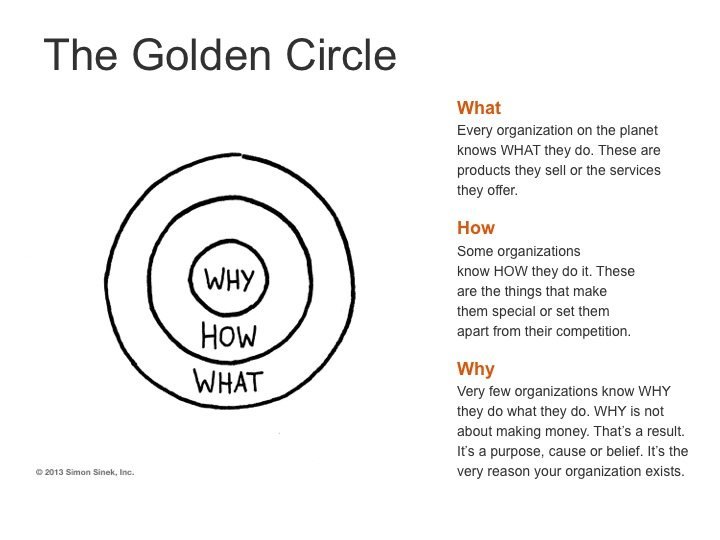
It also brought me back to Simon Sinek's work on change, and the need to know, and keep at the forefront of our thinking,  the 'why' of our work, our moral imperative.

Image result for simon sinek why

Our moral imperative within Uru Mānuka is well represented in this visual representation of our work, one I've shared numerous times before:


Image result for equality equity liberation
Our work with The Manaiakalani Programme highlights one of the important pieces of work that we are undertaking at Hornby High School to achieve this end, to meet our moral obligation to see ALL students able to be the best that they can be. Our work in establishing our Wānanga time and our cross curriculum Hurumanu, are also important pieces of work in supporting the best outcomes for our learners.

The problem lies in that bigger piece of work, that new role for schools as the cornerstones of our society. You see, this is not something we are resourced to do. We are staffed with wonderful people who hold the moral imperative dear to their hearts. We are staffed by people who would (and figuratively, often do) give the shirts off their backs for tamariki that they teach. However as a wonderful former colleague was want to remind me, we are schools, not social work organisations. That is what we are resourced to do.

But what of our work? What can we actually do to  make a difference, given that we are not actually resourced to be those 'cornerstones' of our society? We can be values driven, as we all are. We can be culturally responsive, culturally inclusive, welcoming to all cultures in our communities. Every child ought to be able to bring their 'cultural backpack' into the kura, to be who they are without fear or reservation.

These two ideas come together in a unique way in Aotearoa New Zealand. We have a true taonga in Tikanga Māori, in those beautiful values of manaakitanga and whanaungatanga, of kindness and relationship. By upholding the precepts of the Treaty of Waitangi we may yet save ourselves as a society. We currently have a Prime Minister who talks the talk and walks the walk about showing kindness, about rejecting the cult of the individual that has been an implicit part of the neo liberal right wing agenda that has driven much of western society for the past 40 years. We hear those messages abut inclusivity, about embracing diversity. Doing so makes us all richer, better off. A society that has extremes of wealth, a society that is divided along any grounds at all, is a poorer society both economically, culturally, and socially. Embracing tikanga offers us a path to greater moral and economic wealth. Why wouldn't we?

That's a big ask for schools alone. We must play our part, but we can't do this alone.