Showing posts with label creativity. Show all posts

Saturday, 18 April 2026

It's the stories....

I like the idea that we are all ultimately stories. In her 2008 short story collection 'Moral Disorder' Margaret Atwood wrote "In the end, we'll all become stories". In a similar vein, in the opening line of her 1979 collection 'The White Album', Joan Didion wrote "We tell ourselves stories in order to live". Stories are important, we are all story tellers, and we've probably used stories to enrich our lives, to give ourselves meaning, for as long as humans have walked the planet. Our stories connect us, they help us to 'find our tribe' and they help us to build bridges. Sometimes they can also destroy bridges.

Our stories carry our voices through time.  Of course, "You have to listen to the voices" probably isn't something you should say to a stranger sitting next to you on a bus. If you do, the wild eyed reply "like, yeah.. it's the voices, man" is probably one you don't want to hear.  However, in the work of creating and realising a shared vision for the future our stories, our voices, are a powerful way of harnessing the synergy of collective action, of building the future that we want. I've often seen the situation in which, when challenged with change of some sort, professionals are stuck in inaction and will say 'I understand why you want the change, but what would it look like? What would I be doing that would enable this change?' Stories are one means of showing others what change looks like, what they can do to be a part of the change, to feel more in control of their own change journey.

Gathering the voices, curating the stories, are things that Ako Ōtautahi - Learning City Christchurch does as it slowly brings people together to realise its vision of a learning city. In 2024, during the course of its Learning Days celebration, the Trust brought together a range of voices from around the city to consider what a vision of Ōtautahi as a learning city might look like. This year the Trust brought a range of voices together to discuss strategies and actions that might start to make that a reality with a workshop titled 'From vision to visible'.

Some of the participants in the recent 'From vision to visible'

This is important and powerful mahi. The connections that are made, the kōrero that takes place, the realisation that others share things in common with us, are all important antecedents to change.

In a similar vein Ako Ōtautahi has begun to curate and amplify stories of some of the amazing learning opportunities and journeys that already take place in our city. with the 'Ōtautahi in Practice' podcast, hosted by Sam Woolf and Erica Austin. The podcast serves as a platform to "humanise learning" by amplifying the stories of local Learning Champions and Ambassadors. The first ten episodes, concluding with a milestone reflection in Episode 10, explore how curiosity and connection drive the city's evolution. 


There are some key themes coming from the early episodes.

  • Curiosity as Practice: Moving beyond passive interest to active, intentional exploration of one's environment and self.
  • Systems Change & Futures Thinking: Exploring how individual learning journeys contribute to wider regenerative and inclusive futures for the city.
  • Identity & Belonging: The deep connection between understanding one’s own culture or identity and navigating the city’s landscape.
  • Collective Wisdom: The "ripple effect" of asking for help and how shared knowledge builds cultural movements. 

Some key examples of specific things you might see in a Learning City, in OUR learning city, that have been highlighted are:

  • Tūranga (Central Library): A flagship "living learning space" offering free access to technology, storytelling, and innovation for all ages.
  • Tagata Moana Trust: Founded by Nina Oberg-Humphries to empower Pasifika learners through STEAM-based education rooted in identity.
  • Community Spaces: Locations like the Richmond Community Garden and the University of Canterbury campus are highlighted as welcoming hubs for pursuing personal passions and creative action.
  • Social Enterprise Ecosystem: Collaborative work within the city to support the hearing difference community and other social causes. 
A number of interesting themes have come through in these early podcasts. I love the way that interviewees have urged that we need to normalise failure, because learning is often "messy" and failure is a necessary part of growth. We also have much to learn by way of cultural exchange, as Hana Kininmont describes when looking at the differences between learning in Japan and Aotearoa.

For several decades now formal education has made much of the need to develop personalised learning pathways. Whatever the success of the formal education system, we need to see a shift toward self-directed learning where residents can tailor their experiences based on interests and age. 

Interviewees have also raised some interesting future challenges:
  • Systemic Inequities: There is an ongoing need to remove financial and social barriers to ensure learning is truly accessible to everyone.
  • Te Tiriti Obligations: We need to continue to navigate this "challenging time" for Te Tiriti o Waitangi, emphasizing the importance of protecting language and culture in education.
  • Digital Equity: There is a lot of mahi to be done if we are to bridge the gap in digital access and literacy across the region.
  • Actionable Curiosity: It is essential that we move from "pockets of promise" to a fully coordinated city-wide vision where learning is integrated into every facet of life. 

The current by-line for Ako Ōtautahi is 'cultivating courageous curiosity'. Curiosity and creativity go hand in hand, and to truly be a learning city we need to see curiosity and creativity in abundance. There is no cookie cutter answer to what this looks like. Examples of this are as numerous as we humans. These are our individual stories, amplified through our individual voices. Sing it loud and clear!!!! 'Listen to the voices, man'. "We tell ourselves stories in order to live".

Friday, 13 February 2026

Sparking creativity, fanning the blaze

Some sparks flicker into the night sky, float for a while, and are then snuffed out. Some sparks settle and sit for a while before being fanned in to life by the wind, itself sometimes a gentle breeze, other times a gale. I think creativity can be much like that. To extend the simile, it begs the questions: what are the sparks, and how do we create the wind that fans those sparks into life?

I was thinking about our own life in retirement, Lorraine and I. While it has at times felt empty, less than purposeful, at times even pointless, it has also been dotted with acts of creativity. 

Last winter the frost had frozen the moisture inside this terracotta pot, and broken a piece off the rim. Throw it out? No .. try this 're-imagining'.


Lorraine has always been a 'crafter', specifically a knitter and a crochet'er (is that a word?). She spends some time almost every day doing one or the other, creating garments for premature babies, or blankets and toys for cats at the SPCA .. daily acts of creativity.


Nearly five years ago I found myself writing poetry. Why? No idea... my experiences of poetry at school weren't positive so this came as something of a surprise.  My current 'thing' is to take old nursery rhymes and re-imagine them in some way.

These are our personal 'sparks'. Then I have friends who restore vintage and classic cars, who dance, who turn bowls from scrap pieces of timber,  put new handles on old knives, and create prints and paintings and pen sketches in their spare time. Friend Andy sketches while he waits as his daughter engages in her swimming training.

Credit: Andrew Gorman 2026


Our daily lives are dotted with examples of creativity. I do however recognise that I live a life of privilege. I don't have to worry about whether some unscrupulous landlord will kick me out of my house next month. I do know that I will have food on the table tomorrow, or the day after, or the week after, and I will be able to heat the house next cold snap we get. And I no longer have to turn up to work six or seven days a week, putting in 60 to 80 hours a week just to be abused by some angry parent who thinks their child has never done anything wrong in their lives.

That privilege allows me the time to stop, it allows my brain to be bored. Professor Peter O'Connor co-authored a great wee book titled 'Slow Wonder', a beautiful read that espouses the benefits of slowing life down. That 'slowness', that time, that boredom, is essential to creativity.

Heartily recommended....

These small examples of creativity in our lives will be dotted all through every community, but it's mostly too difficult to step back and see the coherent whole. I suspect too that because we don't see commercial benefit from these individual acts we think therefore that they have no value.

This is to miss the point that such creativity is an essential part of simply being human. It is central to our lives. There is no need for it to yield some dollar value. The urge to look for a dollar value reflects the degree to which we have lost the ability to simply 'be'. I well recall in my time on staff at Christ's College when the chaplain in sermons often urged the boys to see themselves as 'human beings', not as 'human doings'. This was his way of saying that we need to allow ourselves the time and the pleasure of sitting and being bored, of being at home with our existence.

These acts are the 'sparks' that float in the air of our communities. And like the sparks from a fire, some of these sparks of creativity will die in the rain. Others will, however, be fanned into life by the winds that blow around us.

The wind might be individual passion and self belief and the simple 'urge to create', perhaps the result of an urge as simple as curiosity. However that wind might also be the wonder and encouragement of friends and community. If we accept that creativity is central to learning, this is where a 'learning city' comes into its own. An idea attributed to Confucius, and voiced by Dan Siegel, Ursula K. Le Guin, and Richard Feynman, says that "the beginning of wisdom is to call things by their proper name", the idea that to name something is to be able to understand and control it".

By naming our city as a 'learning city', we allow ourselves the opportunity to understand what learning is, what creativity is, and so be able to foster and grow our individual and collective creativity. That is one of the focii of 'Ako Ōtautahi-Learning City Christchurch'. It's LCC's job to encourage the sparks and send them into the air, and thento fan the flames, whether with a gentle puff of wind or a force 10 gale.

Let's acknowledge and celebrate the creativity that abounds within and between human souls. Then and only then can we gather the corresponding economic benefits as we reveal, nurture, and grow, a creative population, although that economic benefit should not be our main reason for doing so.  The whole will certainly be more than 'the sum of our parts'. We must first see creativity as a part of simply 'being', we must allow ourselves to slow down and simply 'be'. 

I think I feel another poem coming on.

Monday, 7 July 2025

Guerilla gardening in a city's cafes?

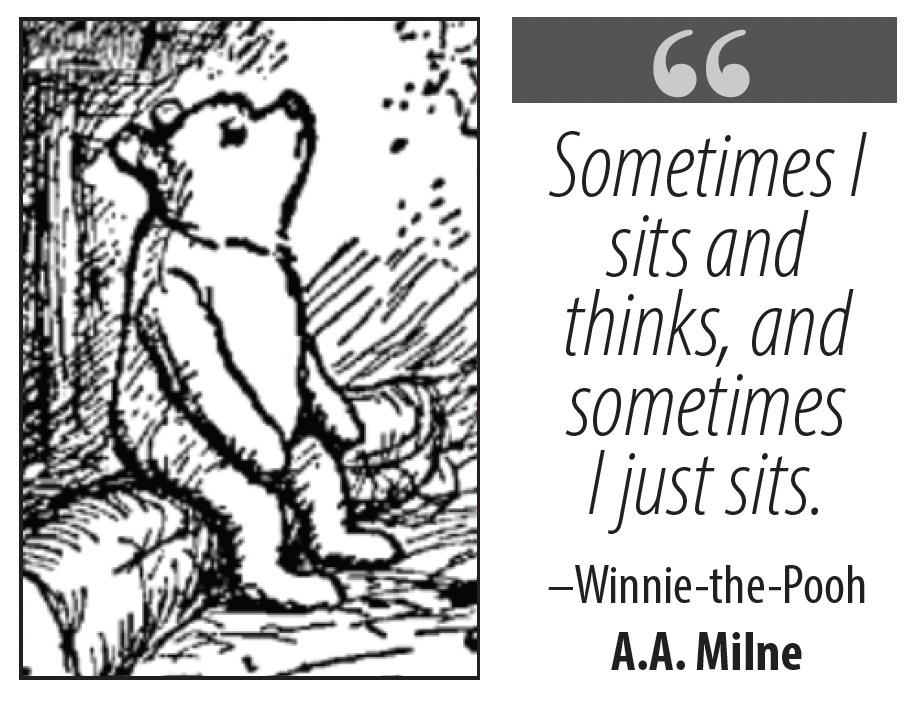
You see a lot of things when you're sitting in a cafe.You can think of lots of things as well. Cafes can be great places to sit and think. 

http://www.dinknesmith.com/2024/03/sometimes-i-sits-and-thinks-sometimes-i.html

This is hardly one of the world's great secrets, and cafes are filled with people who are doing everything from eating lunch to enjoying a solitary coffee to meeting friends to typing assignments or sales proposals on a laptop .. to sitting and thinking. The more pertinent point is that cafes are generally abuzz with people. Well, the successful ones are anyway.

I also notice that many of those successful cafes, those 'popular' cafes, are often filled with examples of creativity. Call it decor, call it interior design, call it the 'vibe', call it the deliberate and intentional display of artworks for display or sale, they can be abuzz with creativity. Cafe operators know that their own distinctive vibe is an important part of their success (as well as good food and coffee, of course). I was in a cafe yesterday and sat staring for a while at these two features.. not intentional displays of creativity, but rather just ways of creating their 'vibe'.


But this had me thinking. Back in 2024 I wrote about how we need to take 'learning' and creativity to where the people are. Re-read this too if you like. It's one way in which we could democratise learning and creativity, how we could surface it, how we could connect people in ways that support their wellbeing, that help them to thrive.

In that regard I love the idea of being slightly 'subversive', of being a little 'guerilla'. I've met some outstanding 'guerilla bureaucrats', folk who are slightly subversive in stepping outside organisational norms to better achieve organisational goals. And I love the idea of the guerilla gardener. Ako Ōtautahi - Learning City Christchurch uses the concept of nurturing a permaculture to help people understand what they do. If we think about nurturing learning systems, a 'learning city' in fact, then guerilla activity may be one way to go. 

If we want to nurture learning and creativity, why not do some guerilla gardening in our city's cafes? I don't mean doing illicit things without the proprietor's approval. Wouldn't it be rather cool to seed each table in a cafe with a printed poem during World Poetry week (or any week for that matter)? Or copies of small artwork sketches? How would you feel if something like this sat randomly on the table as you sat down with your flat white or your espresso?


Or this?


What conversations could this create?  At the very least it might create curiosity..... What is this? Who put it there" Why did they put it there? What does it mean? I can hear the conversation now - seven year old to mother "Mum, what does that say?" There are some great possibilities.

Amongst the problems is the issue of access and privilege. Just as museums and art galleries are often only visited by those with privilege, so too with cafes. Your daily caffeine fix comes at a cost, and when you are struggling to pay the rent and feed the children, sitting in a cafe with a mocha or a chai is unlikely to be any part of your weekly routine. The question is, by spreading this mahi across cafes and into the minds of those that can afford it, would we potentially improve the lives of others? I am a great believer in the power of art and poetry to change thinking, to grow empathy, to broaden perspectives. Perhaps that could be the big win. Social engineering? Yup.. unashamedly so.

Take the learning, the creativity, to where the people are. Some cafes already offering up examples of creativity, because it's good for business. Let's get a little 'guerilla'. But most of all let's get more deliberate and intentional about it. Let's not wait for people to come to us. Let's generate curiosity, inspiration, creativity, and learning, in those informal everyday spaces where we find people. Let's take the curiosity and the creativity to them.


Tuesday, 1 October 2024

Amplify Amplify Amplify

When you take a look around, when you look hard at your own village, town, or city, there's a lot going on. In particular there's a lot going on that I would describe as creative endeavour. You'll find painters and poets and novelists and print makers and designers and photographers and inventors and cabinet makers and sculptors and wood turners and vintage car restorers and gardeners and experimental chefs and mural painters and dancers and guitarists and timpanists and .... yeah, there's a lot going on. 


However all of us can all too easily fall under that 'fug' of feeling and thinking in which we think our world is not very creative, and that we are not very creative, because unless you are a part of that scene, or unless you actively go looking, you mostly don't see it.

Often on a daily basis we pass by the material evidence of this, with murals and sculptures in public spaces, or we might occasionally see a small media piece of a writers' workshop or something similar. And this is all part of the 'creative vibe' of any place in which we live. But I wonder how often we recognise it as such?

In politics we are now seeing an extreme example of the old lesson about repetition: if you say something often enough, whether truth or lie, people come to believe that it is so. Sadly we are seeing this all too often in the repetition of lies that are intended to create division, to appeal to some very base human instincts, in order to support someone's hunger for power. It is repetition based on a complete lack of moral imperative.

I have, during the course of experience in leading two schools, found that if you simply take what already goes on, are deliberate and intentional in giving those stories their creative spin, and tell the stories as widely as possible, you can influence a culture. You can raise awareness, you can get people to go 'oh wow yes, hadn't thought of that'. You can get people thinking about creativity, about what it looks like in their daily lives, in their daily mahi. You can build a creative vibe.

What if we harnessed this behaviour in support of the growth of creative and learning cities? What if we took what is already happening in our villages, towns, and cities, and kept talking about it, all the time? What if we were far more deliberate and intentional in telling our creative stories, and our learning stories, using social media as the amplification tool of the moment? Could we influence a city in this way? Could we convince people that they live in creative and learning focussed cities?

As I was part the way through writing this, the following piece appeared in the Star News (click on the link in the photo caption).

Source: https://www.odt.co.nz/star-news/star-christchurch/mini-melbourne-christchurch-nzs-new-capital-cool

This is the creative vibe' I have been talking about, and this media piece is the sort of thing that builds the perception, and therefore the reality, of a creative city. After all, our perception is our reality, isn't it.

And why am I 'banging on' about a creative city? Because I have the opinion that a creative city is a learning city is a creative city is a learning city is a ... you get the idea. These are, I 'reckon', reinforcing concepts. The 'Manaiakalani kaupapa' with it's 'Learn Create Share' pedagogy shows us that creativity can be central to learning, and the work of Professor Peter O'Connor and so many others shows the impact on learning and wellbeing of taking a creative lens. Evidence shows for example that learning through a creative lens amplifies reading and writing for children.

There are so many opportunities. Take for example Jason Marsden, Centre Manager, at The Hub. He is delightfully passionate about connecting with the community and about being authentic. He initiated an 'artist in residence' at The Hub a few years ago, bringing creativity and creative opportunities to the local community. He's also a creative himself. Imagine what could happen if EVERY mall in the city did this. Imagine if every shopping mall hosted a' 'artist in residence'. What impact might that have?

There are a number of small entrepreneurial operators offering creative opportunities for young and old alike, whether 'Egg Academy', or Risingholme, or... far too many to name. What would happen if every mall in the city took it on itself to promote one of these operators every year, to have them operate within the 'public' spaces of the mall? Imagine the potential impact.

Perhaps the key word is 'IMAGINE'.... we don't allow ourselves to do that often enough.

The challenge is how to amplify the message, how to keep all of this wonderful creative mahi and energy, in front of as many people as possible, as often as possible. 

This perhaps is some of the most important work of Ako Ōtautahi - Learning City Christchurch. AO-LCC is not a creator in the sense that it conceives and runs events etc, but rather a connector and an amplifier. The Trustees know the Gestalt that 'the whole is more than the sum of the parts'. 

Going back to my experience in principalship, one of many things I think I learned is that you can change perceptions by focussing on the positive, by focussing on the great things that happen. One of the odd things about we humans is that if our 'information space isn't filled with positive news, we will most probably fill it with the negative.  We all have that 'negative voice' in the back of our heads. We have to drown the negative out with positive ideas and thoughts. Our perception is our reality. So our challenge is, much like the principle of 'self talk', to flood the media spaces with positive stories of creativity and learning. We need to leverage off our many networks, social media and otherwise, with consistent and coherent messaging. We need to make sure that everyone from Frank and Lyn in Aranui to Hemi and Helen in Cashmere know about this. We can't afford to let a single drop of human creativity and potential go to waste.

We have to AMPLIFY AMPLIFY AMPLIFY.


Thursday, 26 September 2024

Being constant and relentless: our words matter

Way way back in my late teens and early twenties I served in the Territorial Army, 1 Squadron, NZ Scottish Regiment to be precise. We drove those M113 Armoured Personal Carriers. It wasn't all marching, in fact was a lot of fun. But soldiers were always 'marched' from one place to another. When in a more formal 'camp' situation an NCO would take command of the squad to march us from one place to another, and as NCOs we learned the skill of commanding a squad. 


Source: https://natlib.govt.nz/records/22712622


You would call out commands (obviously), like "'eft 'ight 'eft 'ight 'eft 'ight eeefffft" (that's quite difficult to write down phonetically, but you get the idea). You would also call out what might be called 'coaching commands' like "heads up, swing those arms straight through front to rear" and so on. If you didn't, then the marching could become quite slovenly, and the moment you did you could see the members of the squad up the ante, pick up their game, stand tall, and it often applied regardless of how experienced the squad members were. I'd hasten to add that when 'on parade', on the parade ground, it was different. You knew you had to put in your best effort then, otherwise you'd be answering to some towering Regimental Sergeant Major who would tear you limb from limb (figuratively speaking).

I think that in anything in life we all need that little bit of coaching to remind us what to do, regardless of how experienced we are. I was reminded of this recently. In my Acting Principal role I have spoken often about creativity, about it's importance, about its impact, about the need to take risks if we are to be creative, and about the need to model risk taking and creativity with our learners if we want them to be creative too. I've tried to model one way in which that might look with staff.

As this piece of my own mahi comes to an end, I received a lovely email from a colleague, in which they said this:
"Your reminders to be creative have reignited something I’d lost too and for that I’m grateful. The creativity had gotten lost in all the other stuff but it’s back and I’ll make sure it stays."
Working in schools is tiring and demanding, messy, and chaotic at times. It's easy to forget those things that perhaps brought us to the profession. It's easy to lose sight of the 'essential us'. We can lose them in the fog of busyness and fatigue. It's easy to forget the need to feed our own selves, to feed our own sense of creativity. Without that, it's hard to see how we could or would nurture creativity amongst our learners.

Source: https://www.slideshare.net/slideshow/creativity-in-school-education/80737187


One feature of my attempts at leadership has been to try to be deliberate and intentional, constant and relentless, in voicing what I think is important, about how I think we can make the biggest difference. Also I always try to keep the number of different messages as small as possible. You can't do it all at once. I hasten to add that I try to ensure that my views are evidence informed, not simply 'random reckons'. There may be a little too much of that in our profession at times.  
 

Thursday, 19 September 2024

Creativity and pedagogy

I've been working out at Darfield High School in mid Canterbury in term 3, standing in for the awesome Andy while he takes a well deserved sabbatical. It has meant the inevitable Newsletter columns, in which I have often espoused the case for creativity in schools. Here is this week's missive which I thought had wider relevance than just the Darfield community. 

I remember back in the ‘80’s (yes, I am that old) when I was working in the not-for-profit sector, and often had interactions with accountants. At about that time, if I remember correctly (and yes memory is indeed a dodgy thing), the Society of Accountants changed the university requirements for accountants. They required students to take at least one paper in their degrees that was NOT from the accounting area of the university curriculum. Take some art history, or some music, a language or a science or …. they said. I reckoned this was in recognition that maybe the stereotype of accountants that seemed to rule at the time had some basis in truth. Maybe. Maybe not. The point was that for accountants to do their job effectively they needed breadth in their learning and in their lives beyond just profit and loss statements and balance sheets. They needed a broader understanding of the world in which they worked, in which their business clients worked. They also needed the ability to better understand the nature of the businesses they served, and to be able to think more critically and creatively about all of those things in order to better advise and serve their clients.

I recently saw this sentiment in a meme that popped up on my Facebook feed:

“The true purpose of arts education is not necessarily to create more professional artists. (It’s) to create more complete human beings who are critical thinkers, who have curious minds, who can lead productive lives.”

I’ve heard it said that if we want better scientists, better managers, better engineers, better farmers etc then we need to ensure some exposure to the arts in school in whatever shape or form children and teens like. I’d go that step further and say that everyone benefits from the explicit inclusion of a focus on creativity. That will give us better scientists, better managers, better engineers, better farmers.

Which brings me to the education ‘P’ word: pedagogy. It’s a bit of a silly word, a piece of education jargon which just means ‘how we cause learning’. The refreshed AotearoaNZ curriculum (the refresh started several years ago) contains, for the first time that I can ever recall, an explicitly stated ‘pedagogy’: ‘Understand, Know, Do’. That is, it outlines a consistent and intentional framework for how schools and teachers will cause learning. It’s not a linear or sequential thing, and the fact that it includes the word ‘Know’ tells us that it places importance on ‘knowing stuff’ (about which many of you will breathe a sigh of relief, as do many teachers). ‘Knowing’ stuff might come from direct instruction (Hattie identifies this as still having a large effect size. That is, it’s still regarded as highly effective), or it might come from doing, which might be as simple as repetitive practice of exercises, or it could come from the act of creation. In education we do need to shift our practice to embrace a far wider range of ‘doing’ activities.

As an aside, that does leave us with the question of what we mean by ‘knowledge’. To most of us it probably means having recall from our own brains of facts, formulae, processes etc. In 2005 Jane Gilbert, researcher with NZ Council for Education Research, published a book called ‘Catching the knowledge wave’ in which she said that knowledge is now a verb, not a noun—something we do rather than something we have. That is, while we still need to have recall of facts, ideas, and processes, that’s no longer enough. She was saying that ‘knowledge’ is having that information in our brains, AND doing something with it. We want people who think creatively and critically about that ‘stuff’. You can’t think in a vacuum. You need to know stuff to be able to think about it.

What also matters is that the school’s pedagogy is made obvious for everyone (Tumuaki/Principals, teachers/kaiako, and learners/ako and whānau alike). It needs to be very visible for everyone to see, and teachers need to constantly ’unpack’ what it means and what it could look like.

In my previous principalship I lived, worked, and breathed, a slightly different pedagogy. That it was different doesn’t matter. What mattered was that we knew what it was, we knew how we did things in that kura, and we were deliberate and intentional in thinking about it, in unpacking it, in using it, to the benefit of all learners. And it worked!!!!!

My point is that this pedagogy (Understand, Know, Do) values creative thinking, and it values it across the whole curriculum, across the entire ‘lived experience’ of every learner.  That might be through an arts course, but it equally might be anywhere across the learning experiences of learners in every kura, every kura kaupapa, every ECE. This is visionary stuff. If we value creativity, if we are deliberate and intentional in making it a part of the experience of every learner, then one likely outcome is that we will indeed get even better scientists, even better managers, even better engineers, even better farmers. 


I’m all for that.


Tuesday, 13 August 2024

Maybe creative schools coud lead to creative cities?

I'm currently back in 'work harness' as Acting Tumuaki at Darfield High School, covering sabbatical leave for  awesome Tumuaki Andy England. One of many things that has struck me about the kura (all positive, I hasten to add) is the clear rich arts tradition. I enjoyed their bi-ennial major production last week (Little Shop of Horrors) and as I walk around, the visual arts tradition is equally clear. Some of the work has been made by the members of the community, but equally some has been made by students.

Referring back to some of my thinking previously about creative cities, similarly you can create a 'creative vibe' in a school. In that school environment it is of course much easier - it is smaller, and there is much more direct control of the environment. It does however still take deliberate and intentional acts if it is to happen. In the school context it takes inspirational teachers too, and... it takes inspirational teachers who feel empowered to act, to do, to support, to nuture, and feed, student creativity, and to be creative themselves. It requires courageous leadership that is single minded in its focus. It takes leadership that empowers teachers and learners (you'd hope all teachers are learners, of course) to engage their creativity, to feed it, whether in the art room or the science lab, the social studies room or on the footie field.

And lots of schools like this in and around a city must surely mean that the life of the city itself is impacted. Most schools have lots of art work around, that's not unique. How about we show it off more, how about we talk about it more, how about we showcase it more, how about we celebrate it more? 

There is a problem there though.. wherever we are, wherever we live, wherever we work or play, it is easy to stop noticing these things in our environment. The secret is to open our eyes every day at the wonder that is all around, to see a new every single day those things that we have seen every other day.

We have to lift our view, open our eyes, and sit and stare for a while, we need to dare to daydream, all of us, school students included.

Sounds a little 'Pollyanna'ish' I guess, but it works.

Library entrance foyer

Library mural

A piece of outdoor art

The entrance foyer to the kura

Some outstanding Level 1 (Year 11) art work on display behind the reception desk

Maybe more creative schools in and arounbd a city could indeed lead to more creative cities. It doesn't exactly sound like rocket science, does it. I haven't been here long enough to have too much of an insight into things in this regard, and won't be here long enough - it's only a term. But .. e hika mā.. what a delightful leg in life's journey so far.

Thursday, 8 August 2024

Creativity somewhere along the space/time continuum?

I'm not saying memories are always completely accurate, eh. I guess they could more correctly be described as a scattering of crumbs and the readings and interpretations we place on events at the time, and in the space of time that has passed since. However I do have memories of being in school. And amongst those memories (which are often far from positive) is being told on numerous occasions 'Sutton, stop daydreaming and get on with your work'. Did that actually happen? In my head it did, and also in my stock of memories from my professional life is recollection of seeing and hearing teachers say much the same thing to students.

We seem to be taught at an early age that busyness is equated with productivity, and that if we sit idly we are wasting our time. One of the many things I am grateful for from my upbringing is that I had parents who did not peddle that message of busyness. As growing boys we were allowed to sit, to lounge, to daydream.

https://commons.wikimedia.org/wiki/File:The_Thinker,_Auguste_Rodin.jpg


In my professional life I came to increasingly enjoy wandering through the visual arts spaces where I would see students sitting, in silence, staring up to the heavens, the long eyed stare. Yes they were daydreaming. Was that a bad thing? I  don't think so. Even if they were not thinking about the task in front of them, they were engaged with their internal selves, they were listening to their internal dialogue, feeling and being alone. That process needs space and time. In this age of 'always on' in which devices and social media mean that we crave connectedness within the false construct of 'social media friends', it is surely never a bad thing to sit alone, with oursleves, for a while?

So what? Having returned to work full time for a term, I've been reminded of something very fundamental about creativity: if it is to truly prosper, it needs time and space. It's not a 'space time continuum', it's not a trade off, an either/or in which you position yourself somewhere along the line. In my temporary return to this full time work status I find I have far less time to dream and invent, and to write poetry. My output is stalled (those who bother to read it might well claim that this is not a bad thing .. Douglas Adams' description of Vogon poetry might well be apt here). I'm not saying that it has stopped the creative process. But it gets in the way.

If we go with the notion that creativity is an implicit part of being human, I wonder if it is too long a draw of the bow to suggest that solitude, the need for space and time, is part of being human? Does it nurture our humanity in the same way that it nurtures creativity?

And what then do we take from the latest prognostications from on high suggesting that the arts and music can take a back seat in our schools? What interpretations are we left with?

It feels a lot like 'what could the common people possibly need creativity for, they don't need to make any sort of connection with their humanity?'. And if going hand in hand with creativity is this notion of curiosity, is this seen as a threat to political control of a population? After all, a curious population is one less likely to bend to political manipulation and control, isn't it?

Maybe I'm too readily buying into some sort of Marxist class war conspiracy. Maybe our politicians are simply uninformed, maybe they are spouting their own political dogma in their political echo chamber. Whatever the reason, our world will be the poorer for it.

Give me the dreamers any day.

Here is a link to a nice collation of some thoughts on 'aloneness and creativity'

Creativity needs both time and space if it is to flourish. It doesn't exist along a space/time continuum, as that suggetss it is almsot binary in nature. Rather than an either/or, it is surely an and/and? I'll try to find more time to just sit and daydream.

Wednesday, 17 July 2024

Fostering curiosity in a city

As the Trustees of Ako Ōtautahi - Learning City Christchurch, in our deliberations, our kōrero, our hui,  the word 'curiosity' keeps coming up. And with jolly good reason. Curiosity is perhaps one of the most primal and powerful survival instincts of our species, and perhaps of all life forms. 

"One way to begin exploring curiosity is to understand ‘information seeking’. This behavior is observable across the entire animal kingdom – from apes and dolphins all the way down to crabs and tiny nematode worms. ‘Information seeking’ means that every animal seeks information about their environment. This is so they know how to navigate it. In fact, it’s why sensory organs exist – to supply the brain with information that helps you understand your environment and make better choices." (Source: https://curiosity.britannica.com/science-of-curiosity)

I spent quite some time down a rabbit hole searching for what has been written about curiosity, it's benefits, and its connections with creativity. GoogleScholar is a wonderful thing, as is the Google search operator 'site:edu'. I have to confess that I didn't even scratch the surface, but in the process of skimming through a lot of material several things became apparent.

Curiosity offers many benefits for learning, and for our lives as human beings.

"A study published in Neuron last fall about the science of curiosity confirmed that when people are curious, they:
  • Learn more
  • Remember better
  • Absorb incidental material (the boring stuff) better than they ordinarily would
An article by Todd Kashdan in Experience Life magazine summarizes other research showing that curiosity is a leading contributor to better health, intelligence, relationships, and happiness.
(my emphasis).." (Source: https://blog-youth-development-insight.extension.umn.edu/2015/06/making-curiosity-happen.html) 

That has echoes of the work of Professor Peter O'Connor ('Replanting creativity in post normal times').

Curiosity is also beneficial in supporting, promoting, and developing creativity.

"There is a strong connection between creativity and curiosity. Curiosity is the
foundation for creative people, creative process, and creative environment to foster
innovation. To evaluate how curiosity stimulates creativity, this project explored the
nature of curiosity and the role in creativity. "
Source: https://digitalcommons.buffalostate.edu/cgi/viewcontent.cgi?article=1075&context=creativeprojects )

I had taken a lot of this for granted, admittedly not a good way to enter into any inquiry, but it was a belief based on a lot of previous reading and work. The question with which I had begun this search  was this: is it possible to promote or develop a curious and creative city, or is it possible to build a culture of creativity and curiosity in a city?

To cut to the chase, I gathered some interesting material, although it may take some more thinking/processing to come up with strategies that make this all work.

In a 2021 book 'Restorative Cities', Professor Jenny Roe, Director of the Center for Design & Health in the School of Architecture, University of Virginia, writes of the idea of restorative streets in urban design:

"As one example – the design of ‘restorative streets’ that can boost mental health – might include:
  • Multiple uses and facilities, a mixture of all kinds of residences, workplaces, shops, cafes and restaurants that bring people out on the street at all times of day;
  • Urban greenery and street trees that are so strongly linked with restorative mental health;
  • The inclusion of ‘fascinating’ shopfront facades, and other attributes of street design that promote curiosity and wonder (such as public art, green walls, murals);
  • Safe ‘bumping’ places where people can mix and mingle on an impromptu basis; dog walking areas, street chess, mini-markets and food stalls, for example.
  • Comfortable streets that restrict vehicular access and promote walkability and other modes of active travel including cycling." (Source: https://engagement.virginia.edu/node/5806)


 In a paper submitted in 2006 for her Masters Degree ('Curious About Curiosity?'  Buffalo State College) Sharon Walsh  suggested the following personal steps that in her opinion would develop curiosity:

  • Be observant
  • Have a sense of wonderment and awe (sounds a little like Art Costa's 'Habits of mind')
  • Be more curious, ask questions
  • Judge your judgement
  • Make the familiar strange, and the strange familiar
  • Be surprised, and surprise others
She concludes:
"There are many techniques to help encourage curiosity. It is helpful to consider
engaging curiosity from the perspective of people, process and environment. An
important component to encouraging curiosity is opening oneself to the creative process
through being more curious, judging judgment and (sic) playing with concepts and
ideas. Taking a childlike sense of awe and wonder about the world and being more 
observant is an avenue to igniting one's curiosity. Another technique for encouraging
curiosity is to surprise yourself and others.. "

In a blog post titled 'Making curiosity happen' written in 2016, Jessica Pierson Russo of the University of Minnesota, suggested that the following three things promote the development of curiosity:

  • Build knowledge
  • Thrive on uncertainty
  • Play
  • See the extraordinary in the ordinary
She also wrote:
"I can think of other strategies that may be useful in strengthening curiosity as a skill—for instance, nurturing failure as a welcome part of the creative process. Failure should be taught as a good thing (rather than something to be avoided at all costs) in relation to learning and building curiosity. But the main strategy that I would advocate for in building curiosity is teaching it intentionally as a necessary life skill that we can develop. Each of us tends to exercise these strategies, at least unconsciously, at one point or another. But when we use them intentionally, we begin to create valuable habits that ultimately result in stronger minds and better learning experiences" (Source: https://blog-youth-development-insight.extension.umn.edu/2015/06/making-curiosity-happen.html)

This notion of nurturing failure, of celebrating the need for risk taking in the creative process, I have found to be recognised across many sources.

I came across a number of other papers that said quite similar things. If we are to assume that these are correct, then the question is 'are these strategies scaleable across a city?' 

One conclusion I have come to yet again is that cities that have a 'creative vibe'  are more likely to be cities that foster curiosity and therefore creativity.  I have written about this several times before.

Just today I read of a new 'green space' popping up in the central Christchurch CBD, and have seen yet more street art appearing (or maybe it's just that I am 'seeing' it for the first time). There are plenty of other Ōtautahi Christchurch examples in previous posts.


And Christchurch is forward in developing those alternative spaces where creativity can be nurtured, where it can thrive. There is the SALT district:

"SALT is the gritty, Southern ALTernative to the glossier city core. Laced with laneways and centred around St Asaph, Lichfield & Tuam streets, it’s a character destination where cool people with big ideas make amazing things happen."

 A part of this development is the 'Boxed Quarter':


"BOXed Quarter is a melting pot of art, music and hospitality located directly opposite Ara Institute and deep within the rapidly emerging SALT District. "


One of many questions I have in my head is 'how does this impact the lives of whānau who live in poverty, who battle addictions, abuse, and privations generally'? That is, how does this impact the lives of our most vulnerable? You could easily respond that it can't, it won't, that this is not the right tool for the job. It's just that if a part of our vison for a learning city is a drive for equity, I can't help thinking that those whnau ought to be a part of this. After all, surely every one of those human beings has creative potential that could benefit us all? Every one of those human beings deserves to live their best life?

I am of the opinion that developers and city planners in Ōtautahi are doing their bit. They are doing what they can to give us an environment that is conducive to growing curiosity and creativity. What next?


Tuesday, 2 April 2024

Karpool (karaoke) interview: my thoughts on creativity

Anyone who followed any part of my professional journey over the 7 years I was Tumuaki leading Te Huruhuru Ao o Horomaka Hornby High School (2016-2023) will know that the most essential component of the change I tried to engineer was to embed creativity into the kura, to make creativity the essential ethos of all that we did. 

Was I successful? It's not for me to judge, but for others... the akonga, the kaiako, the whānau .. but I tried. On the back of that, I was recently invited to be a part of a carpool interview with Steve Zonneville, who along with along with Dave Armstrong has pioneered the 'Forty Hour Principal' project.

Apologies in advance for the quality, I had to compress the video significantly to get it onto the blog. The video speaks for itself.


My answers (I hope) capture a lot of what I believe about creativity and education, and creativity and life. Here is the post in which I talked about creativity as an act of rebellion.

It's time we rebelled, it's time we nurtured and celebrated what makes us human. I reckon!!!

Sunday, 17 March 2024

Go where the people are

 If you like that genre of humour that we call 'Dad' jokes, you might have heard this one:

"Isn't it amazing how they manage to build hospitals where all the sick people are"

... or ...

"Isn't amazing how they build the roads where all the cars go"

You get the idea, so I won't labour the idea or prolong the pain. My point is, if you want to sustain creativity, and learning (beyond formal schooling, that is) I think you need in part to go where the people are. There will always be those who will make the effort, go out of their way, to take advantage of opportunities, to participate in creative or learning events or opportunities. But I'm not convinced that is the majority. Generalising our behaviour as a species, I reckon we tend to look for the easy way out, the easiest path, and if we think something's not easy, we are typically less likely to participate. Just depends on the motivation, our individual answers to that question 'what's in it for me'.

Then there is the issue of genuine ability to connect, to participate. I recall in the 90's when I chaired the kidsFest Trust in Ōtautahi, we took pains to try and get events out into the areas where we knew incomes were more limited. We also negotiated free bus services to try to enable children especially to travel to events. I have worked with many whānau and young people who cannot afford a bus ticket or have never ridden a bus and don't know how. It's easy to apply pākeha middle class values and expectations to these problems, missing the point that we are not all the same. We assume such things at our peril when we think we have a cunning plan that might address inequity of opportunity.

I have seen some interesting solutions to this problem.

As part of its 150th Anniversary celebration the University of Canterbury ran an event called  'Raising the bar'. They took 'talks' by members of their staff out into local bars around the city. I attended one at my favourite local brew pub. It was unfortunate that one of the speakers chose to humble himself before the architect of Ruthenasia, making the content farcical at times. However we can't all see things the same way, can we. My only question is whether or not they took any of these events to any of the local bars in the poorer parts of town. I would love to know ..


Then there is the fabulous  'Arts on Tour', something which I think has been defunded by the Arts Council, sadly. We were pretty regular patrons of the local events.


I recall one concert called 'The Four Chiefs', one of whom was Wayne Mason of 'The Fourmulya' fame with 'Nature'.

I'd never have thought I'd be sitting 3 metres from one of Aotearoa's iconic musical legends listening to him perform. 

Libraries are a great example of taking creativity and learning into their local communities. They have become much more than book repositories (they are still that however), they have become learning and creative hubs for their local populations. They organise and/or host a range of events, sometimes delivered by their own staff, sometimes delivered by external providers.

Organisations like 'Ako Ōtautahi-Learning City Christchurch', with their Learning Days festival, attempt to bring together a range of such providers under one banner ('Learning Days'), their events taken to places where people congregate like shopping malls, libraries, and streets. 

The thing is, we need more. These functions are not things that typically 'make money'. They are typical 'merit' goods, so they are under provided by producers, and we under consume them in the context of what gives the greatest benefit to society, if their provision is left to the market.

UC needs to run a 'Raising the bar' event every year. ArtsOnTour needs to have its funding fully reinstated. These things spark people's curiosity, and that's what leads to real learning.

If we want a 'learning city', a city that is creative and thriving, one of the things we have to do better at taking these opportunities out to people, we have to be where the people are, whether it's in cafes, libraries, bars, shopping malls, or bus exchanges, we just have to go where the people are, to make it easier for them to access these opportunities. 

'Like, that helps create the vibe .. maaaan'

Sunday, 25 February 2024

'Like, it's the creative vibe, man' (5)

I've thought a little about what deliberate and intentional actions we can take if we are to generate a more creative city, a city in which learning is just how we are. It's a complex beast, one in which I am not at all qualified to make grand assertions. But I've been thinking about it. I've asked myself this question: what are the possible levers that we can use to get there?

Maybe these things can (in the language of economics) be classified as macro and micro 'levers'. 

The macro levers are those that operate at an institutional and system wide level. In Aotearoa New Zealand perhaps the best example is the impact on education of Tovey and Beeby, and their work with creatives in schools in the 1950s and 60's (one of the best examples of which must be Ralph Hotere, but there were a number of others). This was action that impacted directly on children and young people, action that (so the literature suggests) resulted in an epoch of creativity in our schools. Did it? Not sure, but it seems to be a reasonable assertion. This was also the time of Elwyn Richardson and his ground breaking work in leading learning through the lens of creativity.

Thinking about this macro level in education poses questions around our national curriculum, and the importance that it places (or doesn't place) on creativity. This then (presumably) impacts on  the mahi within individual kura. My experience was that regardless of whatever curriculum documents say, it is possible to foster an ethos of creativity in an individual kura, as long as there is leadership from the top.

Within the civic or public space we can question the commitment of civic leaders (both elected representatives and salaried professionals) to the creativity, to the efficacy of creativity, in generating economic activity, innovation, and wellbeing, amongst their citizenry. How easily swayed are they to the benefits of such a focus, especially in these cash constrained times when they are being told that the choice between roads and drains, or libraries, pools, and creative public services, is an 'either/or' rather than an 'and'.

That said, they are still able to consider how they fund libraries in particular, and also museums and galleries, and other public spaces and activities, to support creative thinking and endeavour amongst their citizenry. In Ōtautahi Christchurch the public library spaces at Tūranga, and the redevelopment of the network of suburban library spaces, gives us hope. I note that the soon to open Hornby library (the Matatiki Hornby Centre) will be an absolute delight in terms of the facilities that it offers to the locals that might foster and support creativity and innovation with its dedicated 'Creative Activities Room'. Included will be opportunities ranging from 3D printing to sound recording.

These are examples of those macro level levers which generally are out of the reach for most of us.
I wonder also about the degree to which we can pull the levers of civic and architectural design across civic and private projects? When I look at some of the building and space design that we have seen in Ōtautahi through the earthquake rebuild, we see some of the worst and best of building design in particular, from awful tilt slab monstrosities to the creation of quirky innovative spaces that are new, but have the feel of ancient spaces. These are part of that 'vibe' I am talking about.

A signal of the development of Gloucestor Street, and the 'arts precinct' that will include the new Court Theatre, plenty of hospitality, backstopped with Te Pae, a wonderful new convention and function centre at it's west end - more 'very cool vibe'


The old 'New Regent Street', strengthened and repurposed with less traditional retail, and more hospitality, business.. a delightful 'feel' on a sunny day

More relevant and accessible to us as individuals are those micro level actions that we can take. Organisations like Ako Ōtautahi Learning City Christchurch are very proactive in showing some of the possibilities. What happens when you 'join the dots', when you connect people and ideas? What happens when you find guerrilla bureaucrats, awesome people within organisations who are able to activate smaller parts of those organisations, and resources, to support the vision of a more creative city, a city that values and activates learning not only within the formal sector but across the informal sector of learning?

Are we joining enough of the dots? Are we telling the stories loudly enough? Often enough?

AO-LCC is one of several organisations that are working to leverage change. Others include the Greater Christchurch Schools Network, Risingholme providing Adult Community Education, and that group of smaller providers such as Egg Academy, and Creative Trust, the Christchurch Young Writers' School, and Christchurch Rock 'n' Roll Club, and .....  all those smaller rebels that I have mentioned previously,  all alongside an amazing public library network. Ōtautahi is not in any way different from or superior to any other city. It is simply the city I know.

At our individual level, perhaps the best thing we can do is to actively broker conversations with many and diverse groups, as many conversations as we can, about creativity, about learning. We need voices that will echo loud and clear over the top of those who would have us submit to endless machine-like lives. We need to amplify the messages. We need to be persistent and relentless in the messaging, in fostering the conversations.

We need more than words. Individual acts of creation matter, whatever they are, in what ever form or medium we choose.


Going back to my original contention, if we accept that creativity and learning go hand in hand, if we accept that learning can be generated more effectively formally and informally through a creative lens, if we accept that creativity and innovation enhance our lives and our communities as measured with both economic and wellbeing metrics, is there such a thing as a creative vibe in a city, does it enhance creativity and innovation generally in a community, and does it enhance learning in a city? Is it another piece of the puzzle of how we go about building a 'learning city? Could it, would it, help to create a 'learning vibe' in a city? And what would a 'learning vibe' look like, feel like, sound like, in a city?

Perhaps my biggest contention is that whatever we do, we need to be far more deliberate and intentional in doing it.

What is at stake? I couldn't put it any better than O'Connor and his associates:

Like Freire, McLaren (2000) offers critical pedagogy as an antidote to education
systems that “replicates social inequity and creates an unthinking consumer class” (p. 123).
A truly democratic society requires people who are fully conscious, or fully awake in the
world, and Maxine Greene argues it is arts-making which brings the individual into awaken-ness (Greene, 1997). Perhaps it is why some might call art or photography ‘a woke subject.’Martha Nussbaum (2010) argues the moral imperatives sitting beneath a democratic society are based on the creation of empathetic citizens. She argues that empathetic imagination has been systematically ignored, and severely repressed, by neo-liberal models of education.
(Page 15)

And with reference to our formal schooling system:

We argue how the true measure of public education is not in individual achievement, but in
the success of participatory democracy. What we risk with the current schooling is creating
classes of people disconnected from a sense that they are able to be active participants in
their own lives. We believe the dangers of such an approach during post-normal times is
obvious as new nationalisms and dehumanising ideologies find fertile ground in collapsing
economies.
(Page 16)

These words tell me that we face uncertain and worrying times. Let me finish with some words from the Ōtautahi Climate Action Campus:

"Climate Action Campus, Ōtautahi - Shifting young people’s sense of climate anxiety to climate hope. One of the biggest mitigators against climate anxiety is to take action." 

Source: https://www.growwaitaha.co.nz/our-stories/climate-action-campus-otautahi-shifting-young-people-s-sense-of-climate-anxiety-to-climate-hope

 ... which I'd like to adapt like this:

Could we be a "Creative Action Campus, Ōtautahi - Shifting people’s sense of anxiety to hope. One of the biggest mitigators against anxiety is to take action."


References

'Replanting creativity during post-normal times', O'Connor, Anderson, Freebody and Ginns, October 2020


'Like, it's the creative vibe, man' (4)

I clearly recall my time leading teacher professional development. Teacher practice was hard to shift. But it was very rarely a result of an 'I can't be bothered' attitude. It was much more likely that the thought process was 'Yes I see what you are saying, and why this would be a good idea, but.. what would it look like in my daily practice?'. And once you were able to show that, the almost universal response was 'aha, I get it, righto then...let's crack on with it'.

I think this 'fostering creativity' and this 'learning city' thing are similar. What could it look like? I use the word 'could' because I reckon that there isn't ONE formula, there isn't ONE way, to do this. What's more, I think that any city or organisation needs a multitude of approaches and responses. After all, that's creativity isn't it? I wanted to try to capture a little of what it already looks like in Ōtautahi Christchurch right now.

The Greater Christchurch Schools' Network (GCSN) works with schools and the city's libraries to bring creative opportunities to school aged children. These are typically digitally focussed (because that is the 'raison d'etre' of GCSN). Here is a sampling of the activities on offer in 2024.


Then there's 'kidsFest', an annual festival of activities for children that has run in Ōtautahi since the 1990's

There's the work of Ako Ōtautahi - Learning City Christchurch and its annual 'learning days' celebration. This celebration aims to showcase learning, and the value of learning, to connect more and more of those who work in that area in the city, beyond the more usual compulsory school sector.


The 'climate change' campus, set up on the original site of Avonside Girls' High School in the east of the city, attempts to connect young people with the issues around climate change, and what they can do to mitigate the existential dangers of the current climate crisis.


Cities typically also have their own performance based cultural institutions. In Ōtautahi Christchurch, our very own Court Theatre is something of an icon.


There are a number of other 'players' in the market place. There's the 'Egg Academy', the brainchild of Kane Stewart:


The 'Word' festival in Ōtautahi, certainly not unique to the city, and not a 'small player':


The Canterbury Poets' Collective:


And let's not forget that there are also many not for profit clubs and societies that offer creative growth opportunities.

For example dance clubs:

https://www.christchurchrocknroll.org.nz/

... and craft clubs:
The Christchurch City Council information web page on craft groups etc


My concern about many of these is whether or not they serve the 'democratisation' of learning. Do they succeed in serving those most vulnerable in our community? I recall the story of a young man with whom I worked in a school.. he was a seriously good rapper. He left school, and (I think) went the way of the gangs. As a society we lost the benefit of his amazing creativity, and may in the future face the social and economic costs of a human being who crosses the law. I hope not.

Then there is what is happening in the schooling sector itself. I'm yet to be convinced that schools in general give creativity the emphasis it demands or deserves, but certainly within schools in the Manaiakalani network creativity is a central part of their underlying pedagogy. There are two school clusters in Ōtautahi that are part of the network (although not all schools in each Kāhui Ako participate): Uru Mānuka in the west, and Te Pai Tūhura in the northeast.


This summarises their underlying pedagogy.


One kura in the Uru Mānuka kāhui ako tries to place creativity at the centre of what it does.


This gives you a glimpse into what this could look like, it is all fabulous stuff. I'm not sure that it is not enough though. More effort, more thought, more resource, needs to be applied to the challenge of creating creative communities, communities in which there is a clear 'creative vibe', or perhaps just as importantly there is a clear and visceral 'learning vibe', communities in which creativity and learning are 'just the way we are'.

The challenge is 'how do we do that'?