Monday, 16 September 2019

'Learn Create Share' the old fashioned way, with a modern twist

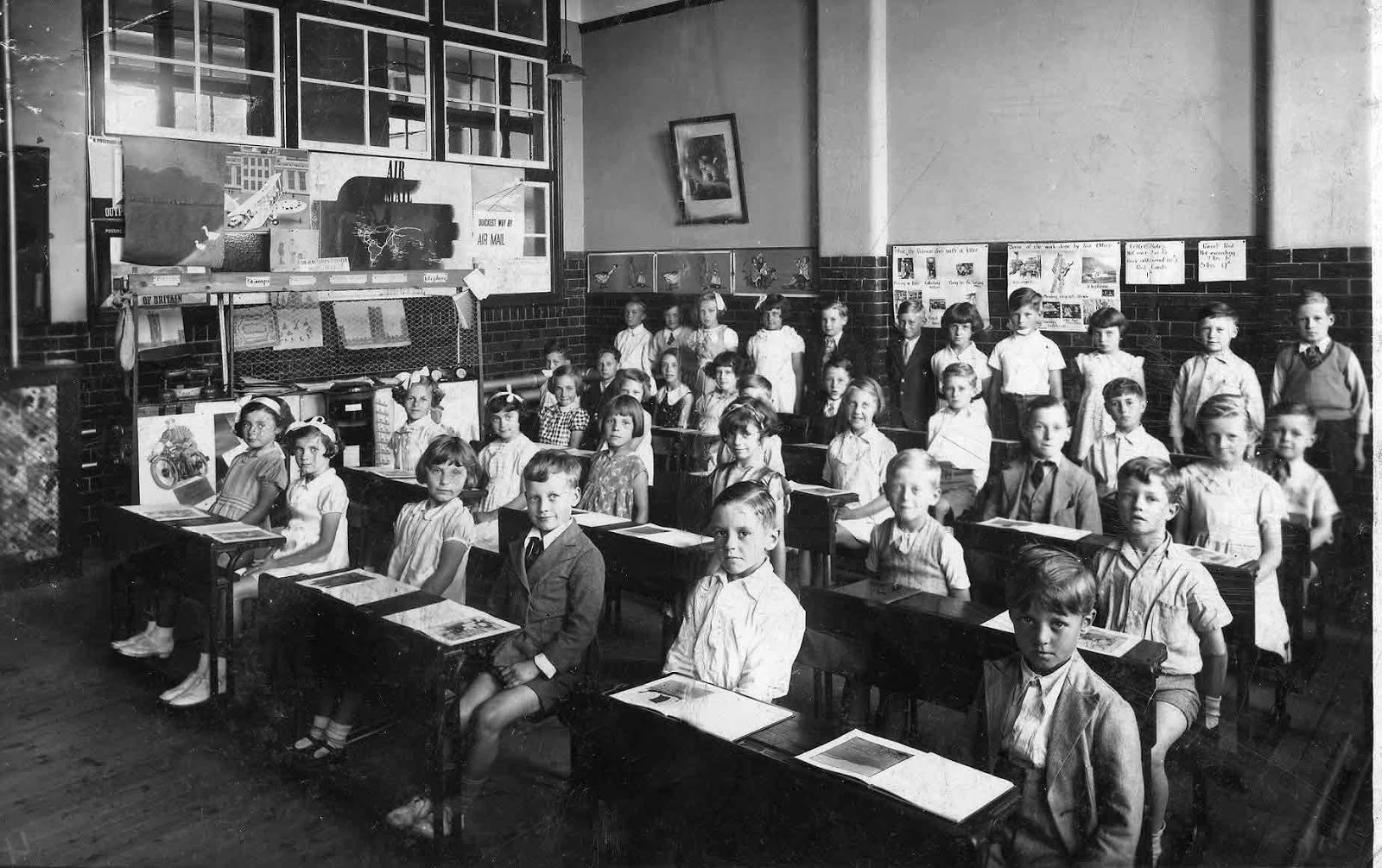
The Manaiakalani Programme is extraordinary. It is accelerating student achievement wherever it is used, regardless of the context. It uses a common pedagogy regardless of age, stage, or subject matter: 'Learn Create Share'. Pedagogy is just a fancy way for saying 'the way that we cause learning'. The biggest challenge is to help everyone to understand what that means. Teachers may get that idea more easily than non teachers, and the best way to help is to show what it looks like.

You might argue that teachers have used 'Learn Create Share' throughout the development of education, but the differences now are :

  1.  We are consciously employing it, consistently employing it, and making it clear to learners that we are using it, and
  2. We are amplifying the benefits of the pedagogy using digital devices, and digital tools.

In doing so we have to be careful not to through the baby out with the bathwater. That is, we have to be careful that we don't throw away other tools that still work.

Over the past few weeks two classes of Year 10 social studies students under the guidance of Catherine, a teaching intern from NZGSE, and their class teacher Alby Wilson, have combined the best of the old and the new. They have been studying technological change through human history, and today it was my pleasure to open an 'exhibition' of their learning. They were looking at technologies from those early neolithic civilisations, alongside those of ancient Rome, and ancient Egypt.

Because the room they have been working in is due for demolition very soon (yay) they sought my permission to do some 'cave drawings' on some of the walls. The walls were first textured using glue and sand, and they students then created their 'cave art'. The created cardboard models, cooked food according to what historians believe were accurate recipes of the time, made life sized replicas of some equipment, and created costume that they thought was appropriate to the times. They looked at mummification as a process, both scientifically, and culturally.

The researched and they wrote (all digitally), and alongside that they created. Finally today they shared as we opened their exhibition, inviting whānau to come along and enjoy their work too.

'Learn, Create Share', the old fashioned way, but again 'amplified' through the use of digital technologies.

Now let the blogging begin as students reflect on their learning, and share those reflections with the real world, making their learning visible.

Here are some photos of their exhibition. Ka mau te wehi!!


Wednesday, 4 September 2019

Democratisation of education: The Manaiakalani Project, and more ...

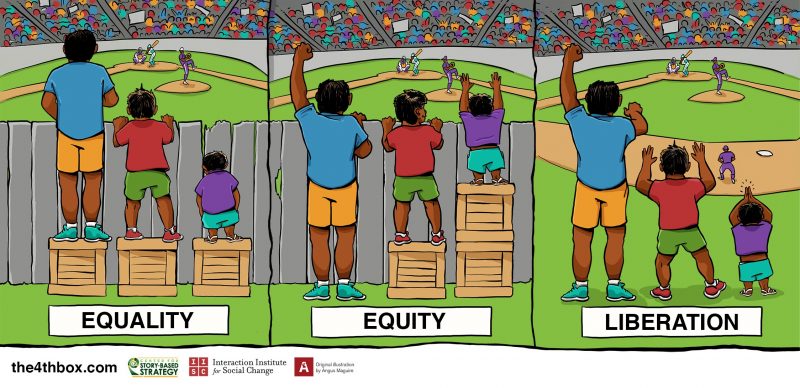
Nothing could capture the moral imperative of education better than this image:

Image result for equality equity liberation image

It captures the challenge that faces us better than anything else that I can think of, and I've used it repeatedly.

How can we reduce inequality, how can we improve equity? I believe that ONE strategy is the democratisation of education,  making education 'fit for purpose' for everyone, not just those from the European middle class, not just those who have traditionally benefited from our past educational systems. Education offers the opportunity for liberation.

That is the background to my thinking after another great meeting with Cheryl Doig. We discussed a really interesting piece of work that she is involved with called 'Learning City Christchurch'. The name speaks for itself. What does it involve? What would a 'learning city' look like? That's the million dollar question.

Here's my take on it: we want Christchurch to be a city in which learning is ''what we do', the 'we' being all citizens, regardless of age, race, religion, and regardless of the purpose or context of the learning. Such a 'construct' is a very complex thing with lots of inter-related parts.

In Christchurch we have a formal education system that is evolving in ways possibly unique in the country. Secondary schools are increasingly collaborating, working together, sharing practise in order to improve outcomes for learners. Much of this began post earthquakes through the work of the Ministry funded 'Grow Waitaha' organisation, and continues on to this day. This in itself is important work that the Ministry of Education needs to continue to fund.

I recently discovered another exciting piece of collaboration in the making when I had a delightful meeting with Cheryl de la Rey, the (new) current Vice Chancellor of University of Canterbury. She spoke of moves to improve collaboration between the four key tertiary providers in Christchurch. To get more learners into formal tertiary education, regardless of the institution, is winning for the city, for learners, and for the country. Her views were refreshing.

Back to the meeting with Cheryl Doig; we talked of a concept of 'supernodes'.. something that blew my mind, but if I understand correctly it involves systematic development of areas of advantage that the city already has - agri-technology for example with Lincoln University.

So, how does this connect with Hornby High School?

We are already doing great work in the democratisation of education with The Manaiakalani Programme. The outcomes for our learners, regardless of gender or ethnicity, are transformational. Students are encouraged to find their voice, to connect their learning to their own cultural world, to make their learning visible, to coach each other. We are also working to transform curriculum so that it is more relevant, engaging, and effective. These things support development of student agency and efficacy (that is, control and effectiveness). These two things improve achievement for learners.

In this journey we are not alone. Many secondary schools in Christchurch are working to improve the ways in which they cause learning so that they improve outcomes. Whether it is Haeata and their new learning paradigm, or Christ's College and their 'Inspire' programme for their year 10 boys, it is all a part of the innovative educational landscape that we have in Christchurch. I am aware of many other initiatives across the city (and across the country) that are seeing extraordinary transformation in learning. Beyond Christchurch, try Hobsonville Point Secondary School, or Rototuna High School.

What is holding us back? In my opinion one barrier is the media, ever ready to 'bag' any attempts at doing things differently. After all, growing a sense of outrage is the best way to sell advertisements and generate revenue. To hell with the truth. To hell with improvements in society. The net result is that schools and Principals tend to keep their heads down in their attempts to avoid that public media gaze, that pseudo-scorn that the media is so keen to heap on educational innovation. Thank goodness many schools and Principals have the moral courage to try new things.

Well, Dear Media, let me offer that famous Einstein wisdom "The definition of insanity is doing the same thing over and over and expecting different results."

In schools we are trying to do things differently. Whenever you see change and you 'bag it', you disincentivise that change and improvement. In doing so you create a push factor that resists change and maintains the status quo, that keeps those who have traditionally been poorly served by education down at the bottom on the economic heap. Perhaps most specifically you keep Māori at the bottom of the heap, because they are the people who have been least well served by our traditional euro-centric system. That sounds and looks a lot like institutional racism to me. Maybe I'm wrong, but that's certainly my perspective. And here's the fascinating thing in this regard: things that improve educational outcomes for Māori improve educational outcomes for all (He Kakano)

These are things that help to make a learning city, or to use a Christchurch City Council phrase, a city of opportunity. So too are moves to micro credentialing, to creating a system that 'badges' or recognises small pieces of learning that are important to the learner at a specific point in time, and that may well accumulate towards qualifications but which more importantly focus learning on what matters, not on gaining qualifications that may be largely irrelevant to the learner, and to society.

This looks a lot like democratisation of learning, and equity for learners. For Hornby High School, the democratisation of education comes in the form of The Manaiakalani Programme, in the shape of new connected curriculum, in the shape of a shift in pastoral practices and structures. Other schools have their own journey, as they should. This happens to be our journey. Many schools have the courage to change. Let's not be brow beaten by others into avoiding what is right.

Iti te matakahi, pangāia ke te tōtara pakaru ai (The wedge may be small but it will split the greatest tōtara).

At the very least we all bask in the economic benefits of this democratisation. By crikey, even the OECD agrees. And some of us even bask in the knowledge that what we are doing is morally right.

Ma te hururu, ka rere te manu

Robin Sutton
Tumuaki


Sunday, 18 August 2019

A wonderful mix of 'Learn Create Share' and good old fashioned kindness and gratitude

Our Year 7 & 8 curriculum this year includes the opportunity for tamariki to take part in 'Community Impact Projects', and passion projects. One of these projects engages the tamariki in enhancing wellbeing in their community. Last term they devised and designed a mindfulness colouring in project/competition that they then promoted amongst cluster schools. They went out to businesses asking for prizes and were, on their own admissions, overwhelmed with the support they received, and were able to support improved wellbeing.

Their teacher Miss Birtch wanted to share some great learning and community interactions. Last week she had some of the Year 7/8's writing letters of appreciation to someone special in their lives. They were expressing their gratitude to help improve someone else's wellbeing and to show kindness.

Miss Birtch writes:

"Students wrote to a variety of people including Mums, Dads, other whānau members, teachers, friends, coaches etc. Students got to choose to share their actual letter on their blog, print them off to take home or email straight to their person, and then post a reflection about the task.

"It was great to see friends lighting up receiving kind messages and students running up to us to say that "Mum responded!!" or "Mum commented back!" within the time frame of the lesson."

This is a link to Saia's blog. He posted his letter on his blog, and guess what? Mum responded. I suspect you can imagine Saia's delight.

Engagement was high and these students brightened the day for a lot of people showing once more, and in a very different context, the power of 'Learn Create Share'. Students were writing, they were thinking critically, they were reflecting on gratitude which we know is strongly connected to wellbeing. For some this was via blogs, for others it was via email, or paper copies. The sharing of their thinking and their feelings was the important thing, and for some the technology enabled this in ways that might not have been easily accessible otherwise.

This is a condition of the human heart, and powerful determinant of our wellbeing. Of course that said, technology was never required to say thank you.

Monday, 5 August 2019

The power of making learning visible 2

My last post looked at a class scenario in which some of our amazing rangatahi contacted a fave author after reading one of her books, and writing a series of reviews. The net result is Ella West's planned visit to our kura in September. When we make our learning visible, authentic connections occur and new opportunities are created, opportunities that most probably would not have existed without that visibility, without the blogging, without the affordances of the digital technology.

Here is another recent example. Natasha is a Year 10 Business Studies student in Mr Stokes' Business Studies class. Natasha put together a presentation on what we call the 'Triple Bottom Line', the idea that businesses need to focus not just on profits, but also people, and the planet. Her presentation was a mini case study about Van, the shoe manufacturer. She then posted her presentation on her blog for the world to see.


With a little 'engineering', a staff member from Van's in Australia read the presentation and commented on Natasha's blog post. You can see the reply if you scroll down to the bottom of Natasha's post.

This is a real and authentic connection, a connection with real world people in a real world context. Natasha has brought her thinking to the attention of the people who matter in this regard, she has been able to begin the process of tapping into real world expertise. The fact that her presentation has been shared across the Australian arm of this company is extraordinary. Imagine how Natasha feels. No, you don't need to imagine. In her own words:


Natasha's context is real, the expertise that she may now be able to learn from is real. Natasha's learning is real. The benefits of this visible learning go far beyond the improvements to thinking and writing that occur with the act of 'blogging', improvements that are well documented through the independent and authenticated research conducted by Woolf Fisher Research centre (Auckland University).

We can only guess at the possibilities that now exist, but we can be sure that they are possibilities that did not exist before.

Image result for equality equity liberation image


This is the power of visible learning, this is the liberation we want for our learners. This is what happens when learning focuses on real world situations, and is shared with an authentic audience.


Thursday, 1 August 2019

The power of making learning visible 1

So what's this big deal about making learning visible?  'Manaiakalani', we say. "Learn Create Share' we say. "Accelerating learning", we say. How does that work? What does the Share part of that look like, and what it the big benefit of sharing learning?

Our basic sharing tool is student blogs. Blogs are our mechanism for sharing our thinking, our work, our learning, with a real audience. This blog post that you are reading is me as an educator sharing my thinking. And whenever a student writes a blog post, she opens up the possibility of connection with an authentic audience, with an audience that at the very least may be interested in the topic, or an audience that has much more specific expertise to offer on the blog topic. That offers a pathway to much deeper learning by connecting with levels of expertise that are not easily accessible within the student's own localised community. Sometimes that connection occurs naturally, and sometimes we have to 'engineer' it in the same way that a business or organisation has to engineer its own connections with its market or audience. But that's okay. We are most often so overloaded with information that we relish any opportunity to have our attention steered towards what matters, or what may be of interest.

This post is the first of two looking at real examples that we have seen at Hornby High School in the past few weeks.

Late last term a group of students from 7/8 Al started to read the book 'Night Vision' by ex Christchurch author Ella West.


Ella now lives in Australia. The students loved the book so much that they decided to contact her. To their surprise Ella replied. What's more she replied to each and every one of them.


And then this happened:


Followd by this:


The following day Mrs Allan-Fletcher took a phone call from Ella West, with the offer to come and talk with the class when she is in Christchurch in September this year. Mrs Fletcher came to tell me, and she was almost literally jumping up and down with excitement. If I am to be truthful, so was I when I heard the news.

Here are some of the responses of the students, who were equally as excited. Their words tell the story far better than I could. These are 11 and 12 year olds, hooked onto reading, and hooked onto learning. These are 11 and 12 year olds grateful for the opportunities they have, grateful for the chance to connect with a real author.


THIS is the power of blogging. THIS is the power of making learning visible.

Perhaps most importantly this is the power of Manaiakalani, Learn Create Share, and the use of Chromebooks as a way to create real connection, to create learning in context. This is how Chromebooks amplify learning. This is how we are accelerating learning. This is how we are accelerating writing development for our rangatahi by twice national averages. Theirs is perhaps the most powerful statement of that impact, and the most powerful argument for delivering a Chromebook into the hands of each and every child. We remain grateful to those whānau who make the sacrifice to purchase a Chromebook for their tamariki. After your time, you are giving your tamariki the best gift you possibly can.

This is not the first example of Hornby High School students making those real world connections with world experts to enhance their learning. Mr Rees' work with a Year 9 Maths class constructing sundials was the first I documented on this blog. This is another outstanding example.

Let's not forget that this is students showing our school values of Commitment, Achievement, Resilience, and Respect. And let's also not forget the power of an inspiring teacher in all of this. In this case, thanks Mrs Allan-Fletcher!!! And let's also not forget the manaaki, the whanaungatanga, the simple kindness, shown by Ellas West herself... reaching out to our tamariki in this way is true humanity. Thank you!!!

In part 2 I will describe another wonderful example of the power of sharing, of making learning visible, that has occurred in our kura over the past few weeks.

Friday, 12 July 2019

Problems or disruption: the better way forward for education

I have known Derek Wenmoth for quite a few years now, and have followed his work with more than a passing interest. I enjoy his ability to cut through the dross, to think with insight about the future in society and education. For the past twelve years he has published 'Ten Trends' for CORE Education. Here is the summary for 2019.

You can look back through those twelve years worth of insights here. The question is how do we see change, and how do we respond to change?

So an all too brief lunchtime conversation, followed by his workshop "Innovation and Future Thinking" at the NZSTA conference, has lead me to try to clarify my own thinking with this post.

Our conversation revolved around the question of our response to change. It was prompted by a comment by an earlier presenter who suggested that change is made in response to problems. That has traditionally been the case, after all why change if there is no problem? And that, in education, is often accompanied with the statement 'what I do now gets great results, so why change?'

The difficulty is that there may be no apparent problem, nothing that immediately presents itself as demanding a response, yet things are changing, and changing faster and more profoundly than we realise. There are massive disruptive influences in play around us every minute of every day. These disruptive influences may be technological innovation. They may be such fundamental issues as climate change. They may be the ever increasing diversity of our population.

Disruption is taking place around us all the time. 

Virtual reality example of disruptive technology

Here is a list of some of the disruptive technologies if 2019.

What matters is that we change in response to that disruption, not just in response to problems. If we continue to focus on identifying problems and nothing else I think that our responses become too slow, or (all too often) we take our eye off the ball and miss the problem until it becomes far too serious, until it becomes unavoidable. We allow our biases to rule, and we turn that proverbial blind eye to the circumstances that actually confront us.

Disruption is inevitable, it is relentless, it is the consequence of human endeavour, that underlying human drive to better ourselves. The net result is that the old frame of improvement doesn't work so well anymore. But even that mindset needs to be changed. We need to stop seeing that disruption as a problem. We need to start seeing it as the array of opportunities that it represents.

The time has never been better to re-imagine our futures. Re-imagining is the new creativity. It is the new 'improvement programme'.

Just as 'Disturbed' took this:


and re-imagined this:


So we have to take this:


and re-imagine it to ... well to whatever we establish will improve learning. We have known for nearly twenty years that the very nature of knowledge has changed. Jane Gilbert clarified this for us in her insightful work 'Catching the knowledge wave' in which she redefined knowledge as 'doing' not 'knowing'. Put another way, knowledge is 'creating' as we push with our 'Learn Create Share' pedagogy out to our learners. And let's be clear, create doesn't have to mean creating something knew that no-one has ever done before, although we should never underestimate the capacity of our young people to do that. Look at this example.

Create can simply be creating knowledge that the learner didn't have before. It is no longer a matter chasing improvement based on perceived problems. It is a matter of being proactive in the face of the disruption.

Manaiakalani is one part of the puzzle that is our response to disruption. It empowers learners, it enables agency or independence for learners. When coupled with our clear vision to embrace creative excellence, to create real world curricula that allow learners to learn through real world problems, to allow learners to see the relevance and importance of their learning, within the framework of our solid school values (Commitment, Achievement, Resilience, and Respect), you know we are developing future focussed learners who can work collaboratively, think creatively, communicate effectively, to embrace the key competencies that are the heart of the New Zealand Curriculum.

Source: https://en.m.wikipedia.org/wiki/King_Canute_and_the_tide

Embracing disruption is the ONLY way forward. We cannot do a 'King Canute' and hold back the tide. Improvement is no longer just a matter of addressing problems. It is a matter of grabbing the opportunities that disruption presents. Flexible, creative, critical thinkers who can collaborate and communicate effectively, and who are able to regulate themselves.. that's what we need. That's the brilliance of the NZ Curriculum which was a document ahead of its time.  We just need to embrace its empowering nature... NOW!!!

Monday, 1 July 2019

It's all in the words we use - let's 'talk (educational) dirty'

Yesterday I attended one of those meetings that we seem to increasingly have in education these days. They are meetings filled with optimism, yet at the same time they can feel a little conspiratorial.

File:Schurz Conspirators.jpg
Source: https://commons.wikimedia.org/wiki/File:Schurz_Conspirators.jpg

We were there to talk about how we might get back to building collaboration across the secondary school network in Christchurch. This was something organised by Grow Waitaha that appeared on our 'landscape' in 2016/2017 and was, after its brief flourish, killed stone dead. We used words like collaborate, innovate, improve, as if we were a group of third world conspirators plotting the downfall of the world as we know it. Indeed you could be forgiven for thinking that using the word 'innovative' in education at the moment feels a little like 'talking dirty'. Such is the climate it would seem is being created by our media. Why research an issue in depth when you can make superficial sensational claims that will satisfy editors' demands for yet more click bait? I guess we shouldn't be too harsh on our reporters. Maybe what we are seeing is their initial responses to the disruptive influences of technology. Media owners seem intent on reducing reporter numbers in order to cut costs and drag in the advertising dollar. But that's another story.

Image result for conspirators
But here's the point: this is about our children, about their future (and ours), and superficial clickbait will NOT do.

If I use the word 'innovate' I am, it would seem, likely to be labelled as 'experimental'. If I talk about 'collaboration' it seems that I am likely to be labelled as someone who wants all children to learn in huge groups taught by several teachers in an out of control environment where mob rule is the norm. And of course that is the norm whenever a school is rebuilt, isn't it. Forgive me for cringing in the corner, won't you.

On the other hand, if I use the words 'school improvement' I am perhaps seen as being a moderate, nay conservative, educator who doesn't really intend to do more than tinker around the edges.

We all proclaim that we want better educational outcomes for our children. Well, helloooooo .. doing the same thing and expecting a different result is Einstein's definition of insanity. To get better educational outcomes things have to change. Who says that doing things the way we have for the past 150 years was the best anyway? Echoing the critics of change, show us your evidence that the past 150 years were 'best practice' and gave us the best outcomes we can hope for? It seems to me that it only ever worked for the privileged few, those of European descent and of middle class background.

All schools need to innovate, all schools need to be empowered to have the courage to innovate, to try new things. And most (if not all) schools have built into their structures and processes the innovative mechanisms that drive that improvement. It's just that some are taking bigger steps than others at any given point in time.

I had the privilege of sitting in on the mid year report back of members of our staff team from their Professional Learning Groups, as they fed back to colleagues the results of their inquiries so far this year. What I saw was 'gobsmackingly good', it was exciting. No one thing that I saw represented a quantum leap in change, each was a small incremental change in teaching practice. But here's the thing: small incremental change for each individual teacher represents large change for a kura.

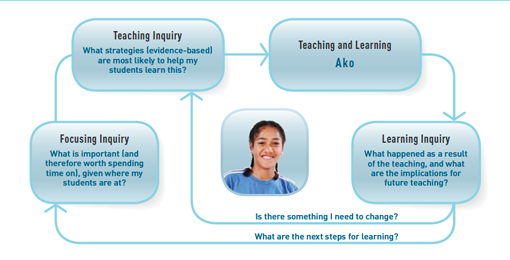
For those who don't know (cue: take note, Media friends) Teaching as Inquiry is our key improvement process, our key way to generate teacher learning and better outcomes for learners. It is recognised as perhaps the best way to help teachers to learn, to up-skill, to better meet the individual needs of the learners they interact with daily. I could go on, but you get the idea. For those who don't know (yes, media .. this one is for you) the process looks like this:

Image result for teaching as inquiry

I saw teachers developing better ways to empower personalised learning. I saw teachers digging in to data to learn more about their learners. I saw teachers enhancing student mana by empowering them to become experts for their peers. I saw innovative use of technology to help students to read, write, and create, more effectively.  I saw teachers looking at how they can make more effective use of simple one on one face to face conversations to better engage students.

This is innovation. This is empowering. This is exciting. This is what leads to better outcomes for learners. It does also underpin more significant kura wide change. It empowers us as teachers to try new things, to be prepared to take risks, and risk taking is important because without it we get no change.

And all of those things I have described are informing our whole school evolution, whether it be Chromebooks and digital learning (Manaiakalani), curriculum change, or pastoral systems. Our school wide improvement data continues to be impressive. Take this writing data, tracked across a three year period form the beginning of 2016 to the beginning of 2019.

The data uses 'matched pairs', so a student had to be include in the testing at BOTH the beginning and the end to be counted. The right hand column is the one to focus on. If that number is 0, then students have made exactly the progress in their writing that you would expect over three years. If it were negative, then they would have made less progress than expected, and if it is positive then they have made more progress than expected. This is called acceleration. They are progressing faster than you would expect. A student can be expected to make 9.5 points of progress per term, on average. Our nYear 10 students made just under nine terms more progress than expected over that three year period. Framing that another way, we accelerated their writing progress by nine terms more than children of that peer group did on average across the country. This is extraordinary.

If by doing all of this we are, suddenly. an experimental school, then so be it.

And when undertaking inquiry, we all acknowledge that sometimes the hunches that teachers have are wrong, or the strategies they try out don't work. And do you know what? That's ok. Because learning that something doesn't work is just as useful as learning that it does. And it's better than doing nothing.

The media seems intent on beating teachers and schools over the head when they try new things. Schools come at this driven by the moral imperative to do better for our children. I am frankly not seeing much of that in the media these days. The climate being created by this approach will only serve to drive innovation out of the system. Or where it does occur, it will seem more like some sort of guerrilla activity, some clandestine operation undertaken in the dark of the night.

And this must be much like the innovators who began Manaiakalani must have felt in their early days. Maybe they didn't, or maybe the media had a different approach ten years ago. But thank goodness those innovators did. The outcomes for our rangatahi are amazing. We accelerate learning in writing by (on average) twice national averages. We accelerate improvement in reading and maths by (on average) one and a half times national averages.

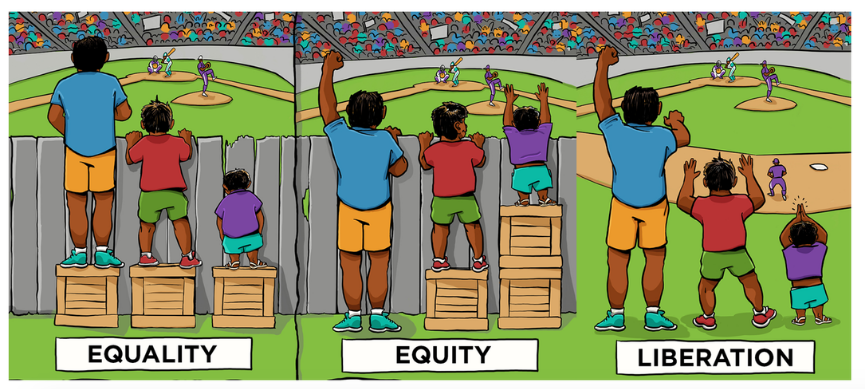
We are out to liberate our young people from the tyranny of 150 years of educational practice that has served too many of them poorly. And that is NOT a plea to 'throw the baby out with the bath water'. There is much in what we have done that is good. However it is no longer enough. Here we go with this same image:

Image result for equality equity liberation cartoon

THAT is creativity. For our kura THAT is 'creative excellence' in action with teachers. THAT is the result of innovation. THAT is the result of moral courage. THAT is the result of some professional 'dirty talk'. If 'talking dirty' in professional terms is what it takes to give our rangatahi the better future they need and deserve, pass me the swear jar. I'm in!!!