Monday, 8 August 2022

What a gift - being creative in selling the 'creativity' message

As a leader, what do you stand for? There's an old saying: if you stand for nothing, you'll fall for anything, and I am of a mind to agree with that.

This sign above our main reception tells you something about not only what I stand for, but also what our kura stands for:


As a leader though it's important to make sure that those around you understand what you stand for. If they are unclear, the outcome seems highly likely to be a state of confusion. 

I have tried really hard to make sure that those I work with know what I stand for, and I'd like to think that if you ask them, then most of them would include in their answers some sort of statement about the power of creativity in education.

I've written before about how our actions are more important than our words in sending those signals about what we value, and in that context I described my own poetry writing, and its sharing with staff, as a way of modelling creativity and personal risk taking.

But wait, there's more.

In 2017 I started the habit of giving every staff member a book gift: 'Creative Schools' by Sir Ken Robinson. I want staff to understand what creative schools might be, and why I think it's important. The difficulty (as others have said) with Sir Ken's work is that it doesn't exactly create a 'how to' manual. Rather it (very persuasively) argues the case for creativity in schools.

Earlier this year I discovered the 1950's work of Elwyn Richardson after buying and reading his book 'In the early years' (on the recommendation of Bruce Hammond .. kia ora, e hoa). I followed this, on recommendation, with the book 'Elwyn Richardson and the early world of creative education in New Zealand' by Margaret MacDonald. These are both NZCER publications, and they both mightily impressed me.


In line with my habit with Sir Ken's book, I wanted to give every staff member a copy of MacDonald's book, so outstanding do I think it is. However, our school budget certainly wasn't going to run to that, so I emailed Graeme Cosslett, Tumuaki of NZCER. I headed the email 'A challenging request of NZCER', described our work, and then said I wanted him to give me enough copies of MacDonald's book to give every staff member and Board member a copy. If you don't ask, you don't get.

The initial response was warm and empathetic, but Graeme was unsure if they could manage this, after all my request was not cheap. However after internal discussion, particularly with NZCER Publications Manager David Ellis, I received a reply from Graeme that made that ten year old boy inside me (yes, there is still one) jump up and down with joy. Perhaps just as heartening was this comment in his email:

We both admire your courage to ask, and whilst this certainly isn't something we can do on a regular basis, the work you are leading at Te Huruhuru Ao o Horomaka is strongly aligned with NZCER's own strategic priorities - particularly our goal around improving equity for ākonga and equity in education.  One of our goals in this strategic priority is to work with diverse and under-served groups to find ways for all ākonga strengths to be revealed and supported through our mahi.  Via Elwyn's book, and your own kaiako - we have no doubt the creative strengths of ākonga in your school will continue to be revealed and supported in the great work you are doing

Today I gave staff copies of the book. The response was heartening. We couldn't resist the photo opp, although many of the support staff team were not present (yes, EVERYONE on our staff team got a copy).

Some of our staff with the newly arrived books

In the midst of this our Head of Maths announced over the weekend that we are celebrating maths week with 'cre8ive maths'. Oh wow!!! My contribution has been to promise a maths based limerick a day. 

This was the first one:

But more importantly students are getting stuck in to creative maths challenges, and we'll publish some of their work at the end of the week.

This is all another manifestation of the 'Create' component of our Manaiakalani 'Learn Create Share' pedagogy. This is what it could look like, this is an insight into yet more ways of manifesting that pedagogy in a kura.

I'm serious about this stuff. I'm serious about the power of creativity. I believe the evidence, so succinctly captured by Professor Peter O'Connor and his co-authors from the University of Auckland  Centre for the Arts and Social Transformation in their 2020 paper "Replanting Creativity during post-normal times'. Creativity is a great vehicle for improving engagement, approaching learning with a creativity lens improves learning outcomes and wellbeing.

I'm pretty excited about staff response to the gift of this book (made possible by Graeme and his team), and will be keen to see where they take what they read. I have no idea, and that is one of many things that makes this so exciting. If our rangatahi are more engaged, if they improve their own learning outcomes, if they are happier at school, this will have been an outstanding investment by NZCER.

Special thanks to Graeme, David, and the team at NZCER. Tino pai to mahi!!! Thank your for your faith in and validation of our mahi, and your support. We fully understand that this is not something you are able to do for every school.


Wednesday, 27 July 2022

Creative connected curriculum and culture

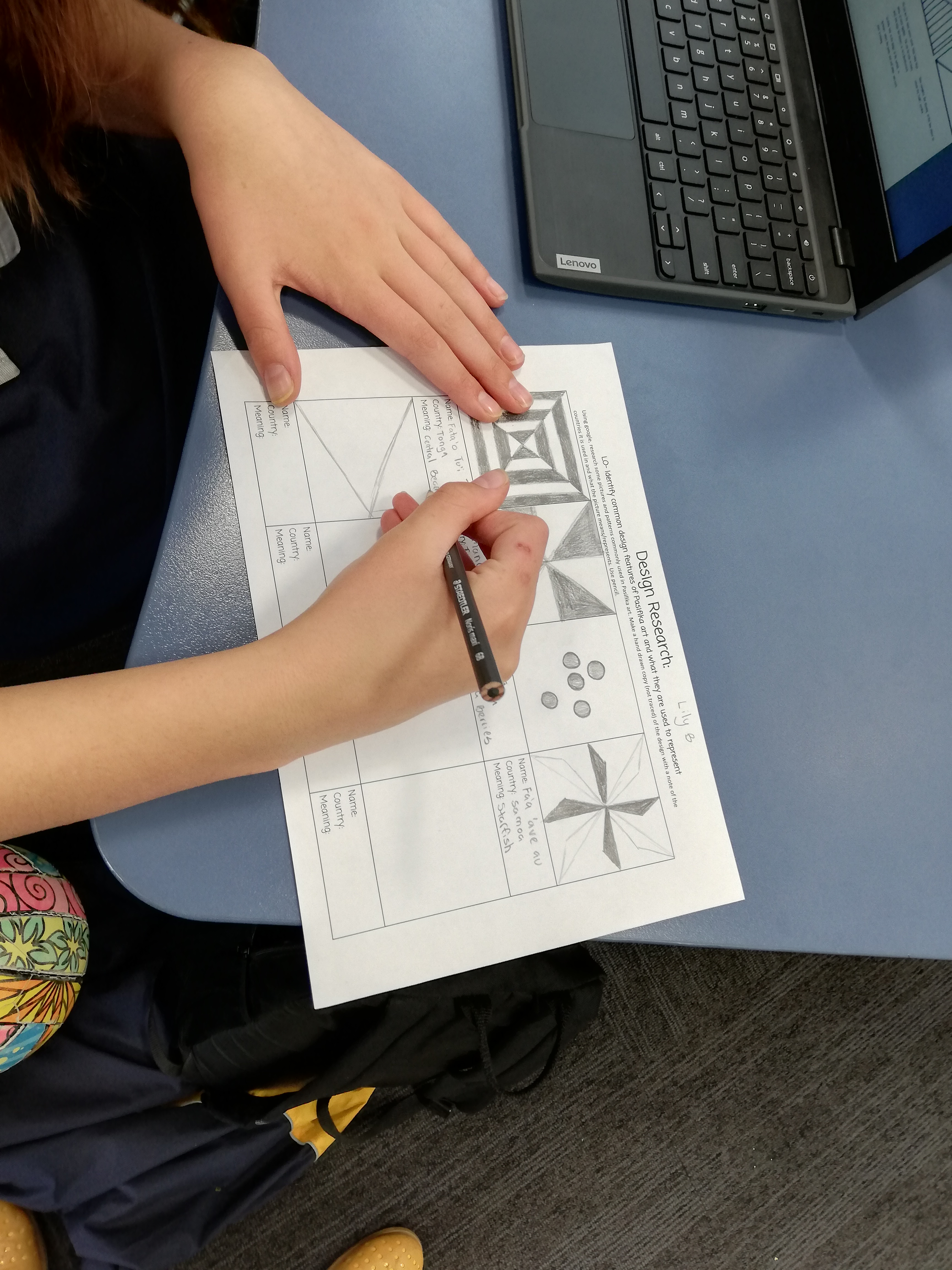
Towards the end of 2021 a group of Year 9 students worked on a Pasifika Art unit from our Creative Connected Curriculum. The 28 students in this group researched patterns and designs from Pasifika cultures before designing one of their own and painting it onto our class tapa cloth.

We were recently able to have the work 'framed' and put on display in Te Pae Rewa. It's a beautiful piece of work reflecting culture and belonging, and 'creative excellence', and an outstanding example of 'Create' from our 'Learn Create Share' pedagogy, made so delightfully explicit with our Manaiakalani kaupapa.

This is a bit of a short photo study showing some of the work that went into the development of the imagery, and the final product.


The completed work, with many of the students who contributed to its completion.

The completed work on display in Te Pae Rewa


Tuesday, 26 July 2022

Permission to be creative

I'm quite interested in creativity. Actually, I'm really interested in creativity. Well alright, I'm more than a little obsessed with creativity, what it is, what it looks like in schools, and how we lead to support creativity in those schools.

When we talk about creativity, it's really helpful to know what we mean. It's easy to fall into the trap of thinking that creativity is the creative or performing arts. Yep, it is, But it's much more than that. It exists in technology, maths, science, social sciences, languages, in fact in everything that we do. But more than that, it helps to define what it means to be human, to be who we are, and therefore I think it helps us to understand out potential in this life, to gain meaning from our lives.

It is important that we have a shared understanding of what we mean by 'creativity', after all our vision is to be 'he puna auaha, a centre of creative excellence', and creativity is at the centre of our Manaiakalani pedagogy 'Learn, Create, Share'.

A colleague (Scott) shared this wonderful video with me today, a video by Ethan Hawke. I'll leave Ethan to do the talking. This is well worth the 9 minutes you will invest in watching it. I think it helps.


Wednesday, 6 July 2022

The creativity IS the learning

 I love these last weeks of each term. I especially love the fact that so often we see the end products of a term's worth of student mahi, the use of creativity to capture and display the learning. One of the wonderful things about our Manaiakalani 'Learn Create Share' pedagogy is that this mahi isn't just a product of the learning, it IS the learning. This is one of those huge benefits of the fact that we have a consistent coherent and explicit pedagogy (a way of causing learning), a pedagogy that flows though everything that we do.

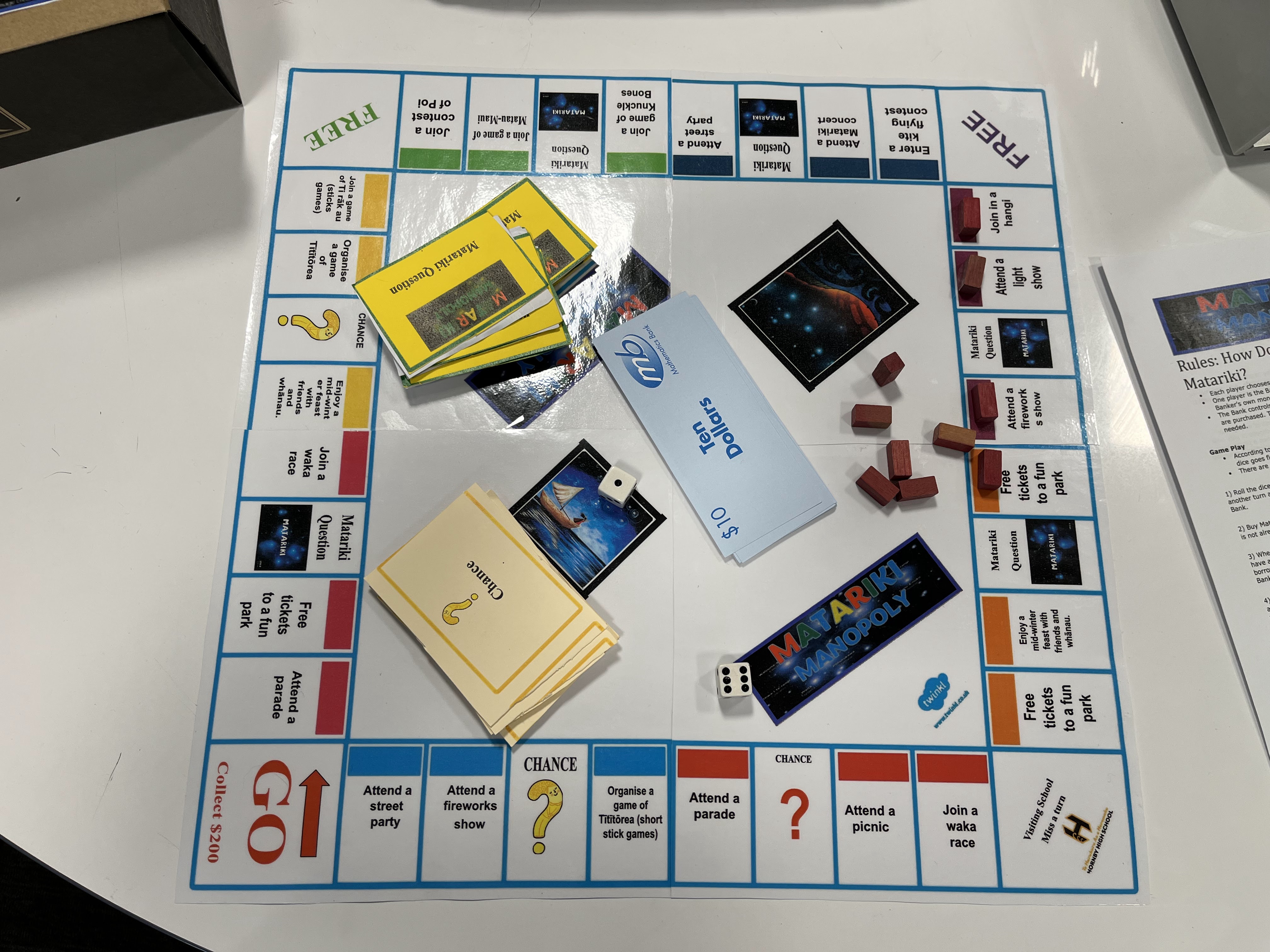
Year 7 & 8 students in our Mōhua kāhui have been undertaking student led inquiry into Matariki. Today has been an exhibition day for their work, and there is so much amazing work on display my heart is full. Even though our focus is on using digital technology to amplify the impact of 'Learn Create Share', as always, not all outputs need to be digital. And what an amazing example of the leadership of staff in this 'creativity space'.

There is much to celebrate. I loved it all. I did have two personal favourites: the 'Matariki Manopoly' game, and the 'Starry Nights' artwork. However it is ALL awesome!! I won't caption each photo. Consider this a photo essay if you like, a simple demonstration of the range and depth of creativity, yet again, in our kura. 


Monday, 4 July 2022

Valuing creativity - you are what you constantly think about

Every little act of creativity counts. Every small creative task feeds and nurtures the inner child, regardless of our age. In walking around our kura this past week, and in talking with students and staff, I am (as is so often true) struck by the delightful range of creative tasks that engage students daily.

Don't get me wrong: not every minute of every lesson can be filled with creativity, certainly not in the traditional arts and crafts sense. However there is so much creativity at the heart of teacher practice for so many students. I think that one of the appeals of the teaching profession that I have always felt, but rarely if ever verbalised, is its fundamentally creative and relational nature.

Some of the acts of creativity I see are traditional, things I recall doing as a young student, like print making with linocuts, or making 'things' from a piece of wood. Some creative acts are primeval in nature; human beings have always (it seems) drawn, painted, danced, acted out, made music. 


Some acts are far more modern in nature. Designing electronic documents, creating virtual worlds in virtual reality or Minecraft.


There's traditional painting ...


A group of our Pacifica students, while preparing for their Tama Mai Saute performance this Saturday., prepared T Shirts especially for the performance. In this case they were supported by South Libraries makerspace.


And some of it is less visual but just as important, like the creative writing that takes place.


It's not that such acts of creativity don't exist in other kura. Of course they do. But with an explicit pedagogy (learn, create, share) that centres itself on creativity I think we are more likely to see a wider range of direct acts of teaching, of explicit choice by teachers, that is the result of deliberate and intentional choices and plans by teachers. The explicit pedagogy supports and sustains creativity for students and teachers. This is, I 'reckon',  one of the significant benefits of being a part of the Manaiakalani kaupapa. If we weren't a part of that we would quite possibly lose sight of the need to develop creativity. The message would get lost in the 'noise' that smothers the education landscape in Aotearoa. Heaven forbid we become prey to the neo-liberal right that would have us all learning maths and science and nothing else. In that case we would not learn those things well either. hat's not an argument for ignoring the sciences and maths either. Everything in balance.

It was interesting but not surprising to notice as I walked through our spaces over several days that the level of student focus and engagement was quite intense. I'm not suggesting that every single student was 100% engaged for 100% of the time. As an adult, try doing that and see how long you can sustain the effort. What I do mean is that students were focussed, active, and happy, in their mahi. They were experimenting, executing, critiquing, practising, and from what I saw often experiencing the joy of creating. That sounds very much like some of the essential characteristics of a 'creative community'. It was a joy to behold.

As they say, you get what you focus on, you 'become' what you constantly think about. Here is a nice link to an article in Forbes on how our thoughts become our reality.

I suspect that one of the characteristics of leadership which is intent on developing and sustaining creativity is that the leader talks the talk, constantly, like that proverbial 'broken record'.

'Guilty as charged'!!!

'He puna auaha, a centre of creative excellence'? We're trying.