Saturday, 25 April 2020

It's the learning that's the thing

With forty years of experience in education, I continue to be gobsmacked at the arrogance with which we seem at times to think about 'education'. Perhaps the problem lies with the word itself, it almost seems to posit the idea that 'education' and 'learning' are totally different things, which in turn seems to lead us to think that one thing is possibly more important than the other.

But it's the 'learning' that's the thing, isn't it? If you disagree, then you are certainly going to find the rest of what you are about to read rather challenging. I suggest you stop right now.

Still with me?

I more and more frequently laugh at our professional conceit when we assume that teenagers will sit down in front of us when we tell them to do so, to learn what we tell them to learn, the way we tell them to learn it. 'Damn it all, do as you are told, we know what's best for you'. Of course to some degree we DO know much about what young people need to know and to be able to do in order to be more fulfilled human beings, better able to participate in our society, and we do so within the framework of a national curriculum which is still amongst the best in the world.

If I reflect on my own learning it is, these days, almost always 'just in time' learning. I learned how to use Screencastify four weeks ago because i realised that writing lots of words for our community (not just now but at any time) is NOT the best way to communicate. Job done!!! I can now make Screencastify recordings at will, although I am still not yet very accepting of hearing and seeing myself.. my inner vice says "EEEwwwwwkkk .. b***y hell".

If we accept that it's the 'learning' that's the thing, then I suspect that you are highly likely to agree that there are many different paths to learning. The concept I am hedging around here is what in the educational jargon we call 'agency': our capacity and the capability to determine what we will learn, when, and to some degree how.

Now I'm not trained in primary education, so don't know what this could/should look like for younger children, but for secondary aged/teenage learners I think I have a little more clarity. Our own Hornby High School experiences with distance learning have put the spotlight on some of these issues.

Here is one absolutely delightful example of what I mean. A staff member emailed me with this after a GoogleMeet with members of her Year 12 form class.

"<Teacher A> said XXXX had made a bonfire in the backyard, XXXX told me in Classics Meet it was in fact a forge, complete with bellows but he didn't have the right fuel to build up heat. XXXX had made a metal tipped spear bound, in Hippolyte fashion, to a spear head, with a round shield including metal cup to defend the fist- he shared a video of a reenactment fight, critiquing their formations and linking how the hippolyte method influenced the Roman legions. He and his brother had a battle which he linked  to the Drama curriculum- method acting [he doesn't do Drama]. In passing he discussed how Leonardo di Vinci invented a tank, based on the Roman battle formation;  then explained to me how to present screen properly.  Is learning happening without school?  I like the way XXXX thinks and connects ideas!"
Consider for a moment the depth of thinking and problem solving that is apparent in that description. I contacted XXXXX to discuss what he had done, seeking his permission to share his work (which he readily and graciously granted). He said:
"Here is just some of the many things I have made over this last month. But sadly i couldn't get any photos of the forge as i did get in trouble for it as big looms of smoke went up into the sky. And the crossbow is what I am still working on."
He sent me these photos:


I asked him if he had been set these tasks or whether he just did it off his own bat. His reply:

"Yeah I got bored and just started to use stuff laying around the house so I did this purely because of boredom."
This reply reminded me that being 'bored' is actually an important part of creativity. The mind needs to rest, to be allowed to wander and ponder, something we do NOT grant our learners  as we push them in the 'busyness' of 'education'. If as a kura we are to continue our pursuit of our vision as a 'centre of creative excellence', one ongoing challenge for us will be how we empower learners to harness their innate creativity.

This is the impact of 'agency'.  XXXX was empowered, he dug into stuff that interests him, using his own talents.

I added to the discussion a suggestion to a range of XXXX's teachers that they consider whether there are NCEA standards that could be attached to any of his work. Isn't that the way NCEA was intended, before we subverted it in the interests of 'education'?

And then there are these examples of students completing some great work at home, when they are ready. Take a look at these two blog posts:

Desharn's creative writing

Trisha's analysis of dystopian writing

These are both junior students.

All of this challenges the school/home paradigm under which we have worked for the past 150 years. We have subverted learning in the name of education. Yes learning and education are the classic examples of the economists' 'Merit goods', and yes we are all better off when individuals get more of it (which is the LIE to the whole idea of charging student loans etc.. but that's another story).

However our assumption that learning can only take place in our institutionalised setting is (as we are seeing right now) flawed.  We need to consider and develop a new paradigm for learning, one that acknowledges the cultural and emotional capital that sits within the home, one that builds student agency, and also one that is founded on kindness to ourselves and each other.

Perhaps one of the biggest obstacles to all of this is the set of 19th century definitions of school attendance that require physical presence on site, that define what attendance looks like (2 hours before and 2 hours after midday, for 380 (or 384) weekly teaching half days).  These things I believe are technically easy to change.

The bigger elephant in the room is the problem of equity - for agentic learning to happen in the home, learners need supportive whānau. What do our whānau think? This lovely piece of research  headed by Dr Riwai-Couch is more than informative, it should be central to our thinking. Our levels of wealth and income inequality, and that raft of problems that come with poverty, and substance abuse and addiction, mean that we already have an underclass of disempowered young people who will find access to learning difficult without whānau support at home.

How do we address that?  Economists are the first to agree that Government intervention is an essential tool to providing suitable 'quantities' of Merit and Public goods (education is defined by those economists as a Merit good). These are good reasons for government intervention against the 'market'. So a caution to any neoliberals who might have read this far .. your own dogma supports government action. Don't you DARE try to tell me that the market will solve these problems. The market has singularly failed to solve the problems of inequality,  and inequity (and yes for the uninformed out there these ARE very different things). The market has merely exacerbated them.

Perhaps one of the best things Government can do right now is to empower educators to solve the problems. Changing the rules can only enable improvements in learning outcomes for learners, as long as we focus on learning. not education, as as long as we can keep focussed on the greater good of society, not the benefit of the privileged few.

We have over the past five weeks of lockdown seen the capacity that teachers (and schools in general) have for innovation and simple bloody hard graft. The voices railing against longer term change are the voices of the entitled, the voices of those who have been the historical winners from our 150 year old paradigm.

I am hopeful that this Government will allow a collaborative, cooperative, and empowering, philosophy, coupled with a good dose of pragmatism, to hold sway.


Wednesday, 15 April 2020

Did our plans survive first contact?

Apparently it was the nineteenth-century Prussian military commander Helmuth van Moltke who said “No plan survives first contact with the enemy".

No battle plan ever survives contact with the enemy." Helmuth von ...


That is, whatever we plan, what happens once we confront the things we have planned for? Do our plans actually work?

I would be lying if I said that I had no doubts at all that our preparations for distance learning would 'do the job' with our learners at Te Huruhuru Ao o Horomaka Hornby High School. Doubts are normal, even when you have done everything you think you can in preparation for any new circumstance.  At the bottom of this post is a footnote in which I have offered a summary of our preparations, of the framework that we have built to support learning.

Going The Distance: Part-Time Online Learning Lacking | Wyoming ...

Source: Creative Commons (Wyoming Public Radio)


We entered this new remote learning space well prepared, we thought. After our first day in this distance learning paradigm, I asked our wonderful staff team for feedback on our 'learning from home' experiences. I hasten to add that our focus in this first week has been on re-establishing relationships rather than knowledge transmission, and feedback suggests that we did absolutely the right thing.  I wanted to share some of these authentic stories as I think it is important that we document our journey. There will be much to think about, and our first task is to 'make sense' of what we are seeing, feeling, hearing, and doing.

I have anonymised these comments, but if these are your stories, you'll recognise them. However no-one else will.

Response 1:
I have had the best day chatting with my form class and some parents. The students were chatty, engaged, honest and highly respectful. ........ the students were on time for their calls and they were prepared to chat (seated and in an appropriate spot.)
...... it has made for a productive and enjoyable day. I am 100% exhausted though.
 Response 2:
Kids seem keen to join the chats and I would say most have been following our updates on Fb and email, so they know what’s what and what’s expected of them in terms of online learning. 

I’m surprised how tired I am from sitting and chatting for 6 hours but all great fun catching up with students and whanau. It was great to see how this digital stuff connects us - had quite a few kids at dads house for example call in, but we were also able to get mum on the line too from her home just by sending an invite! Or collaborating with other staff e.g. XXX has one sibling, I have the other so we did a 4-way video chat to lessen the stress on mum needing to book in 2 time slots. 

Lots of support from parents too. Seem keen to get their kids back on a schedule and keep them busy... One young man jumped off his video call and powered through 130 min of online Lexia reading (for context, we ask for 100 minutes total for the week - 20 min each day!) sent a big congratulations email for his effort! 
 Response 3:
All really positive! Everyone seems happy at home and are getting on with work! Conversations varied from me driving the conversation to meeting the family and the pets ha ha that one was cute! All in all positive and seemed happy to chat. General consensus was they want to come back to school ASAP so that is great too! 
Response 4:
I connected with 8 families today and all (students and whānau) were pleased to catch up and asked me what my lockdown "stories" were. The reminder to get on with (or start) the work set was timely for some students (even though I stressed that this is a health crisis not an education crisis).

Generally I got the feeling that whānau welcomed the call from the "normal" after a stressful time of lockdown. They seemed to appreciate the "Nigel Latta" approach of not pushing these kids too hard, but also welcomed us taking charge of some of their kids' "discretionary time".
Response 5:
Great buy-in, parents and students appeared to be quite comfortable and confident using google meet. All learners were engaging with the online material to some degree and all parents were very happy with our plan moving forward. I had some parents asking if we could schedule more google meetings and they were keen on the idea of watching recordings of lessons. Was great to have a chance to connect with some parents I had not met yet.
Response 6:
Approx 40% strike rate for the online component.  For those online a good vibe.  ....... 
The classes have three groups ........  The (first) will cut through the work independently; the (second) will need all the time over the next two weeks, the (thrid) will hope to complete the work when we are back at school - ........  The stratification reflects that which happens normally but with a different set of students.  Student XXXXX has approx 38% attendance rate (normally) but he is chomping through the theory work.  Student YYYYYY  is working at warp speed as is Student ZZZZZ.  

What I think I am trying to say is that the greatest influence on engagement is the parents.  Also, different methods / mediums / and environments of information transmission suits individuals differently in different situations.  For some the medium, method and environment does not impact greatly they just get on with the job at their own pace.  Others possibly see pedagogical learning as an impediment to their lives and subsequently duck, dive and dodge the learning opportunity - until necessity forces "their feet to be held against the educational fire" 
Response 7:
Everyone I have spoken to is doing well, some families have their own challenges with isolation, less connection with friends or juggling working at home with parenting. 

Students all seem positive and ready to engage back into their learning again. It was really lovely to see them and their parents who were very grateful that we were making the effort to host video conference calls. Some are less familiar with using Google Meet but a quick phone call to talk through connecting has been working well.

But it was great!! Excited faces, happy parents and a lot of compliments on how connected they have been to the school and teachers
Response 8:
I have already setup my YXXX and YYYYYY classes online and we/they are have made excellent progress during the “holidays”.
Response 9:

Overall my form class is very positive, no one scored below a 7.5 on asking how they were doing.

All parents .......  were actively involved and asked questions " How long " etc..

General feeling is that students are missing the contact. Most are on insta, snap chat, messenger. etc. 
None reported not having any work, no contact, some had been speaking to subject staff.

All have indicated good connectivity, no problem with devices. One family has 7 at home

And for a little colour, I love this one:

Some hilarious moments.  This one in particular.  I was privy to 2 dog 'accidents' in the house complete with parental expletives, kids squealing and a younger sibling moving the screen so I could witness the before and after 'clean-up'  lol, lol, lol 😂
Some sense making;

1. We gathered a lot of data as Form and Wānanga teachers entered brief notes on their 1:1 meetings with students and whānau. The over-riding theme of this is that our students miss the daily contact with peers, and with teachers. We should not be surprised by this, given that one of our foundational beliefs is that we are a relational school, and that we believe that relationships are an essential foundation to learning.

2. Gathered across the data collection, and referred to explicitly here by one teacher, is the observation that students who in our physical classroom settings don't always appear to be well engaged are in fact 'going for it' in the distance learning setting. I wonder if the issue here is that these students have been given 'agency', they have been given much more control over their learning. If so, what then is the next step in building this agency for the benefit of more of our learners? And what of those learners for whom we have built a 'dependence'? Those learners who have been taught by practitioners who teach from the perspective of the 'cult of personality'? These are the learners who will continue to rely on their teachers. What of them?

3. Online contact/meetings/teaching is exhausting. I know that from experience, with my day made up of anywhere between 2 and 6 hours of online in meetings. I end the day exhausted, myself. I do not think that is sustainable for either teachers or students. My conclusion therefore is that simply replicating our physical classroom practice online is NOT the answer. I am aware of schools attempting to do this. I hope for the sake of their learners AND their teachersI am wrong, but I am not convinced that that approach is sustainable over the long term.

4. This more general observation is based on more than just this very small sampling, and something perhaps a little more evaluative from me: I suggest that we are seeing a change to education that is unlikely to be 'undone'. It is much like a 'pandora's box'. Once we have let this distance learning thing out, once we have supported (actually once we have 'allowed') student agency, there will be no going back.

My opinion, - I hope there is NO going back. If we can see students more fully engaged, if we can see students managing and controlling their learning more, then the outcome must surely be better learning?

So, our plan, based on 5 years of preparation as a part of The Manaiakalani Programme, does appear to have survived first contact as of the end of day 1.

Footnote:

Hornby High School joined The Manaiakalani Programme in 2015. The programme is a taonga gifted to schools from the Manaiakalani cluster and the Manaiakalani cluster in south Auckland. This approach to learning uses a clear pedagogy (Learn Create Share), with the benefits amplified with the use of digital technologies (Chromebooks) in order to make learning authentic and visible. Content is made visible via teacher Google sites. This means that all learners can access material relevant to their learning. at any time, from anywhere. We call this ubiquitous learning. Learners make their learning visible by publishing it to authentic audiences via the blogs.

Schools are support by an education programme leader whose main task is to assist teachers to upskill in the specific skills required to use the pedagogy and the technologies.

We have been privileged to be support initially by Education Programme Leader Mark, and now by Kelsey, and this work is funded by the Uru Mānuka Education Trust which has done some extraordinary work to ensure that we can sustain these initiatives.

Friday, 20 March 2020

What do beards and the OECD have in common?

As we watch the Covid-19 situation evolve as a rapid pace, those of us in schools are looking at our preparedness for the future challenges of causing learning remotely. There is an inevitability to this at some stage in the future, even if for a limited number of our students. Our overriding paradigm has to be 'business was usual' for as long as possible while taking all sensible measure possible to 'mitigate the risks', to keep everyone safe.

One of the things it has done for me is to provoke some thinking on our purpose as educators. You might say it's a little late in my career to start that. It's not a matter of having started it,  but rather a matter of deciding to put down in words how I see things in the face of the challenges we face right now.

In writing this, my target audience is our whānau and our rangatahi, because I would hope that colleagues have already determined their position in this regard.

So what is our purpose? I think that the greatest task that faces us is to prepare young people to take their place in society as people able to participate in society, to contribute economically, socially, morally, to bettering our existence as human beings. This brought me first to a piece I wrote in a school newsletter at the start of the year, as we faced the perennial 'beard wars', senior boys demanding the right to grow beards, despite the clear school rules. I wrote this:


Already this year I have had cause to consider the psychology of our teenagers. Psychologists in the 60’s and 70’s described them as ‘marginal man’ (at a time when our language was far less sympathetic to the issues of gender identity). They were referring to the idea that teenagers are at the margin, the grey area in which they are neither child nor adult. It is an age therefore where they are seeking identity, and they do this in many ways, not the least is by pushing against the boundaries in order to gain a line of sight to exactly what it means to be themselves. You will see this daily in your home lives.
Pushing against the rules of any organisation is perhaps the easiest way, as those rules are the things most visible and therefore the easiest target. The problem is that any group or organisation must have rules if it is to function. It matters not what the organisation is: the army, the Police, a hospital, a construction site, a school. They all need rules if they are to function. 
Therefore perhaps one of the best things we can do for our teenagers (after giving them our time and our unconditional love) is to ensure that they understand that rules exist and that they develop the resilience to cope with those rules, regardless of whether they agree with them or not. I have had cause to address the issue of beards. It is perhaps relatively normal for teens to see the growth of facial hair as a way of establishing identity, it reflects their search for themselves. However beards and moustaches are often not allowed. In the Police, yes, In the army no (although there was an odd rule that almost ‘required’ a sergeant in the Royal Artillery in the 19th Century to grow a beard - I haven’t been able to find out whether that is still allowed or not, although I suspect not). Our own school rule is clear: boys are to be clean shaven, beards and moustaches are not allowed.
There are rules in many workplaces, whether we like them or not, whether we agree with them or not. As a kura, and as parents, we do our children NO service at all if we do not support them to accept that fact. In one of our recent regular weekly visits to our local supermarket the checkout operator admired Lorraine’s painted nails, lamenting the fact that as staff they were not allowed painted nails if they were to work at the supermarket. When our employer says that we must wear protective footwear if we wish to work on site, then we have two choices: wear the protective footwear, or work somewhere else. We don’t argue with the employer that we want to work there but not wear the footwear.
Growing facial hair may well be seen as a chance to rebel, and you may argue that the growth of facial hair does not impact on learning. But as I said earlier, we do our young people no service whatsoever if we cannot help them to understand that societies and groups need rules to function, and that to some degree at least we all need to observe those rules. This too is an important part of their learning. If our young people want to rebel, let it be against something that actually matters in the long run. Facial hair hardly seems important  when the future of the planet is at stake, or when we have almost 300000 children still living in poverty. Support our rangatahi to rebel for a cause that actually makes a difference. Support them to show kindness in their actions, to show thought and care for others. An argument about facial hair seems to me to be very self centred. There are far better ways of building personal identity.

My brain then connected this with some material published by the OECD (Organisation for Economic Cooperation and Development). Here's what they said:

Creative problem solving requires us to consider the consequences of our actions, with a sense of moral and intellectual maturity. This allows us to reflect on our actions in light of experiences and personal or societal goals. The perception and assessment of what is right or wrong in a specific situation is about ethics. It involves questions related to norms, values, meanings and limits: What should I do? Was I right to do that, in light of the consequences? Where are the limits?


That brings us to the toughest challenge in modern education: incorporating values. Values have always been central to education, but it is time to move beyond implicit aspirations to explicit education goals and practices. This will help communities shift from situational values – under which an individual’s actions are guided by circumstance – to sustainable values that generate trust, social bonds and hope. If education fails to build foundations for communities, many people will try to build walls.
(OECD Educational Compass 2030 https://oecdedutoday.com/education-skills-learning-compass-2030/ Last accessed 21 March 2020)
The OECD has effectively stated in 'eduspeke' what I was saying about beards. All that matters in education, in learning, is not just academic in nature. One of our key purposes is to enhance and develop our moral position in life, to enhance our values, to grow those things that make us human.
The purpose of education is NOT to maximise examination passes. League tables and exam results do not measure what counts, and if we think so then we have certainly failed to give due consideration to what matters in education, to the true purpose of education. The OECD view certainly doesn't align with the 'League Table' bandits who thing that NCEA results are the true measure of the effectiveness of a school. It aligns very closely with what we call 'the front half of the curriculum' in New Zealand, that part that spells out key competencies, values, and vision, for our learners.
Yes we all want improved examination results. Yes these results matter. But more importantly we want young people to go out into society determined to make a difference, to be good citizens. For three years now I have been repeating my plea to our students: BE KIND. It is the SAME message we hear from our Prime Minister The Rt Hon. Jacinda Ardern.
The good news, going back to the original prompt for this thinking, is that as a Manaiakalani Programme kura, we are well placed to continue students' learning remotely, on line. Teachers have well developed Google sites that support visible rewindable learning. Students (and staff) blogs support interaction, they support the visible reflection of thinking and learning and the provision of feedback, the interaction with authentic audiences.
The 'however' is this: not all things that matter can be taught remotely, and not all things that matter can be taught in schools.
Much of the purpose of schools is to provide the social connection that we all need, to provide our children with the opportunity to a make it through adolescence learning those skills necessary to be connected, kind, adults who make a positive difference in our communities.
It is also true that not all that is important in learning comes from schools. If your children end up at home with you, take the time to cook a meal together, read a book together, prepare the garden for winter, or change a wheel on the car together. Maybe make a 'bobby cart' together.. do you remember the joy of that as a child yourself? Take the time to truly be 'present' with your children.

In the meantime, it is essential that we maintain business as usual, that we keep routine and 'normality' for our children. If nothing else, in Canterbury we learned this lesson post February 2011. The Ministry of Health emphasises that school closures do not keep people safer at this stage. It is essential that we follow their advice. THEY are the experts. We would be fools to ignore what they say.
In these challenging times.. kia tau te mauri
Robin Sutton
Tumuaki

Thursday, 12 March 2020

The power of collaboration

I have written before expressing my opinion that the media, by attacking schools that attempt to be innovative, are simply demonstrating institutional racism. In short the argument goes like this: our education system has historically failed Māori and Pasifika learners disproportionately. There is nothing wrong with those learners, but rather there is something wrong with the system. If our society is to realize the benefits of the skill, the talents, and the humanity, of that section of our population, the system has to change. Attacks on those proposed changes are therefore attacks on attempts to create real equity in society. Economically, socially, and morally, we shoot ourselves in the foot, it is something of an 'own goal' to attack those attempting to create change in our current education systems and structures. Some say why change a system that has worked? To which my response would be 'worked for whom"? Who says it has worked given that there has previously been nothing to compare it with? And anyway, can we seriously claim it has worked when it has failed significant groups in our society?

Today I was privileged to be present when educators from 23 secondary kura from across our region got together to share their evolving practice under the title 'Secondary Flexibility'.  We were brought together under the banner of Grow Waitaha, This is an organisation set up to help schools transform their practice, to make themselves fit for purpose in this new age where the future is so uncertain, in an age when we have much less idea than we ever had about what learners need in order to survive in their future because the pace of change is so rapid. This was an amazing exercise in collaboration that is not normal in the world of education. The previous competitive schools model meant that schools were afraid to share practice in case they gave away an edge to their competitors. We were left with small pockets of innovation that in themselves were limited because it is often difficult to see the bigger picture when trapped in our own bubble. However we continue to see that education at least is stronger when we collaborate, when we share knowledge and expertise. In short, OUR CHILDREN ARE BETTER OFF when we share our expertise. The competitive schools model simply created winner and loser children.

You could observe stuff at the surface level like the passion in the atmosphere, like the desire for change that was visceral to say the least. These are people who totally understand the moral imperative, who understand that we can no longer tolerate leaving a growing proportion of our population behind. These educators were unashamedly sharing their work on the sorts of innovations that they believe will create greater equity in our system. And there were lots of cool things happening. Interestingly we are all on the same journey. It's not as if each school is following a significantly different journey. Rather we are all on the same journey, but adapting the thinking to suit our communities, things like the readiness of community, or staff, or students, to adapt to change, or the capacity to resource change.

We are all talking about systems that build stronger relationships with learners (at Hornby High School we call this Wānanga time). We are all talking about changes that connect subjects across the curriculum (at Hornby High School this is Hurumanu), destroying the subject silos that have been the feature of secondary learning in our secondary schools since.. well , since forever as our teenagers might say.

At a deeper level though I think there is something much more significant happening. I previously wrote that schools are often afraid to put their heads above the parapet for fear of being sniped, of being shot down, by a contemptuous and hideously ill-informed media. Today was different. Today we stood shoulder to shoulder, announcing for the whole world that we are committed to a better education for ALL rangatahi, that we no longer believe the lie that the western education tradition is the best and only way to cause learning. We all acknowledged without saying that there is stuff we don't want to get rid of, but we were all also acknowledging that what we do now is no longer enough, if it ever was.

You see, the impact of this stuff is real. In achievement Hornby High School accelerates writing achievement at twice (yes that's TWICE) national averages as a result of our engagement with The Manaiakalani Programme and its 'Learn Create Share' pedagogy. Hornby High School has maintained attendances at an average of over 90% when attendance rates across the country have been declining. That's called engagement. Maybe, just maybe, we DO know what we are doing.  Maybe, JUST MAYBE, the profession of educators does know what it is doing.

I am proud to be a part of a kura that is pushing the boundaries, a kura that wants the best for all learners, not just a privileged few. And today we saw that we are not alone, and in fact never have been. We now know that we have good company on this amazing journey. We have a whole community of educators with us in this work to change lives and communities.

This is the power of professional collaboration. This is the way of the world, this is the. way forward in our work to empower and embolden our rangatahi, to set them on their journey to better lives for themselves, and for all.

You see, the whole IS more than the sum of the parts. As one famous thinker once said 'you can judge the quality of a society by the way it treats its weakest members.' Today showed that as educators we are determined to treat our young people, some of our weakest and most vulnerable members, in the best way we can imagine.

Saturday, 7 March 2020

The new 'cornerstones' of our society

All groups need rules. They need a set of agreements on how members will behave, how they will treat each other, if they are to succeed. Regardless of whether it is the armed forces or the police, a kura or a hospital, a sports club or a motorcycle gang, all groups have to have some agreement about how they will act.

I recall Lorraine in the 90's inviting her parish vicar for dinner. It was an enjoyable evening, and I recall expressing the view that for many centuries in European societies churches provided the moral glue that bound us together as a society. I suggested that it was the failure of our churches in general to retain their relevance to people that has lead to a significant drop in numbers of parishioners generally, and therefore in their ability to influence values, to sustain a moral code that we might live by. I then suggested that this has accelerated a significant shift in our cohesiveness as a society because we struggle to hold shared values. Here is some recent NZ data, and I readily acknowledge that this doesn't reflect some of the changes happening with individual faiths.


I realise that that statement suggests that their values are the right ones, and all others are not. That is not my intention. It is merely an observation on what I think has happened in European based societies globally. Here too I stress that this is a very euro-centric observation, on which I'll say more later in this post.

The vicar certainly didn't disagree with me, and I have to confess that despite working for 15 years in an independent school with an Anglican ethos (and an excellent school, at that), I have at best 'flirted with faith'. That worried me, although despite that I like to think that I have managed to live a values driven life that reflects core values founded on respect for others.

I would also like to state that this is not a post promoting any specific set of values, Christian or otherwise, other than the values that are implicit in the New Zealand National Curriculum. I merely make the observation of the need for an agreed and shared set of values. As a state school in New Zealand, we are required to be secular in nature. We do however have a set of values (Commitment, Achievement, Resilience, and Respect), that are our own interpretation of the values spelt out in the front half of our National Curriculum.

Just last week I was in a meeting with Gary Roberts (Principal, Hornby Primary School) and Malcolm Gooch (Leader of our local Mana Ake team, working with the Uru Mānuka cluster). Malcolm made one of those statements that 'joined the dots' for me. I admitted that I felt deeply embarrassed that I hadn't made this connection, that I hadn't joined these dots, before.

He said 'schools are the new cornerstones of society', they are places in which society generally has high trust, they are gathering places for us, perhaps in much the same ways that churches were before.

That lit a number of light bulbs for me, reflecting a vital function that had lurked in the back on my mind like one of those ghostly memories borne of a half remembered dream.

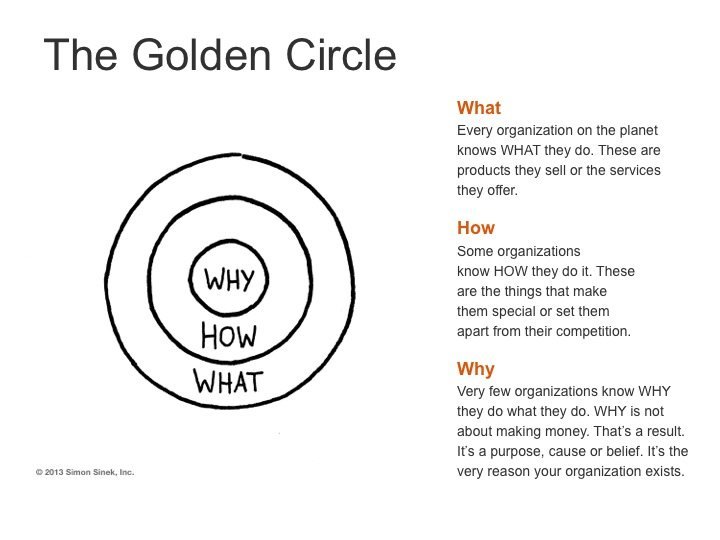
It also brought me back to Simon Sinek's work on change, and the need to know, and keep at the forefront of our thinking,  the 'why' of our work, our moral imperative.

Image result for simon sinek why

Our moral imperative within Uru Mānuka is well represented in this visual representation of our work, one I've shared numerous times before:


Image result for equality equity liberation
Our work with The Manaiakalani Programme highlights one of the important pieces of work that we are undertaking at Hornby High School to achieve this end, to meet our moral obligation to see ALL students able to be the best that they can be. Our work in establishing our Wānanga time and our cross curriculum Hurumanu, are also important pieces of work in supporting the best outcomes for our learners.

The problem lies in that bigger piece of work, that new role for schools as the cornerstones of our society. You see, this is not something we are resourced to do. We are staffed with wonderful people who hold the moral imperative dear to their hearts. We are staffed by people who would (and figuratively, often do) give the shirts off their backs for tamariki that they teach. However as a wonderful former colleague was want to remind me, we are schools, not social work organisations. That is what we are resourced to do.

But what of our work? What can we actually do to  make a difference, given that we are not actually resourced to be those 'cornerstones' of our society? We can be values driven, as we all are. We can be culturally responsive, culturally inclusive, welcoming to all cultures in our communities. Every child ought to be able to bring their 'cultural backpack' into the kura, to be who they are without fear or reservation.

These two ideas come together in a unique way in Aotearoa New Zealand. We have a true taonga in Tikanga Māori, in those beautiful values of manaakitanga and whanaungatanga, of kindness and relationship. By upholding the precepts of the Treaty of Waitangi we may yet save ourselves as a society. We currently have a Prime Minister who talks the talk and walks the walk about showing kindness, about rejecting the cult of the individual that has been an implicit part of the neo liberal right wing agenda that has driven much of western society for the past 40 years. We hear those messages abut inclusivity, about embracing diversity. Doing so makes us all richer, better off. A society that has extremes of wealth, a society that is divided along any grounds at all, is a poorer society both economically, culturally, and socially. Embracing tikanga offers us a path to greater moral and economic wealth. Why wouldn't we?

That's a big ask for schools alone. We must play our part, but we can't do this alone.

Sunday, 2 February 2020

Do you mean 'creativity', or do you mean 'creativity'?

He puna auaha

A centre of creative excellence

This is our vision for Te Huruhuru Ao o Horomaka Hornby High School, a bold vision for a secondary school, at a time when we need to be bold in education. I'm not afraid to be bold, I'm not prepared to step back from the challenge, because now more than ever before we need to be bold, to develop new ways of thinking in education. Our historical system has failed too many children, too many rangatahi have left the portals of secondary schools undervalued and underprepared for the world that they face. And I am privileged to be able to walk our journey with a group of colleagues who share the vision, who share the appetite for change, an appetite to shake up the system to better serve our amazing tamariki, despite the anxiety that the change creates for them.

For those who weren't involved in the development of our vision, and the development of our roadmap, a reasonable question might be 'do you mean creativity or do you mean creativity'?

The simplest interpretation would be to assume that our vision is to be a centre of the creative arts. That in itself is laudable and desirable, and it is a part of our plan. However our intention is to be much bolder than this. We are seeking creativity in everything that we do. A question I often ask of colleagues is 'what does creativity look like in your daily work? In the classroom? On the sports field? Around the Board table?'

Our staff team has been re-imagining what we want learning to look like, and I want to share their work. I stress it is THEIR work, not mine, and is testimony to their commitment to the vision, and to our rangatahi. I'd also stress that many parts of this work are not unique. In the finest spirit of the development of creativity, we have taken our own educational 'artist role models' and we have evolved their ideas and adapted them to suit our Hornby High School community of learners. Before I outline our progress so far I would like to pay tribute to those inspirations, those other kura that have informed our own thinking. They are Campion College in Gisborne, Rototuna High School in Hamilton, and Rolleston College in Rolleston (outside Christchurch). There are other inspirations that have come from a range of thinkers, but these have been our greatest sources of inspiration, because they have shown as a 'how', a way of 'doing' and 'being'.

Our changes to date can be classified into two areas:
  • The strengthening of relationships for learning, something that might previously have been termed our pastoral system, although what we are devising goes far beyond the pastoral systems of old
  • Connected curriculum, operating under our title Hurumanu
The pastoral changes include:
  • Shifting progressively to a vertical pastoral system akin to a true whānau system, where students will be grouped together across Years 7 to 13. This will be phased in over the next few years. We were strongly advised NOT to drop all students into the system straight away. Other schools reported difficulty as senior students unintentionally sabotaged the change because it is completely different to the horizontal groupings that had experienced throughout their secondary schooling.
  • Using 7 hours per week from 'old school curriculum time' for what we have termed 'Wānanga' (and yes, that macron is important!!). Students will spend the bulk of this time in Wānanga groups of 23-25 maximum with their 'learning advisor', an adult who will come to know them better than any other adult on the team. They will explore cybersmarts, undertake testing to show progress (the data gathered by Woolf Fisher Research Centre, amongst others), they will undertake passion projects, attend assemblies, deliver learning exhibitions, participate in mentoring that will help to build goals and confidence, and most importantly they will build relationships, you get the idea.

This image from the staff Google site gives a great overview of what may take place in Wānanga time.


The curriculum changes see us shift towards more cross curriculum learning. Subjects have been paired, and teachers supported with time to plan cross curricula learning opportunities that we have named 'Hurumanu'. Year 7 & 8 students will work together in combined groups, while Year 9s will operate on a stand alone basis (that is, they will not be in classes combined with Year 7 & 8 students), but experiencing the same cross curriculum structure. In this structure they will explore 'big ideas' through subject specific lenses.

Here are some of the topics on offer for Year 7 & 8 students:

And for the Year 9s:


Students will be challenged with engaging big ideas, using the cross curriculum lenses that we hope will support an understanding of relevance and complexity. A future step will include the recognition of the need for student 'agency', that is, for students having more choice over what they do. Passion Projects do that, but we recognise the need for more agency still.

We have 'resourced strategically', by using four of our five Kāhui Ako Within School teacher positions to appoint staff to support others on this journey.

Underpinning all of this is our desire to ensure that every child knows that her or his culture is valued and recognised. The fifth Within School Teacher position supports staff to improve the cultural responsiveness of their practice. Our Kāhui Ako (Uru Mānuka) has also dedicated one of it's Across Community Teacher positions to supporting and developing our cultural responsiveness across the whole Kāhui Ako. This is central to building positive relationships for learning

We should also recognise that The Manaiakalani Project forms another really important component of our work. Our 'Learn Create Share' pedagogy offers agency and visibility, it offers real world connection which is so important as we delve deeper into our real world cross curriculum work.

All of this reflects one way of seeing creative excellence in our work, challenging old ideas, and recombining those ideas in new ways.

Our 2020 structures are not THE final shape. They are our next steps on the way.

I often say that I do NOT believe in revolutionary change. Revolutions almost always leave 'dead bodies' on the streets. I want everyone who choses to be standing at the end to be able to do that. So our change journey is one of evolution, of gradual change that (I hope) takes people along with us. Change is stressful enough without beating people up with it, without 'leaving bodies in the streets'.

All of this work reflects the general understanding that exists within our kura: relationships are central to learning, and connection and relevance are central to engagement in learning.

He puna auaha A centre of creative excellence, we're working on it.

R Sutton
Tumuaki


Saturday, 21 December 2019

Necessary but not sufficient ...

What's the secret to school improvement? If I knew the definitive answer to that, I'd probably be on the global speaking circuit earning significant dollops of cash, I suspect. Mind you, I think we all know that there ISN'T one single answer to that, and there never has been.

I have come to believe however that there are a series of factors, some necessary but not sufficient, and then others from which we leverage the significant learning gains for our rangatahi.

I think we begin with the Viviane Robinson framework for student centred leadership. This has been my 'bible' for thinking and for action around leadership since I took up Principalship in 2016, and continues to be my guiding framework. It looks like this:


Image result for viviane robinson leadership dimensions"


What do I think this has looked like in our Hornby High School context?

The "necessary' factors I mentioned in my opening paragraph have been, I think, a relentless focus on:

  • Relationship building
  • Valuing all students' cultures in our school community
  • Strong vision, consistently articulated and applied
  • Quality physical infrastructure with our whole school rebuild
  • Strategic resourcing of key initiatives with suitable staffing
  • Effective use of digital technology that is founded on a consistent  and overt/completely visible pedagogy
  • Consistency and coherence in everything that we do. That is, there has been NO jumping from one fad to the next. We call this 'staying on the bus'. This metaphor comes from the 'Helsinki bus theory'.
  • The demand that we have clarity in our values, and that all of us (staff and students alike) live and apply those values in all that we do, as a basis for strong positive relationships. In our case, we apply PB4L, restorative practices, and restorative circles, to conflict resolution and relationship building. I have consistently talked up the need for kindness.

These things are essential to school improvement, and there are more that we do that I have just not mentioned. Our new school buildings have had a significant impact on the mindsets of our students. I would like to think that more of our students now generally feel valued by our kura, and our country, because they have been given the chance to live and learn in the school facilities that they always deserved. The design we chose for our spaces, a mix of collaborative and single cell spaces, has allowed staff the opportunity to review their pedagogy, and to put into effect things they learned when we encouraged them to 'play in the sandpit' between 2016 and 2019, to try out ideas that ranged from project based learning to passion projects, from knocking out walls in classrooms due for demolition to cross curriculum learning opportunities.

We have seen the dramatic impact of digital technology, and our Learn Create Share pedagogy, on student outcomes, with writing progress accelerated at twice national averages, and reading and maths accelerating at 1.5x national averages.

My current opinion is that these are all things that have been necessary to improvement in our kura. However I suspect that on their own they would have relatively limited impact unless combined with what I think are THE game changers in schools:

  • Embedded inquiry
  • Curriculum shift
  • The Manaiakalani Porgramme

Our curriculum shift is already significant. If anything, this is where e are disrupting education. I often say that I am a believer in evolution not revolution when it comes to organisational change. Why? When we have revolution we are, far too often, left with bodies in the streets. I'd rather we embark on a change journey that sees everyone who wants to 'stay on the bus' still standing at the end (if there is ever an end, that is). So our curriculum is evolving, perhaps more quickly than some would like, perhaps less quickly than others would like, but nevertheless it is evolving. Our junior 'connected curriculum' is more adaptive, more engaging, more relevant. It connects more clearly with the front end of the national curriculum, supporting as it does the development of the five key competencies that we still think are essential to success. In one of this year's junior prize giving speeches, I said this:
I have chosen to talk about this today because your ability to be successful at school is in part determined by your ability to manage your emotions. The fancy phrase we use is your ability to self regulate. Work hard to get better at that. We all struggle with the challenge, regardless of age.
The Manaiakalani Programme has provided Hornby High School with a visible and clearly articulated pedagogy that is proven to make a difference. Without this, the application of digital devices is unlikely to have made much of a difference. My opinion on this mater is strong: placing digital technology into the hands of students and teachers without changing the way teachers work, without changing the way learning is caused (the pedagogy), is doomed to failure. TMP gives us the pedagogy and the visibility that is necessary to make a difference.

And then there is the professional game changer: inquiry. For the non educators amongst readers, this is the principle that teachers inquiring into what they do, investigating hunches about what will improve learning for their students, are far more likely to adapt and improve their practice. The process looks something like this:

Image result for teaching as inquiry"


Let's face it, NONE of us begins our lives in this profession knowing everything that we need to be successful. In fact, on a side note, I suggest that it is even worse than that, that much of what passes for initial teacher education in New Zealand is not fit for purpose, but that's a different issue. So, as teachers we all need to be curious learners. we need to ask ourselves how we can do this better.

At Hornby High School I believe that what I am seeing is the progressive adoption of inquiry as the driver behind improving what we do. As my colleagues have inquired, made changes, reflected, and then written of what they have done, I have seen reflection that I would describe as transformative. What's more, this has taken place with the support of Professional Learning Groups, many of which have involved collaboration across our Kāhui Ako. This means that we have had primary and secondary trained colleagues collaborating on their inquiries. This is a rich source of knowledge sharing and transfer, and the potential for impact on our learners is huge.

Amongst the benefits of being a Manaiakalani school are that we have a clearly articulated pedagogy (Learn Create Share) around which to focus all inquiry, with hunches often formed based around the mass of great data with which we are blessed. We are able to inquire into what we call 'high shift practices'. In short we are beginning to build a true inquiry culture that focusses on improving outcomes for learners.

That in itself is the high shift practice. I would suggest that while new buildings and digital devices are necessary for transformative school improvement, in and of themselves they are not sufficient. To create those big shifts we seek, we need inquiry, and a future focussed curriculum, and....